One way trucking companies are addressing workforce challenges is to explore new demographic groups from which to recruit – including women. Tips and insights from Women in Trucking's latest diversity index.
by Brian Everett, Women in Trucking Association
October 25, 2024
The Women in Trucking association collects regular gender diversity data for its WIT Index.
Source: WIT Index
5 min to read
One of the biggest pain points for companies with trucking operations is talent recruiting, retention, and management. It’s also one of the biggest expenses.
Ad Loading...
In fact, a common budget allocation for talent development is 3% to 6% of salary or 2% to 4% of revenue. The average cost to hire a new employee is on average $5,000, but many employers estimate the real total cost to be three to four times the salary of the position.
One way that companies are addressing this workforce challenge is to explore new demographic groups from which to recruit – including women.
Ad Loading...
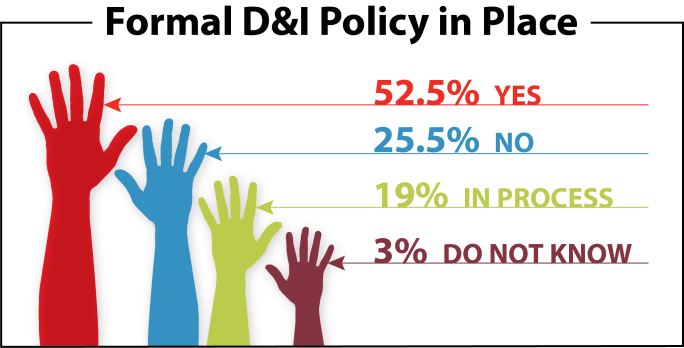
More than half of the companies responding to the WIT Index have formal diversity programs in place.
Source: WIT Index
What are some of the biggest challenges for trucking operations?
Talent shortage: The demand for skilled workers is often higher than the supply, which can lead to a talent gap.
Employee engagement: Keeping employees engaged and motivated can be difficult, especially in large and diverse organizations.
Retention: High turnover rates can be costly and disruptive, so effective retention strategies are important.
Technological changes: Rapid technological advancements require employees to continuously upskill, which can be a challenge for talent development.
Leadership development: It's important to nurture employees with leadership skills and help them advance their careers.
Developing organizational culture: Potential recruits will look beyond compensation to the culture they'll be joining.
Managing diversity: Managers need to be oriented to leadership and foster diversity in terms of lifestyle, perspectives, attitudes, and more.
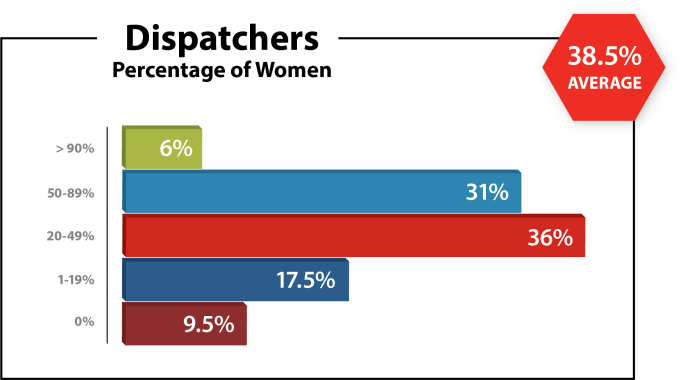
37% of companies in the WIT Index reported that more than half of their dispatchers were women.
Source: WIT Index
Why Trucking Operations Should Recruit More Women
There can be significant advantages to intentionally recruiting more women into your workforce. Some of these advantages include:
Increased productivity: A diverse workforce brings a range of skills, experiences, and perspectives, which can lead to more ideas and processes, and increased productivity.
Improved decision-making: A diverse workforce can help control biases and encourage people to question their assumptions, which can lead to better decision-making.
Faster problem-solving: Employees with different experiences and views can contribute different solutions to problems, which can help resolve them faster.
Improved customer understanding: A diverse workforce can help a company better understand and serve its customer base.
Reduced employee turnover: Diversity can reduce employee turnover, which can save on employment and training costs.
Enhanced innovation: A diverse workforce can drive innovation and differentiate a company from its competitors.
Improved employer brand: Diversity can be positive for a company's employer brand.
Increased profitability: Diversity can help companies hire top talent, understand their consumers, and build a solid reputation.
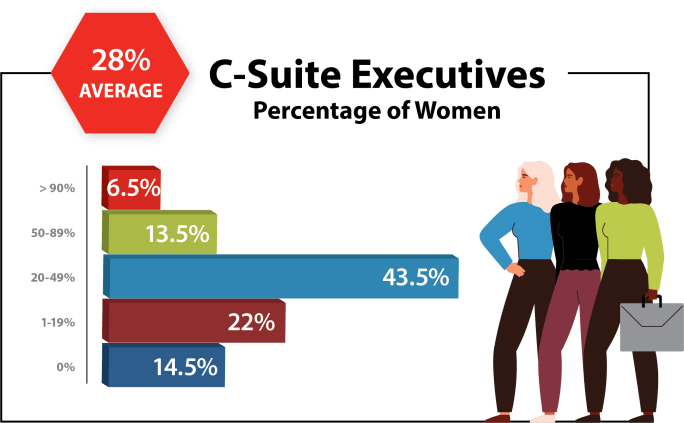
More than 43% of companies reported their C-Suite was made up of 20% to 49% women.
Source: WIT Index
Gender Diversity Development: More Women Are in Key Roles
Are more women playing important roles in the transportation industry? The simple answer is yes.
Ad Loading...
The Women In Trucking Association (WIT) regularly conducts the WIT Index, which is the industry barometer to benchmark and measure the percentage of women who make up the following roles in the transportation industry:
Corporate management (C-suite)
Boards of directors
Functional roles in such areas as operations, technicians, HR/talent management, safety, sales and marketing
Approximately 350 respondents identified as authorized to report their organizations’ gender diversity statistics in the most recent WIT Index (2024-25) survey. A majority of them (51.5%) represent for-hire motor carriers or companies with private fleets as part of the organization’s operations.
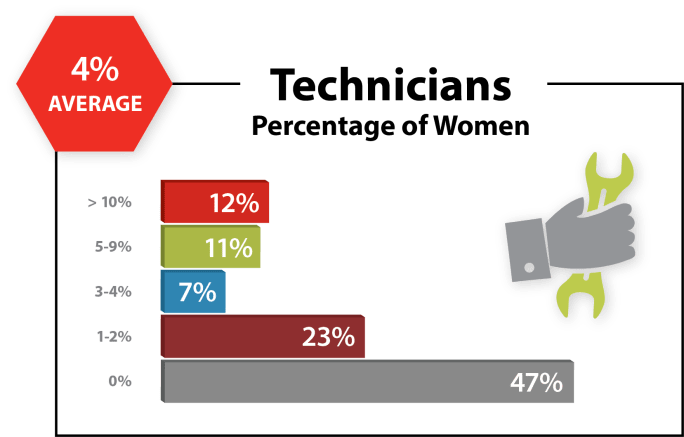
Technicians are an area where women have a long way to go; nearly half the companies in the WIT index had no female techs.
Source: WIT Index
Of those respondents representing organizations with fleet assets, 38% are for-hire motor carriers of various types; 13.5% are manufacturers, retailers, distributors, and other company types with private fleets; and another 13.5% are intermediary companies such as 3PLs, truck brokers and freight forwarders.
The 2024-25 WIT Index highlights the following critical data points that demonstrate that women are playing a much more dominant role in this industry:
Ad Loading...
A significant percentage of women are involved in leadership roles. For example, an average of 28% of executives in the C-suite are women and an average of 34.5% are company leaders with supervisory responsibilities.
An average of 29.5% of board members are women. Approximately 40% of participating companies report that between 20% and 49% of their boards of directors are females.
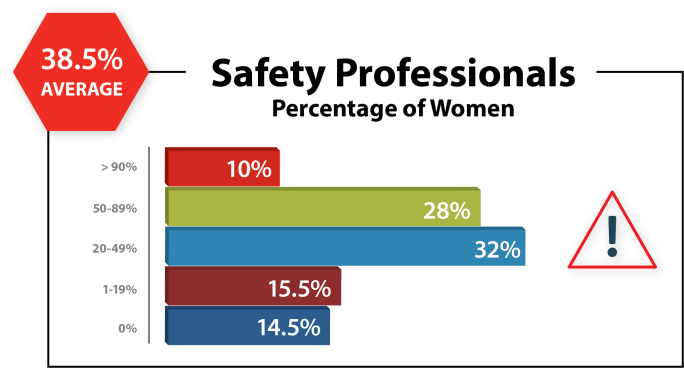
An average of 38.5% of safety professionals are women.
38% of the companies in the WIT Index reported at least half of their safety professionals were women.
Source: WIT Index
Fix the Talent Gap through More Gender Diversity
Many companies in the transportation industry are taking strategic, proactive steps to recruit and retain more qualified women into their overall workforce strategy. Here are three ways companies are accomplishing this.
Companies are rethinking talent acquisition and promotion strategies in their overall business strategy. If the transportation and logistics industry is going to attract women, companies need to look not only beyond their four walls but also outside of the industry itself. When it comes to talent acquisition, smart companies focus on the qualities of the individual and what they can bring to the table.
Move from “talk to action.” Companies in this industry without a proactive diversity-building strategy will fall victim to common pitfalls and will fall flat. When it comes to gender diversity, organizations need to prioritize, collaborate, and think long term.
Women need to feel more empowered. Women tend only to apply for jobs that they feel they are perfectly matched, while men do so even when they meet no more than 60% of the requirements. Similarly, men tend to be promoted more often than women simply because they speak up and more aggressively ask for a promotion. Companies can more actively seek out talent and promotions from talented women inside their organizations.
“Women need to take responsibility for themselves and for their own careers,” says one industry recruiter. “Women need to apply for jobs with confidence, even when they don’t have 100% of the requirements. They also need to be more assertive and ask for a promotion.”
About the Author: Brian Everett is the group publisher and editorial director of Redefining the Road, the official magazine of the Women In Trucking Association (WIT). He is heavily involved in strategic counsel for WIT and managing the association’s annual Accelerate! Conference & Expo. He has more than 30 years marketing, communications, and sales experience in transportation, warehousing, and logistics.
Ad Loading...
This contributed guest article was authored and edited according to Heavy Duty Trucking’s editorial standards and style to provide useful information to our readers. Opinions expressed may not reflect those of HDT.
Freight demand remains sluggish, but rising costs and tougher enforcement have taken enough capacity out of the market to change the outlook for motor carriers.
PrePass Intelligence helps fleets measure bypass savings, flag potential toll overcharges, and spot suspicious transactions by combining data from separate systems.
New tools automate follow-up on fleet data, from maintenance work orders to driver alerts, with two-way voice conversations planned for later this year.
ATRI’s annual survey finds cautious optimism about freight, but diesel costs, litigation, and insurance continue to squeeze fleets. Drivers have different priorities on several issues.
Just a few more days to nominate accomplished trucking fleet professionals under 40 who are making an impact and helping lead the industry forward for the HDT Emerging Leaders award. Deadline extended to October 20!
Incoming President and CEO Mark Colson’s record in Alabama offers clues about his priorities and approach following Chris Spear’s abrupt departure as the head of the American Trucking Associations.