




Research Identifies Strategies to Attract Women Drivers
A new study by the American Transportation Research Institute has identified new strategies for fleets wanting to attract more women drivers.

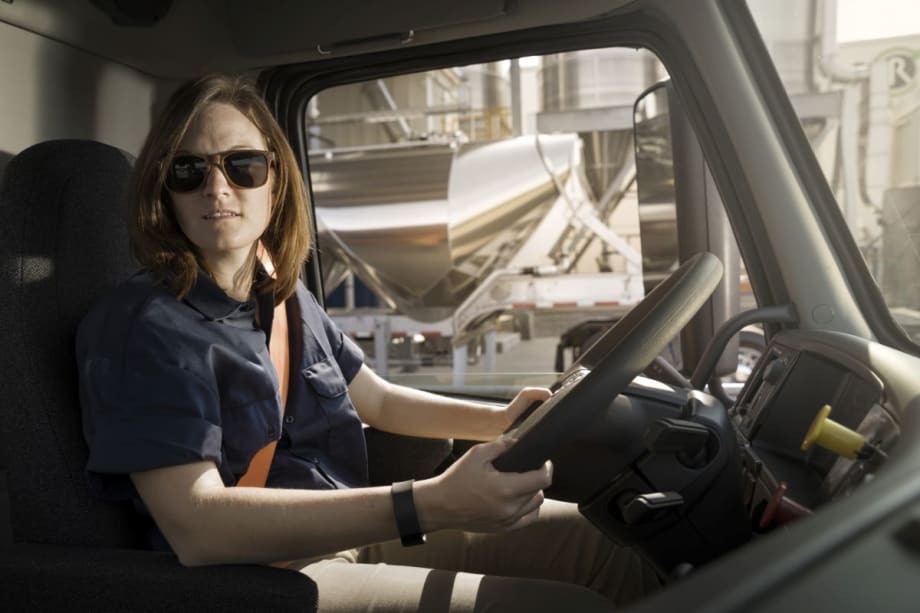
Younger women drivers are growing in number, ATRI found in its new report.
Photo: Volvo Trucks North America
The American Transportation Research Institute (ATRI) has released new research identifying approaches to attract women truck drivers. The report lays out six key challenge areas facing women truck drivers. It then goes on to lay out an action plan for fleets. These include “discrete” steps for motor carriers, truck driver training schools and truck drivers. All of which are designed to make trucking careers more attractive to women.
A Top Priority Study
This research was identified by ATRI’s Research Advisory Committee in March of 2023 as a top priority to help further understand the challenges women drivers encounter. The research then promulgates specific strategies that the industry can implement to increase the relatively small number of women in trucking.
Among the challenges identified in ATRI’s research were industry image and perception, training school completion, truck parking shortages and restroom access, and gender harassment and discrimination.
ATRI’s research included input from thousands of truck drivers, motor carriers and truck driver training schools. The organization used surveys, interviews and a women driver focus group to identify the underlying factors that generate challenges. The report also explores strategies for navigating and overcoming these barriers to success for women drivers.
“ATRI’s research gives a voice to the thousands of women truck drivers who have found successful and satisfying careers in this industry and encouragement to other women to consider truck driving jobs,” said Emily Plummer, professional driver for Prime Inc. and one of the America’s Road Team Captains.
Pay Parity a Positive
The research found that women are drawn to driving careers for the income potential, highlighting the fact that pay parity for women and men is much more prevalent in the trucking industry than in other fields.
The analysis found that carriers that implement women-specific recruiting and retention initiatives have a higher percentage of women drivers (8.1%) than those without (5.0%). The report details how fleets can put such initiatives in place.
The report noted that trucking is one industry where this issue is less likely to occur. This is because there are a number of factors that go into driver compensation including different pay models (e.g., per mile, per hour, per load, percentage of revenue), years of driving experience, annual miles driven, type of freight, geography, and motor carrier, among other considerations.
In separate ATRI research on company drivers and owner-operators and independent contractors, ATRI found that 24 percent of women company drivers made more than $75,000 a year, and 30 percent of women OO/IC drivers made over $100,000 a year, which is greater than twice the average income across all women workers in the U.S.
6 Core Challenges
The study found that there are six core challenges that act as barriers for attracting more women drivers to the trucking industry. The report also noted significant downstream problems that stem from these larger issues.
These include:
Negative industry image and perception.
- Inequitable social norms
- Misuse of social media
- Lack of younger drivers and aging workforce
Inability to complete truck driver training.
- Inability to pay for training
- Lack of driving skills, ability, or knowledge
- No or limited access to childcare
- Excessive travel to and from school
Unsatisfactory motor carrier company cultures.
- Unclear and inconsistent communication with drivers
- Absence of recognition and appreciation initiatives
Inability to acclimate to the over-the-road driver lifestyle.
- Insufficient home-time
- Inability to establish and sustain healthy habits
Limited Parking and restroom facility access.
- Shortage of available safe parking
- Lack of clean restrooms
Excessive gender harassment and discrimination.
- Discrimination during training
- Concern over personal safety
Solid Strategies for Recruiting Women
To help counter these problems, ARTI made the following suggestions for fleets looking bolster recruitment of female drivers. These include:
- Highlighting the income potential and existing pay parity in trucking
- Focusing on women drivers in marketing materials
- Educating family and friends on trucking opportunities
- Staying professional and maintain a positive outlook

Discrimination and insufficient company culture are two major issues women drivers face today, an ATRI study has found.
Photo: Volvo Trucks North America
Additionally, ATRI suggests fleets:
- Connect with High School Students: Previous ATRI research on integrating younger adults into trucking careers found that fleets are not frequently recruiting younger drivers through high school outreach. There is an opportunity for fleets and training schools to implement programs or partnerships within their local communities to educate the next generation on the opportunities the trucking industry.
- Identify and Plan for Generational Differences: ATRI’s younger driver research also identified key differences between generations. Younger entrants appreciate transparency with clear expectations and requirements laid out in the job description. Additionally, fostering a company culture with supportive managers, clear role definitions, community-centered values and respect can improve experiences for younger drivers.
- Emphasize Trucking as a Lucrative Alternative to College: Societal pressure to attend college has grown over the past several decades, with 86 percent of high school students feeling the need to pursue a four-year degree. This is likely one of the reasons that fewer individuals are pursuing careers in specialized trades, such as truck driving.
The full report, which details in-depth action plans to address these issues, can be accessed here.
More Drivers

EEOC Sues Texas Trucking Company Over Driver Age Limits
The agency says Trancasa USA rejected applicants over 65 and applied tougher driving-record standards to those over 60.
Read More →
Nussbaum, Roehl Announce Second Driver Pay Increase This Year
This year has seen a swath of major truck driver pay increases as freight capacity has tightened.
Read More →
From One Generation to the Next: How Mentorship Builds Safer Truck Drivers
After three decades in trucking, Harold Perry shares what he's learned about driver safety, mentorship, and helping the next generation build confidence behind the wheel.
Read More →
Truck Drivers Need More Than Another Alert
Fleets have more visibility into truck health, safety events, and driver activity than ever. The next challenge is turning all that information into useful guidance for the person who has to decide what to do next.
Read More →
FMCSA Removes 110 Truck Driver Training Schools from Certified ELDT List
Federal regulators also are targeting more than 160 additional training providers and launching a nationwide audit of third-party CDL skills testers as part of a broader crackdown on trucking fraud.
Read More →
Hours of Service Pilot Programs: FMCSA Readies for 2027 Rollout
Two pilot programs could eventually reshape hours-of-service rules, giving truck drivers options to pause their 14-hour clock or use longer split sleeper rest periods.
Read More →
Medical Cards, English Proficiency Reshape Roadcheck Violations
Medical-card violations jumped to the top of the driver out-of-service list during CVSA’s 2026 International Roadcheck, while English-language proficiency violations appeared among the leading violations for the first time.
Read More →
Driver Trust Can Make or Break the Success of Fleet Safety Technology
New Teletrac Navman research suggests that onboarding, transparency about driver data, and positive feedback can play a significant role in how commercial drivers respond to safety and coaching technology.
Read More →
EEOC Sues KLLM Over Alleged Sex Discrimination in Driver Training
KLLM is facing a federal sex-discrimination lawsuit over policies the EEOC alleges put female truck driver trainees at a disadvantage.
Read More →
FMCSA Moves to Codify English Language Requirements for Commercial Drivers
By changing regulations on English-language proficiency requirements for commercial drivers, rather than relying on a guidance memo, the FMCSA said future administrations won't be able to walk back the Trump administration's stricter enforcement with just a memo.
Read More →