




Test Drive: Freightliner's 5th Generation Cascadia Tractor
Freightliner's fifth generation Cascadia tractor is a study in evolution -- not transformation. And that's just the way DTNA wants it.

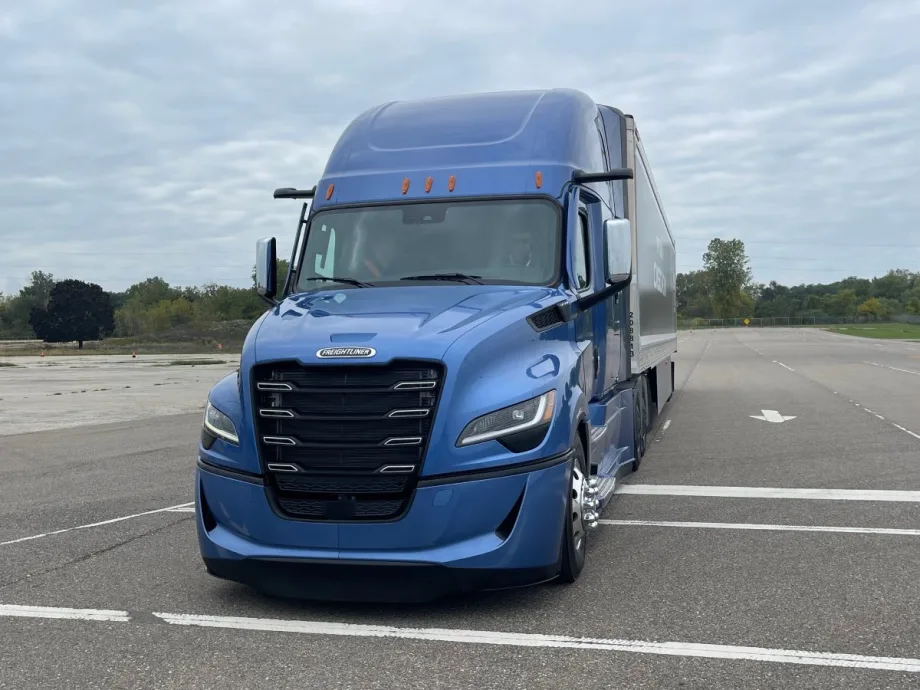
A new, sleeker aerodynamic profile gives the fifth generation Cascadia a 1.9% fuel efficiency boost.
Photo: Jack Roberts
The fifth generation of the Freightliner Cascadia is a study in evolution – not transformation. And that’s by design. Because in the words of Greg Treinen, vice president, on-highway market development, Daimler Trucks North America, “if it ain’t broke, don’t fix it.”
And with 40% market share in the Class 8 long-haul market, the Cascadia design clearly ain’t broke.
But Treinen also noted that there’s always room for improvement. Especially in a time where technology is on a ceaseless march forward. And that’s why Freightliner engineers decided to make common sense improvements on the truck, based on new technology and customer feedback.
Most of the new enhancements on the truck are focused on efficiency and safety. The end result for the fifth generation Cascadia are aerodynamic refinements on the front end of the vehicle, and enhanced driver safety systems inside the cab. And naturally, it was on those areas that my test drive focused.
A Driver-Focused Interior
I’d not been behind the wheel of a Cascadia in a couple of years. So even though Freightliner designers hadn’t touched the interior, I still found it interesting to look around the cab and note various amenities and displays.
I’ve been very interested in the future of the driver-vehicle interface ever since my first visit to CES (formerly the Consumer Electronics Show) in 2023.
Obviously, technology is rapidly changing how drivers obtain information about a vehicle and its surroundings. And I really like Daimler’s approach to this evolving aspect of driving.
The Cascadia dash is brilliantly lit up with large, colorful dials, gauges and graphics. The finishing touch is the large display screen mounted in the center dash stack. The touch-screen is angled towards the driver with quickly and easy access to a wide array of safety, operational and navigation features with minimal distractions.
There were no rear-view mirrors mounted on our Cascadia test vehicles. Instead, the Freightliner MirrorCam system provided information on traffic behind and to the sides of the truck.
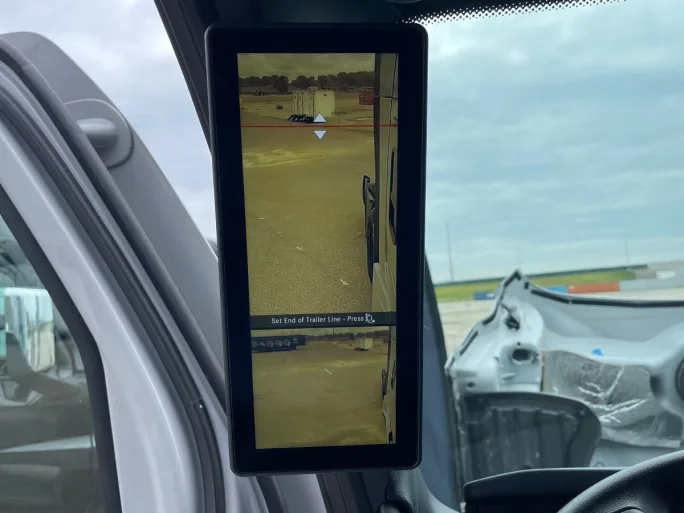
The MirrorCam rear-view mirror system quickly reacts to changing light conditions to give drivers crisp, clear views both day and night.
Photo: Jack Roberts
I like rear-view camera systems. I find them very easy and natural to use. And I appreciate the instant clarity they give drivers in fast-changing light and weather conditions.
The test track outside of Detroit included a brief section of tunnel. And I was impressed by how quickly MirrorCam adjusted to the change from bright daylight to nighttime lightings and the clear, unfiltered views on the A-pillar-mounted display screens.
Smooth Power and Braking
Driving a Cascadia has always seemed more like driving a big pickup truck or SUV than a Class 8 tractor, to me. The driver’s seat, combined with the infinitely adjustable steering wheel, delivers a decidedly “pass car” feel once you’re settled in. And views over the nose and to the sides of the truck have always been exceptional.
Disengaging the parking and trailer brakes takes a simple press of two buttons on the new electronic park braking system. That deed done, the Detroit powertrain rumbles smoothly to life as you apply throttle. Power comes on quietly, yet forcefully. There’s no jerking or juddering at low speeds. And you can carry on a normal conversation with passengers without raising your voice.
Cascadia really finds its sweet spot at highway speeds, where the truck cruises along quietly and effortlessly. Handling and steering response is exceptional: The truck goes where you want it to, when you want it to without any fuss or hesitation.
Braking the truck proved to be a surprisingly smooth experience, too. This was thanks to the new Intelligent Braking System. This new brake-by-wire system gives drivers balanced, coordinated braking control resulting in noticeably smooth deceleration. The system includes an Endurance Braking feature, which marries the engine brake to the service brakes to enhance stopping power. Endurance Braking is incredibly smooth. You really have to be watching hard to hear/feel the engine brake kick in. But I think drivers are really going to like this smoother, enhanced braking performance. And fleet managers are really going to like the longer brake change intervals the system brings to the table, as well.”
Advanced Safety Features
The bulk of the fifth generation Cascadia enhancements are focused on the Detroit Assurance Suite of safety systems. The already-capable system has been upgraded with more computing power, an upgraded camera, and four new short-range radar sensors working hand-in-hand with improved long-range radar sensor.
This system provides Cascadia drivers a mostly passive lookout and warning system that can jump in and help – or even take control of the truck if necessary – in unsafe driving conditions.
The degree of intervention from the system depends on the threat being encountered. For example, Active Lane Assist 2 provides counter-steering if the truck starts to wander in a lane. Whereas its Attentive Drive Protection system will take over the truck, bring it to a stop and engage emergency flashers if it detects a lack of driver input on the steering wheel.

Detroit's Active Brake Assist 6 is now capable of adding automatic braking when detecting vehicles stopped at odd angles, vehicles in curves, stopped vehicles across multiple lanes.
Photo: Jack Roberts
Side Guard Assist 2 builds on those systems by detecting and tracking objects down the entire side of the vehicle – including the length of the trailer.
And Active Brake Assist 6 now provides capable of adding automatic braking when detecting vehicles stopped at odd angles, vehicles in curves, stopped vehicles across multiple lanes, and recognizing both moving – and now – stationary pedestrians.
All of these systems are fully integrated and work together seamlessly. And it’s important to note, that they remain passive until the situation requires intervention.
Taken as a whole, the fifth generation Cascadia is everything you love about this truck, only safer, sleeker, smarter and more capable. It’s a truck that keeps drivers comfortable on the road and gets them home safely once their long haul is over. And what driver – or fleet manager – can ask more of that from a modern long-haul tractor than that?
More Equipment
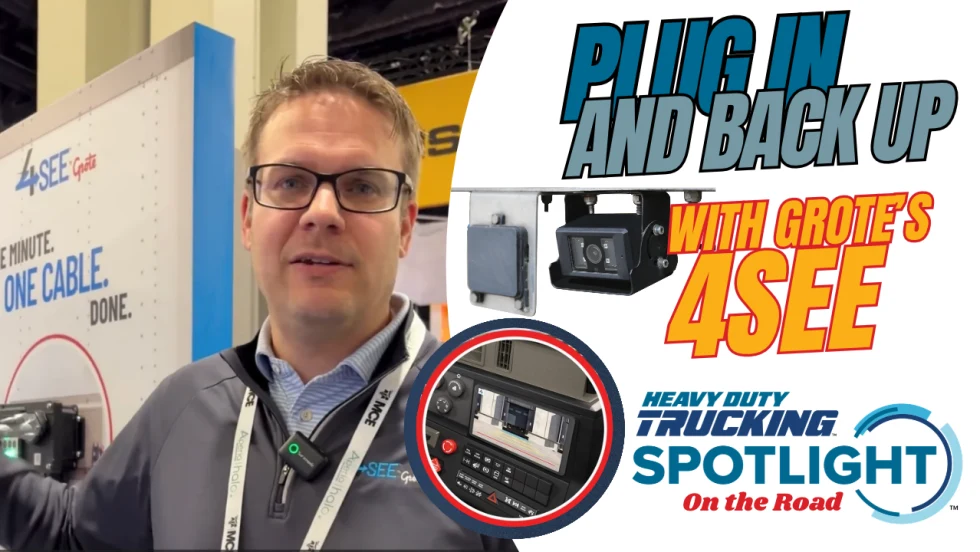
More Trailer Data Through the Same Seven-Way [Video]
Can trucking’s standard seven-way connector handle more cameras and trailer data? Grote’s Adam Slade shows HDT how the company is using new technology with its 4See trailer system, not only to add a new backup camera but also to expand other capabilities — without adding another connection.
Read More →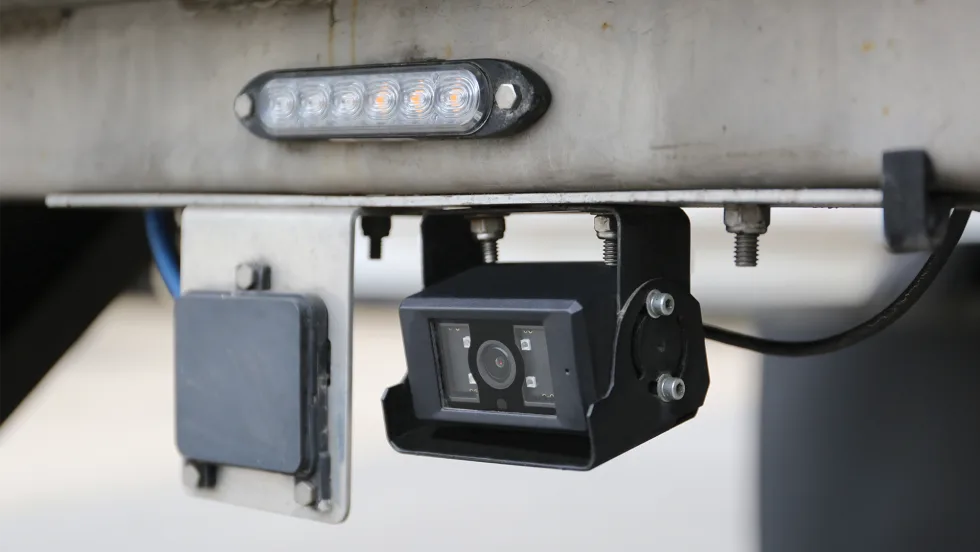
Grote: More Cameras, Same Seven-Way Connector
The next-generation 4See rear-view backup camera from Grote uses the standard seven-way connector and supports additional cameras and other trailer data.
Read More →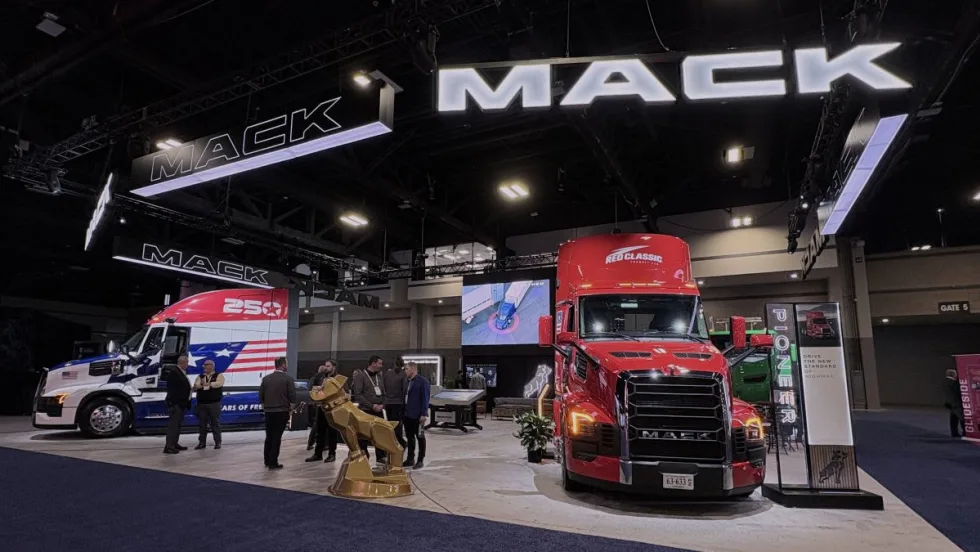
Trucks at ATA's 2026 MC&E in Charlotte, North Carolina [Photos]
From rigs decked out in patriotic America's 250 paint schemes to autonomous trucks and more, check out these photos from ATA's 2026 Management Conference & Exhibition.
Read More →
Help HDT Find Trucking’s Top Products
Have you come across a new product that could make a difference for trucking fleets? Nominate it for HDT’s 2027 Top 20 Products Awards by November 9.
Read More →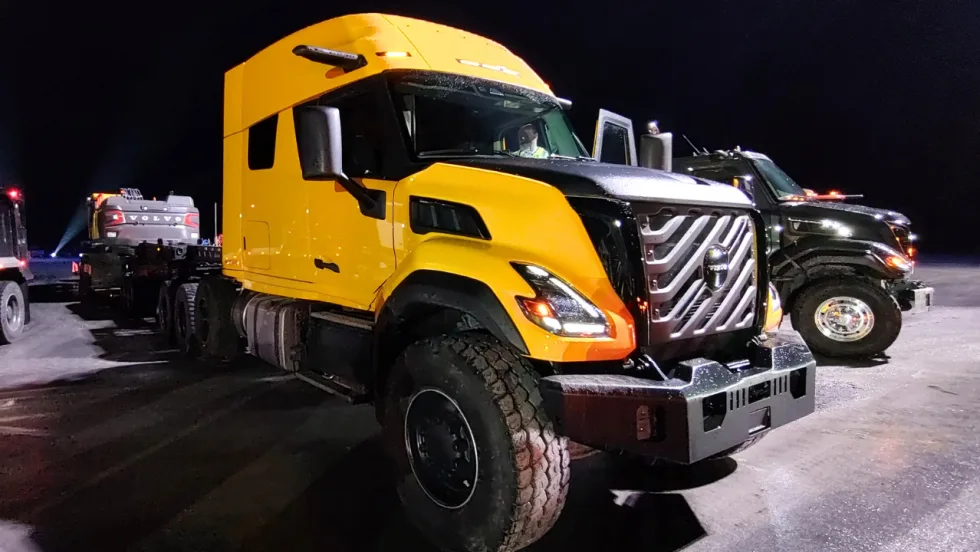
Volvo Unveils New VNX Heavy-Haul and Vocational Truck
Volvo Trucks has launched the VNX, a new vocational truck also available as a tractor in day cab and two sleeper configurations, with one heavy-haul model. The Volvo VNX is powered by Volvo's D13 platform, which delivers up to 540 horsepower and 1,950 pound-feet of torque and is EPA 2027-compliant.
Read More →
How GP Transco Cuts Trucking Fuel Costs, a Tenth of a Gallon at a Time
What’s another tenth of a mile per gallon worth? GP Transco shares how equipment upgrades and driver coaching turn small gains into meaningful fuel savings.
Read More →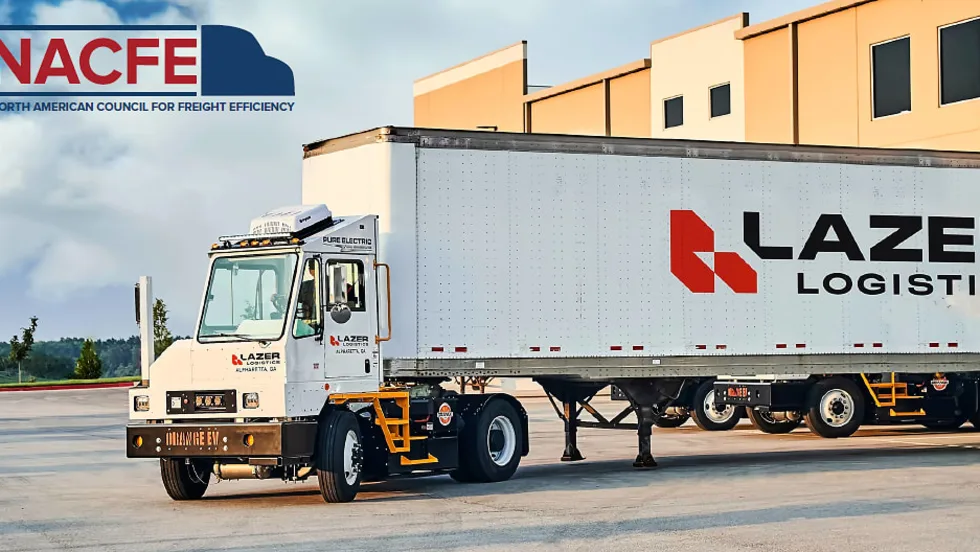
Electric Yard Tractors Move Beyond Pilots
Operating-cost savings have overtaken sustainability goals as the leading reason surveyed fleets are adopting battery-electric terminal tractors, according to new NACFE research.
Read More →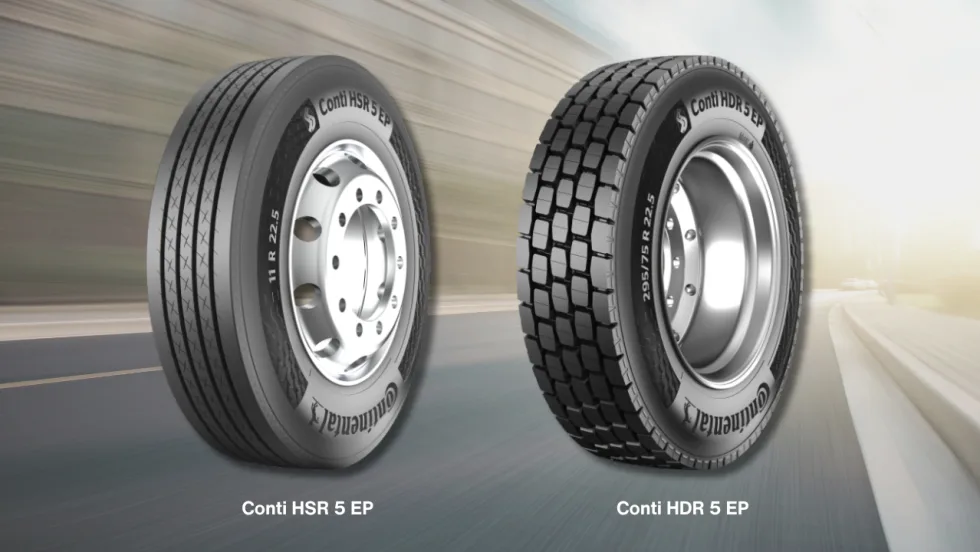
Continental Introduces New Regional Truck Tires
Continental says its new Generation 5 steer and drive tires for regional operations offer longer tread life, with estimated mileage gains of 22% and 19%, respectively.
Read More →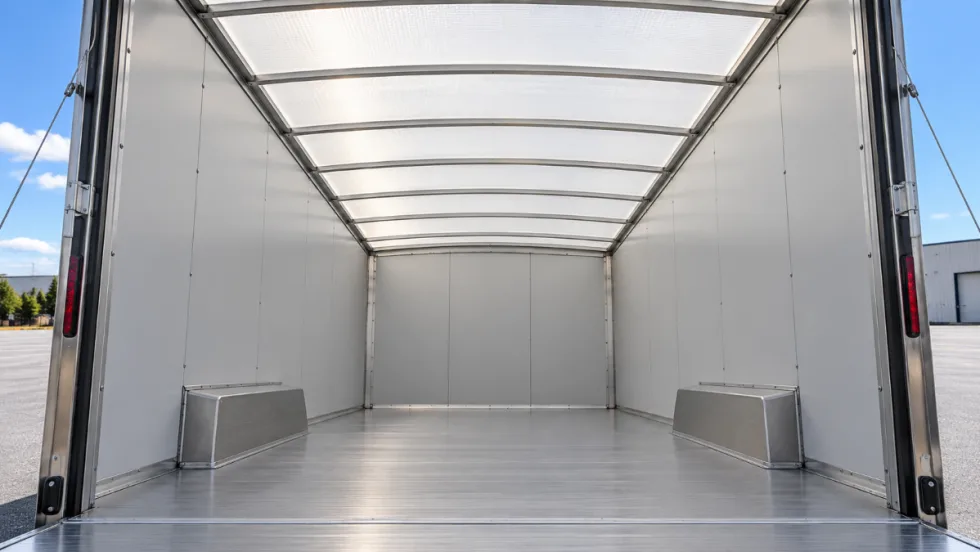
Tekmodo Introduces CargoBright Brand for Translucent Trailer Roofs
CargoBright is designed to diffuse daylight across the cargo area while performing as a working vehicle roof.
Read More →
Fleet Economics Shape Electric Truck Outlook
ACT Research expects costs, charging infrastructure, and technology improvements to drive zero-emission commercial vehicle adoption as federal regulations and incentives retreat.
Read More →