




8 Things Logistics Professionals Should Know About Hurricane Relief
The ability for logistics professionals to get relief items stored, transported, organized and delivered to disaster sites can be a game-changer. In the wake of Hurricane Milton, a logistics aid organization offers advice.

It can be tempting to jump in with both feet collecting trailer fulls of donations for hurricane victims. But that may not be the best way trucking and logistics professionals can help.
Image: HDT Graphic
As Floridians struggle with the aftermath of Hurricane Milton, the American Logistics Aid Network has begun supporting relief efforts -- reminding members of the supply chain community that sharing their logistics know-how, space, equipment and services is one of the most vital ways they can be of help.
Earlier this week, ALAN received its first request for Hurricane Milton-related logistics assistance. In the coming weeks, Executive Director Kathy Fulton anticipates it could receive dozens more such request, just as it has since Hurricane Helene devastated parts of the Southeast two weeks ago.
“During the first 48 to 72 hours after a hurricane, most of the work on the ground is focused on search and rescue efforts,” Fulton said.
“Because of this, ALAN usually doesn’t receive the first substantial wave of donated logistics requests until after that, when humanitarian organizations can get in, conduct their initial assessments and determine what’s most needed.
“We know that can be frustrating for organizations that want to do something tangible as soon as possible. But we hope they will still be willing to provide their logistics help when the need arises, whether it’s in a few days, a few months – or even beyond that.”
Founded in 2005 in the wake of Hurricane Katrina, ALAN is a philanthropic, industry-wide organization that provides free logistics assistance to disaster relief organizations before, during and after catastrophic events. It does this by bringing the expertise and resources of the logistics industry together with humanitarian organizations.
ALAN will publish any unfilled requests at its Disaster Micro-Site at https://www.alanaid.org/operations/. The website currently features several open needs it has for Hurricane Helene and other ongoing disaster relief efforts.
8 Things Logistics Professionals Should Know About Hurricane Relief
1. If any of your facilities are located in places where Hurricane Milton or its remnants hit, be sure to check in with your employees to ensure they are safe and sound. If they have been affected, make helping them and their families your organization’s first priority.
2. Don’t self-deploy to active disaster sites. One of the best ways to be a part of the solution is to make sure you’re not part of the problem. Right now, that means keeping working roadways clear for initial rescue and relief activities.
3. Expect your support to be needed sooner or later (or perhaps both). Disaster recovery is a long process that’s often measured in months or years. So even if you don’t see an opportunity to assist with Hurricane Milton relief efforts at the moment, chances are good that ALAN and many other humanitarian organizations will need your help later on.
4. Offer specifics about any logistics space, equipment or services you might be willing to donate on ALAN’s pre-offer page at https://www.alanaid.org/how-to-help/. Having information like this on hand dramatically accelerates ALAN’s ability to fill logistics requests, which is especially helpful during these early stages of disaster response.
5. Don’t host a product collection drive. Although the intention behind these collection drives is good, they often create more challenges than they solve, including adding more products and transits to supply chains that are already under tremendous strain.
6. Expand your circle of disaster preparedness partners – and your supply of disaster visibility resources. For example, if you haven’t done so already, get to know some of the local non-profit groups and emergency management professionals in the communities where you have operations. In addition, ALAN’s free Supply Chain Intelligence Center offers real-time information about various disasters and their supply chain impacts.
7. Consider supporting relief efforts with a financial contribution. When push comes to shove, few things are more useful to a humanitarian organization than a cash gift. Even a few spare dollars can make a positive impact, and every penny truly helps. Those who wish to help ALAN by making a financial contribution instead can do so by going to www.alanaid.org/donate/
8. Revisit your organization’s hurricane preparation efforts. If there’s one thing that fast-intensifying storms like Hurricane Milton and Helene teach us it’s that some disasters don’t give us a lot of time to prepare. Use this time in between major storms to do a quick post-disaster assessment that will help you get better prepared for the rest of hurricane season. Then shore up your preparation efforts accordingly. A good place to start is Ready.gov, which has many resources and tolls that you can share with your families and employees.
More Safety & Compliance
133 ELDs Revoked as ATA Pushes Certification Reform
FMCSA just removed a record number of electronic logging devices from its registry. ATA says it's time to rethink how ELDs get approved in the first place.
Read More →
CVSA Sets 2027 International Roadcheck Dates
The annual 72-hour truck inspection blitz will take place May 11–13 across North America. Here's what fleets can expect and what inspectors found during the 2026 event.
Read More →
FMCSA’s New Complaint Platform Makes It Easier to Report Trucking Safety Concerns
The FMCSA Complaint Center features expanded complaint categories and a name change away from the word "consumer."
Read More →
FDA Eases Path for Oral-Fluid Testing
Federal actions could advance oral-fluid drug testing for truck drivers, but lab certification delays and marijuana rescheduling questions remain.
Read More →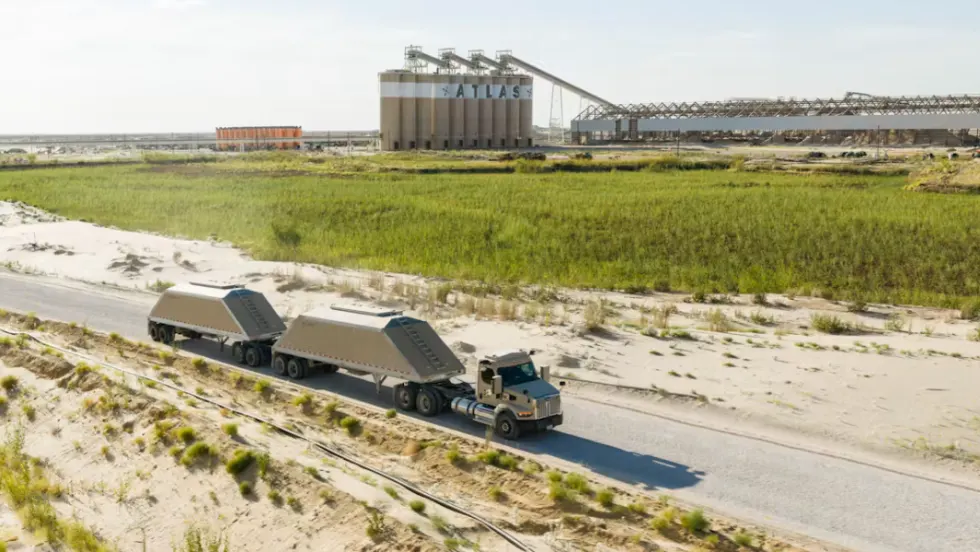
Kodiak Lines Up Fleets for Driverless Trucking
An agreement for 75 trucks, a new Texas freight lane, and progress on safety validation move Kodiak closer to its planned driverless highway launch.
Read More →
More Trailer Data Through the Same Seven-Way [Video]
Can trucking’s standard seven-way connector handle more cameras and trailer data? Grote’s Adam Slade shows HDT how the company is using new technology with its 4See trailer system, not only to add a new backup camera but also to expand other capabilities — without adding another connection.
Read More →
PrePass Intelligence Mines Fleet Bypass, Toll and Safety Data
PrePass Intelligence helps fleets measure bypass savings, flag potential toll overcharges, and spot suspicious transactions by combining data from separate systems.
Read More →
Fatal Crash Exposes Toll Plaza Risks
An NTSB investigation found that last-minute lane changes and large speed differences at an Ohio toll plaza created a hazard the truck driver couldn't avoid in time.
Read More →
When Language Stops the Truck: The Return of ELP Out-of-Service Orders
English language proficiency rules for commercial drivers aren’t new, but renewed out-of-service enforcement has raised the stakes. Here’s what carriers need to know before a driver reaches a roadside inspection.
Read More →
Marijuana and Trucking’s Drug-Testing Dilemma
Marijuana is getting stronger, laws are changing, and drug tests still can’t reliably establish impairment. What does that mean for truck drivers and the fleets that employ them?
Read More →