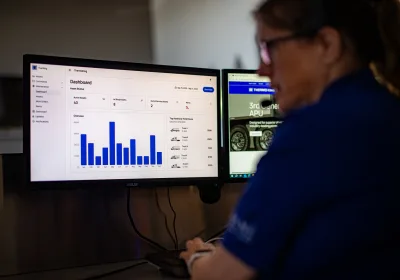
Snapshot of Participating Private Carriers in NPTC Survey
122 fleets participated in the 2024 NPTC benchmarking survey, with an average of:
601 Class 8 trucks
512 drivers
879 trailers
44 locations
 MENU
MENU SEARCH
Private fleets have increased shipment, volume, and value for more than a decade, according to the National Private Truck Council’s 2024 benchmarking survey.
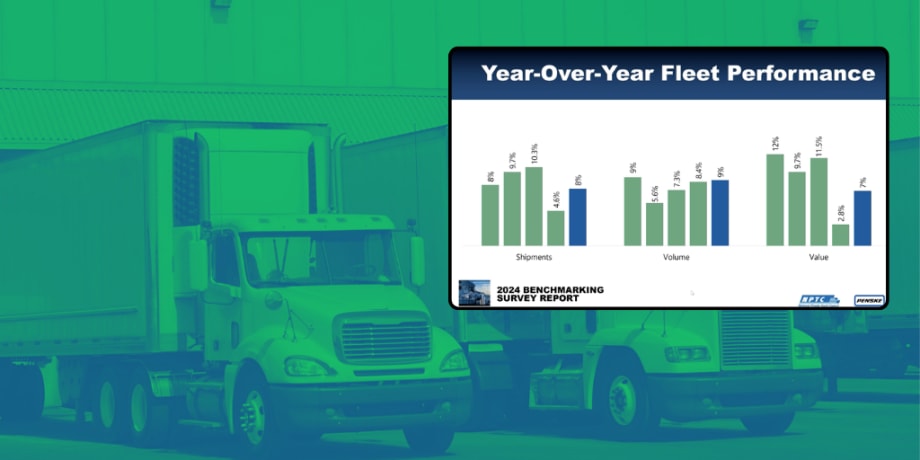
Corporations with private trucking fleets were better able to deal with pandemic-related supply chain challenges than their counterparts.
Image: HDT Graphic
After 180 years in business without a private fleet, in 2019, Proctor & Gamble started building its own private fleet from scratch. It’s now up to 800 drivers. And it's not the only one.
As corporations look for more control over their supply chain, the use of private trucking fleets to transport both raw goods and finished products is growing.
The National Private Truck Council’s 2024 benchmarking survey, reflecting 2023 data, showed that private fleets have increased shipment, volume, and value for more than a decade, and a number of major U.S. corporations have started private fleets from scratch.
The percentage of outbound shipments handled by private fleets in the survey rose to 75%, the highest in the survey’s history.
It’s the largest and most comprehensive benchmarking report NPTC has done since it began publishing it in 2005, with a record number of 122 fleet companies participating. It was sponsored by Penske Truck Leasing.
According to NPTC, citing Federal Motor Carrier Safety Administration numbers, there are 940,280 private fleets registered with FMCSA, compared to 1.08 million for-hire carriers, meaning private fleet carriers make up 47% of the total.
However, as NPTC noted, the vast majority of for-hire carriers are very small fleets, with 90% running 20 trucks or less.
Mike Schwersenska, general manager for Brakebush Transportation, said in 2018 when tight trucking capacity in the for-hire market caused trucking rates to spike, the value of the private fleet became obvious.
“The publicly traded companies were saying in earning calls how bad they were getting hit by transportation costs,” he said. With its own private fleet, the value-added chicken processor did not face the same challenges.
The same thing happened with the supply-chain headaches that happened during the COVID-19 pandemic, leading some major corporations to re-evaluate the benefit of operating a private fleet.
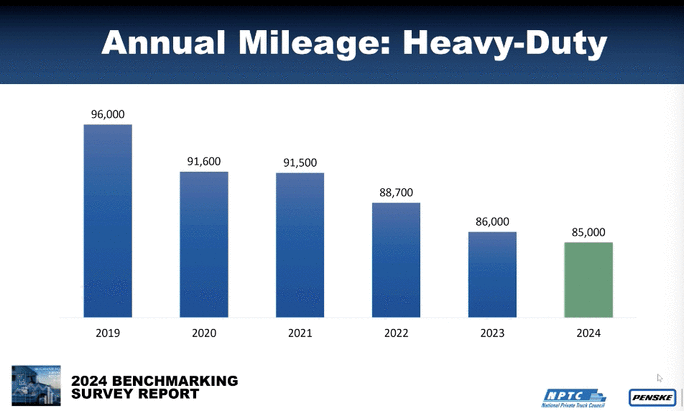
Private fleets have been moving closer to their customers, resulting in lower average miles.
Source: NPTC
“During Covid, the logistics and supply chain was on almost every newscast,” Schwersenska said. The private fleet was able to explain to corporate management how they were controlling those transportation costs.
“Our philosophy has always been, it’s cash or capacity.”
During the pandemic supply chain crisis, he recalled, “We were getting quotes on the outside market for $15,000 for something we could haul for $5,000.”
When Packaging Corporation of America bought Boise Paper in 2013, “they didn’t want anything to do with transportation,” said Cassie Wood, transportation manager, during a media briefing about the benchmarking report. In fact, she said, they wanted to eliminate the private fleet.
PCA, which makes paper and boxes, today operates 260 tractors and has 15 terminals across the U.S. And it's growing.
“At the C-suite level, we’ve proven how important the private fleet is — and that’s why they not only didn’t cut us off, they’re expanding us, giving us more investment ever before. All our plants want their own private fleets.”
“Even though our fleet is a small portion of what we do transportation wise, during earning calls the private fleet was recognized as helping control transportation costs.”
Even though the industry is currently in a “soft” driver situation, with overcapacity meaning fewer trucks that need seats to be filled, private fleets have continued to raise driver compensation and make operational changes to make the job more attractive to drivers.
There are approximately 1.75 million truck drivers with a CDL-A commercial drivers license working for private fleets, about half of the total in the U.S.
In general, private fleets have much lower driver turnover numbers than for-hire fleets. In the 2024 benchmarking report, driver turnover was 20.2%. Some of the factors identified by NPTC include:
A workweek averaging 52 hours, about two-thirds of that spent driving.
Drivers get home more regularly than many for-hire drivers, often every night or every other night.
Excellent driver compensation, which averaged nearly $90,000 in this year’s survey, up from close to $85,000 last year and nearing $80,000 the previous year.
“This is where I think private fleets make a very differentiated argument against for-hire fleets,” said Tom Moore, NPTC executive vice president, in a media briefing about the survey results. It costs an estimated $12,000 when a fleet turns over a driver, he said.
The most common reasons for driver turnover, he said, are taking another driving job, disciplinary measures, or retirement. (The average age of drivers in the survey was 49.3.)
“We see low turnover because of the time and attention given to drivers,” said PCA's Wood. “They’re home every night or every other night. It’s a job that drivers want.”
“The pressure remains on private fleets to escalate driver pay,” Moore said, with this year’s average up about $5,000 from last year.
“We’ve seen a steady progression going up,” he said. “We see members being proactive in taking care of their drivers… Even though drivers are more available right now, when the market turns, we want to make sure they remain loyal to us.”
The average maximum driver compensation in the survey is over $130,000.
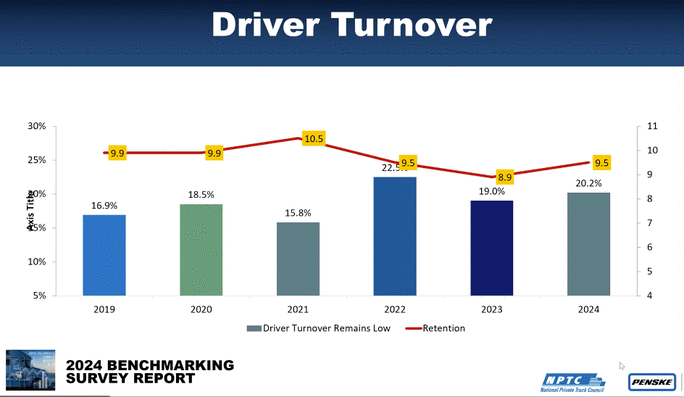
Private fleets have low driver turnover, on average.
Source: NPTC
One of the factors allowing private-fleet driver to be home even more regularly than in the past is that many private fleets are moving closer to their customers.
The fleets in the survey on average are operating out of more terminals than in the past – around 30% increase this year.
“I think we’re seeing a trend to move closer to the customer,” Moore said. “It’s triggered a lot by business growth… and also the need to create a more driver-friendly network.”
As private fleets more closer to the customers, he said, the average annual mileage per truck among the private fleets in the survey has fallen from 96,000 in the 2019 survey to 85,000 this year.
At PCA, said Wood, “We’re absolutely seeing lower annual mileage. PCA’s supply chain model for corrugated, we keep within a 250 mile radius of our customers. That’s why we have over 100 locations.
“We’re seeing the same trend with our private fleet. We used to be more in the over-the-road space, but we’ve moved to more of the local dedicated driver or regional haul, home every night or every other night.”

Explore how telematics help refrigerated fleets improve visibility, uptime, efficiency, compliance, and cargo protection across connected cold chain operations.
Read More →
Escalating U.S.-Canada tariffs could disrupt cross-border freight, reduce truck volumes, raise costs, and create new uncertainty for carriers on both sides of the border.
Read More →
The American Transportation Research Institute wants to know what's worrying trucking fleet managers, drivers, and other stakeholders in its annual Industry Issues survey.
Read More →
ATA President and CEO Chris Spear abruptly left his job at the association on August 21, at a pivotal time for the trucking industry.
Read More →
Public Wi-Fi can expose truck drivers and fleets to credential theft, malware, and other cyber threats. Here’s how to reduce the risk on the road.
Read More →
HDT Truck Fleet Innovator Nicky Cupp turns everyday pain points at Fraley & Schilling into opportunities for better technology and smarter processes.
Read More →
HDT Truck Fleet Innovator Adam Buttgenbach helped PepsiCo build one of North America’s largest EV fleets by focusing on where electric trucks make operational sense.
Read More →
HDT Truck Fleet Innovator Deen Albert makes sure people are still at the heart of operations at Grand Island Express, even while adopting artificial intelligence tools. AI-assisted dispatch helped boost revenue 25% with the same number of trucks.
Read More →
Arc Agent works across Trimble TMS products to automate repetitive tasks such as freight orders, maintenance, invoices, fuel costs and more.
Read More →
Meet five trucking leaders who are challenging assumptions, solving operational problems, and putting innovative ideas to work.
Read More →