





Hours of Service Timeline: The Long, Convoluted History of Truck Driver Rules
FMCSA Wants Comments on Meal and Rest Break Waivers
Although it determined previously that federal regulations regarding commercial motor vehicle drivers pre-empted state meal and rest break rules, the Federal Motor Carrier Safety Administration is now considering several petitions for waivers.
December 29, 2023
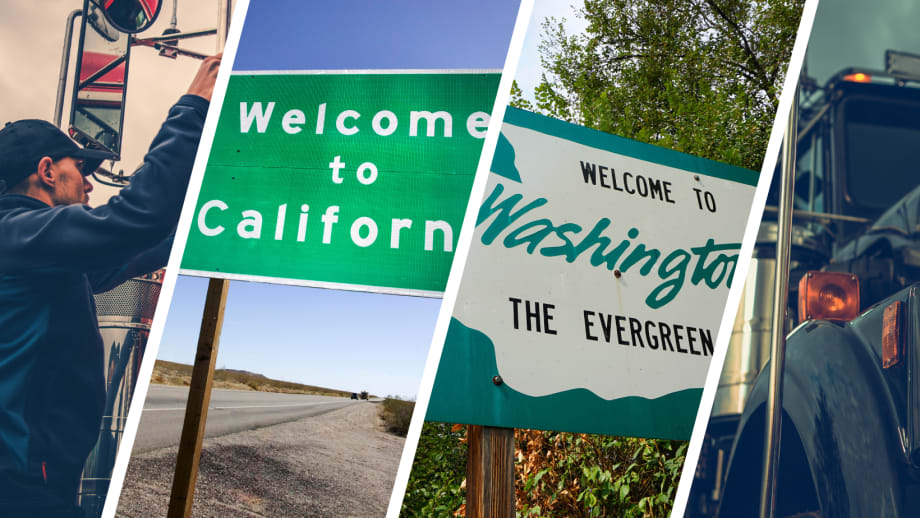
Will motor carriers with drivers in Washington and California have to deal with dueling driver work rules?
Credit:
HDT/Canva graphic
2 min to read
The Federal Motor Carrier Safety Administration is asking for comments on petitions requesting waivers of the agency's 2018 and 2020 decisions that said federal hours of service rules pre-empted state meal and rest break rules in California and Washington state.
In August, the FMCSA stunned the industry by saying it would consider such petitions.
Before the agency decided in 2018 and 2020 that the state meal and rest break rules were preempted by federal regulations, trucking companies often faced class action lawsuits seeking millions of dollars in penalties for violations of the state rules.
California and Washington Rest Break and Meal Rules
California requires employers to provide non-exempt employees a 30-minute meal break if they work more than 5 hours in a day, and employees who work a shift of 10 hours or more are entitled to a second 30-minute meal break.
Washington says employers must provide employees a meal period of at least 30 minutes that starts after the second hour and before the fifth hour of the shift, as well as 10-minute rest period for each four hours of working time.
In its 2018 decision, the DOT said California’s meal and rest break law was incompatible with federal regulations and caused a disruption in interstate commerce. It found that confusing and conflicting requirements at the state and federal level were overly burdensome for drivers and reduced productivity, increasing costs for consumers.
While most trucking groups agreed with the 2018 decision, the International Brotherhood of Teamsters blasted it, saying, “FMCSA’s suggestion that California’s meal and rest break rules negatively impact highway safety is ludicrous.”
What FMCSA Wants to Know
Waiver petitions were filed by:
The International Brotherhood of Teamsters.
The Truck Safety Coalition, Citizens for Reliable and Safe Highways and Parents Against Tired Truckers.
William B. Trescott.
The State of California.
FMCSA is asking for comments on any issues raised in the petitions for waivers, and on the following issues:
Whether and to what extent enforcement of a state's meal and rest break laws with respect to intrastate commercial vehicle drivers has impacted the health and safety of drivers.
Whether enforcement of state meal and rest break laws as applied to interstate commercial drivers will make truck parking shortage worse, and whether any such effect will burden interstate commerce or create additional dangers to drivers and the public.
Whether enforcement of a state's meal and rest break laws will dissuade carriers from operating in that state.
Whether enforcement of a state's meal and rest break laws will weaken or otherwise impact the resiliency of the national supply chain.
Comments must be received on or before Feb. 26, 2024.
More Safety & Compliance
How Fraley & Schilling Improved Logbook Compliance by Over 50%
Fraley & Schilling needed a way to close a compliance workflow gap in its ELD system without adding more work from driver training, reminders, and back-office follow-ups. It found the answer in a custom driver app.
Read More →
Farewell, CDL: Why I'm Giving Up My Commercial Driver's License
After more than 20 years as a CDL holder, HDT Executive Editor Jack Roberts is letting his commercial license expire. Not because he wants to — but because trucking's nuclear verdict crisis has made the risks of public-road test drives too great for editors, manufacturers, and everyone involved.
Read More →
Sponsored•July 1, 2026
Enhance Fleet Performance with High-Efficiency Auxiliary Power Units
Drive sustainable cost savings while increasing driver comfort during short- and long-haul logistics operations.
Read More →

Wabash Trailers Recalled for Improperly Installed Underride Guards
More than 900 Wabash dry van trailers may not comply with the Federal Motor Vehicle Safety Standard for rear impact guards.
Read More →
Why K&B Trucking Is Embracing AI and Driver Safety Technology
Crunching data and embracing artificial intelligence are key in K&B Trucking's safety efforts, says the company's safety director.
Read More →
The Hidden Problem Behind FMCSA's ELD Revocations
NMFTA researchers say dozens of registered ELDs may be built on the same software platforms, allowing compliance and security concerns to persist even after individual devices are removed from the market.
Read More →
ATRI Wants Motor Carriers for Driver-Facing Camera Study
In this new study, the American Transportation Research Institute will explore how driver-facing cameras can impact safety and operational metrics in trucking fleets.
Read More →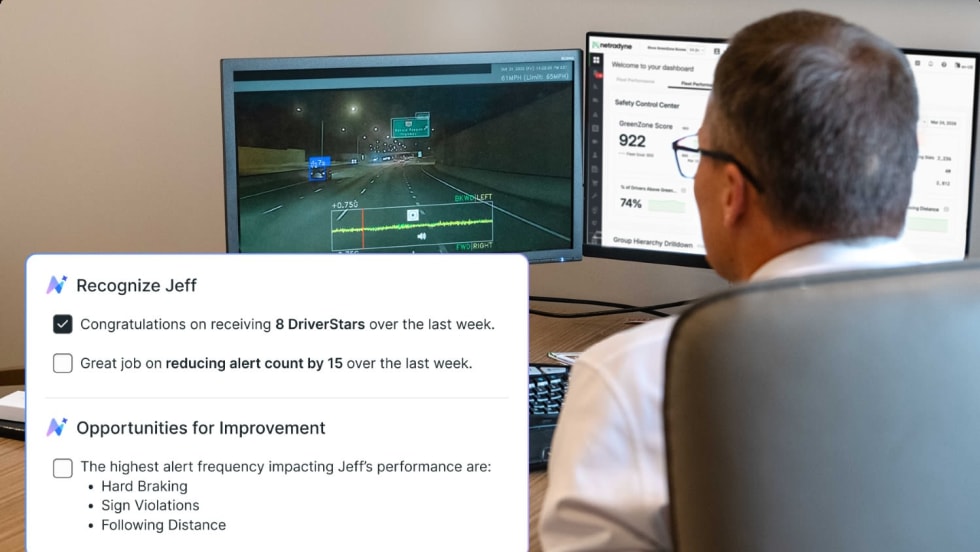
Netradyne Intelligence Uses New AI Agents to Automate Response to In-Cab Camera Data
The company called the next-generation in-cab camera safety platform "a fundamental shift from systems that report on what happened to systems that actively drive what should happen next."
Read More →Mack, Volvo Issue ‘Do Not Drive’ Recall on Possible Wheel-Offs
Owners will be sent advance notice not to operate their affected vehicles until the remedy is performed.
Read More →
Fleetworthy Integrates Lytx Video Snapshots into Safety+ Platform
A new Fleetworthy-Lytx integration gives fleet managers access to video context alongside safety event data, streamlining driver coaching and incident review.
Read More →