





Dig Deeper ... NACFE: Hydrogen Has a Future in Long-Haul Despite Lingering Questions
Canadian Fleet Adding Fuel-Cell-Electric Kenworth Trucks
Loblaw Companies Limited plans to purchase five Class 8 T680 hydrogen fuel-cell electric vehicles from Kenworth.
May 26, 2023
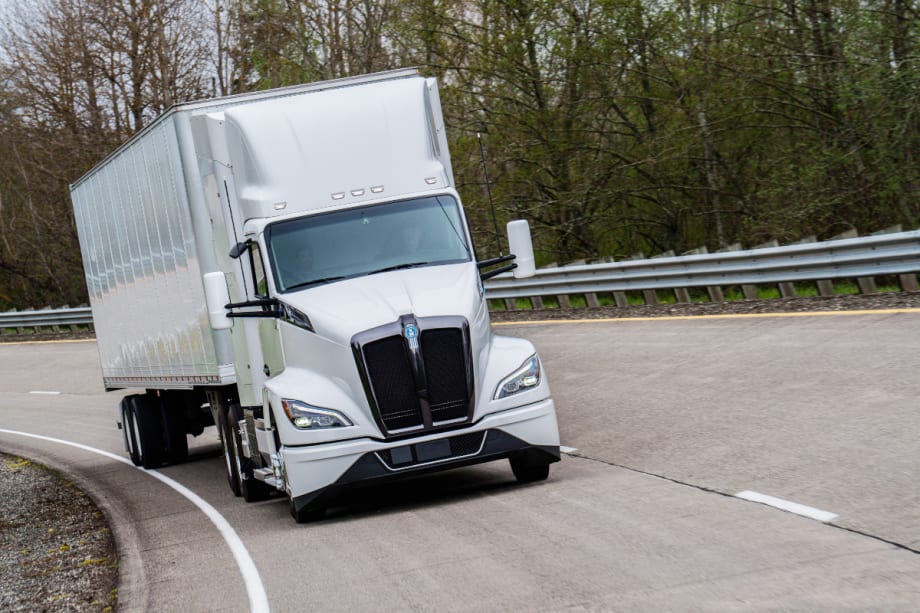
The Kenworth T680 hydrogen fuel-cell truck will soon be delivering for Loblaw Companies Limited in Canada.
Photo: Kenworth
2 min to read
Loblaw Companies, a major Canadian food retailer, plans to purchase five Class 8 T680 hydrogen fuel-cell electric trucks from Kenworth. With more than a 700-km range, Loblaw said, the FCEV trucks will provide greater flexibility to complete long-haul zero-emission deliveries than battery-electric trucks.
The T680 FCEV is powered by Toyota fuel-cell technology and is equipped with Toyota's 310-kW Dual Motor Assembly, capable of providing 415 horsepower continuously at a maximum payload of 82,000 lbs., and the Toyota Gen 2 Dual Fuel Cell Module.
The hydrogen FCEV trucks add to the company's growing zero-emission fleet. Earlier this year, Loblaw put its first two electric commercial Class 8 daycab vehicles on the road making short-haul deliveries from its Boucherville, Quebec, distribution center to stores within the Greater Montreal Area.
Battery-Electric Vehicles
In addition to the five hydrogen FCEVs from Kenworth, the company has approximately 35 battery-electric vehicles on order from various manufacturers, with many expected to be on the road by the end of 2024.
"We're a large company, operating an extensive supply chain network to stock stores in thousands of Canadian communities. That means our trucks are on the road in every province and territory, which creates a large footprint," said Rob Wiebe, chief administrative officer for Loblaw. "We see the opportunity to fight climate change and know we have a responsibility to find new ways to cut our carbon emissions. As technologies advance, we will advance too."
The company points out that currently battery-electric trucks cannot haul great distances without frequent charges, but hydrogen can reliably extend driving distances across entire regions.
First in Canada
Loblaw was the first Canadian organization to sign a letter of intent to purchase these hydrogen fuel-cell electric vehicles.
The company said the purchase of the new trucks is part of its commitment to achieving net-zero carbon emissions enterprise-wide by 2040. From 2020 to 2022, Loblaw cut its greenhouse gas emissions by 8%, according to the company's latest Environmental, Social and Governance Report.
More Fuel Smarts

Wex Adds Cardless Fuel Payments for Over-the-Road Customers
A new fuel card feature for Wex customers offers convenience and security.
Read More →
New California Law Could Shed Light on Electric Truck Prices
Why do battery-electric Class 8 trucks remain so expensive? A California bill signed by Gov. Gavin Newsom would give fleets and state agencies more visibility into what manufacturers charge.
Read More →
How Volvo Updated Its D13 for EPA 2027 [Watch]
Volvo’s updated D13 promises lower emissions without sacrificing performance or fuel economy. Take a closer look at what changed inside the engine in this HDT Spotlight video.
Read More →

Diesel Price Spike Shortens Payback for Natural Gas Trucks, Report Says
Energy Vision estimates fleets could recover the higher purchase price of an RNG-fueled Class 8 tractor in 1.3 to 2.8 years under current fuel-price scenarios.
Read More →
Calstart Becomes Catalyst Mobility, Reflecting Broader Focus
Calstart is now Catalyst Mobility, reflecting the nonprofit’s growing national role in clean transportation, including zero-emission trucks, infrastructure and incentive programs.
Read More →
Record Diesel Prices Squeeze Trucking Fleets
Average U.S. diesel prices have climbed to nearly $6 a gallon, surpassing the 2022 record as tight refinery capacity and Middle East disruptions keep fuel costs elevated.
Read More →
Sponsored•September 9, 2026
How Fuel Delivery Shapes Engine Performance
Fuel delivery depends on more than what happens at the injector. For fleet, maintenance and technical professionals, looking at the full path from pump to injector can provide useful context for understanding engine performance.
Read More →
East Coast Port Launches $45M Electric Truck Push
The Port Authority of New York and New Jersey announced millions in incentives for zero-emission drayage trucks, yard tractors, and new charging hubs near the port.
Read More →
Detroit Opens Orders for EPA 2027 Engines
Detroit isn’t starting from scratch to meet EPA 2027 diesel emissions standards. Its Gen 6 DD13 and DD15 engines keep much of today’s platform while updating the fuel and aftertreatment systems.
Read More →
Zero-Emission Truck Corridor Planned for West Coast
California, Oregon, Washington, British Columbia and Baja California are coordinating plans for truck charging and hydrogen fueling from Canada to Mexico.
Read More →