




Pitfalls of CBD Use Among Commercial Drivers
Can CBD products lead to positive drug tests? It's possible. Explore the risks of CBD use for commercial truck drivers.
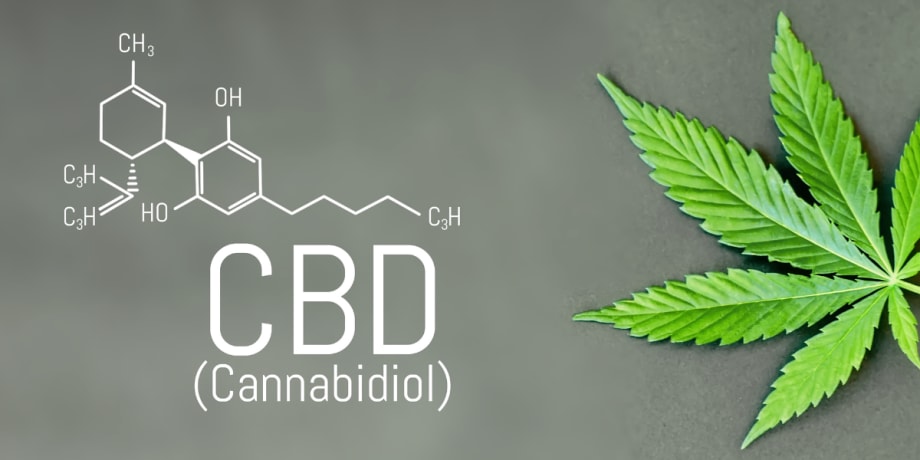
Can CBD products lead to positive drug tests? It's possible. Explore the risks of CBD use for commercial truck drivers.
Graphic: HDT/Canva via Aleksandr Kravtsov
The highway transportation industry is no stranger to the longstanding debate on the legalization of marijuana in the U.S. That debate plays directly into one of the main components of the safety-related regulatory scheme for highway motor carriers: drug/alcohol testing for commercial drivers.
Drivers subject to the Federal Motor Carrier Safety Regulations have long been prohibited from using marijuana, despite various states’ efforts to legalize the substance for medicinal and/or recreational use within their borders. This is well-established.
But what is less so is the impact of CBD use among commercial drivers.
What is CBD?
It’s primarily a derivative of hemp, a close relative to marijuana. Both hemp and marijuana fall into the cannabis genus. Cannabis plants contain two compounds: cannabidiol (CBD) and tetrahedrocannabinol (THC). While both CBD and THC are cannabinoids, only THC has a psychoactive effect on the human body. Thus, CBD does not produce the same “high” effect as THC. Both marijuana and hemp contain both CBD and THC, but in different amounts. Marijuana contains much more THC, which can lead to impairment.
Generally, hemp-derived CBD products (those containing less than 0.3% THC) are legal in most states. Because many contain little to no THC, they are typically safe for use among the general population. However, with very few regulations governing these products, manufacturers are not being held accountable for ensuring their products do, in fact, contain the low levels of THC they advertise. And therein lies the problem, particularly for commercial drivers.
Commercial Drivers Prohibited from Marijuana Use
As it stands, marijuana remains an illegal Schedule I substance, as classified under the federal Controlled Substances Act. That’s despite 21 states having made recreational use legal.
The tension between federal and state laws on this topic creates ambiguity. This is particularly true given the politicization of the issue. In fact, there have been directly conflicting enforcement bulletins from the federal Drug Enforcement Agency, depending on which political party happens to be in office at the time.
The U.S. Department of Transportation has remained steadfast in its assertion that federally regulated transportation employees (including commercial drivers) remain prohibited from using marijuana while that substance remains illegal at the federal level. In 2017, the USDOT's Office of Drug and Alcohol Policy posted the following notice, which remains in effect to this day:
Recently, some states passed initiatives to permit use of marijuana for so-called “recreational” purposes. We have had several inquiries about whether these state initiatives will have an impact upon the Department of Transportation’s longstanding regulation about the use of marijuana by safety‐sensitive transportation employees … We want to make it perfectly clear that the state initiatives will have no bearing on the Department of Transportation’s regulated drug testing program. The Department of Transportation’s Drug and Alcohol Testing Regulation — 49 CFR Part 40 — does not authorize the use of Schedule I drugs, including marijuana, for any reason. Therefore, Medical Review Officers (MROs) will not verify a drug test as negative based upon learning that the employee used “recreational marijuana” when states have passed “recreational marijuana” initiatives. We also firmly reiterate that an MRO will not verify a drug test negative based upon information that a physician recommended that the employee use “medical marijuana” when states have passed “medical marijuana” initiatives.
So, despite state legalization of marijuana, the substance remains illegal for use among those subject to the federal drug/alcohol testing regulations, including those with commercial drivers licenses. CDL drivers who test positive for marijuana will be prohibited from performing a safety-sensitive function, including driving, unless and until they complete the return-to-duty process.
As it turns out, this is a major problem for the industry.
According to recent data from the federal Drug & Alcohol Clearinghouse, a total of 101,512 positive drug tests stemming from marijuana use have been reported to the Clearinghouse since its inception in early 2020. Positive tests from marijuana use far outpace positive results from all other illicit substances combined. What’s more, 120,345 commercial drivers remain in “prohibited status” due to a drug or alcohol violation, meaning they are unable to operate a commercial vehicle in commerce.
But what about non-CDL drivers (those operating smaller vehicles in interstate commerce)? Even drivers who aren’t subject to DOT drug/alcohol testing rules are still prohibited from using marijuana by virtue of the physical qualification requirements in Part 391 of the FMCSRs. Indeed, 49 CFR 391.41(b)(12) provides that a commercial driver is only qualified to operate a commercial vehicle if he/she does not use any Schedule I drug, which, again, includes marijuana. Thus, any non-CDL drivers who use marijuana are technically not medically qualified to operate a commercial motor vehicle.
Can CBD Products Lead to Positive Drug Tests?
Because hemp and marijuana both contain CBD and THC, it's possible for an individual to test positive for marijuana (i.e., THC) on a drug test after using a CBD product if the THC concentration is high enough to exceed the applicable cutoffs (50 ng/mL for initial cutoff and 15 ng/mL for confirmatory).
CBD manufacturers often advertise their products as containing no or very little THC. The problem is that there is virtually no regulation on the manufacture and sale of CBD products. That means there are no real regulatory consequences for manufacturers who falsely claim their products contain little to no THC.
The USDOT's Office of Drug and Alcohol Policy says it’s important for all employers and safety-sensitive employees subject to drug testing to know:
- The Department of Transportation requires testing for marijuana and not CBD.
- The labeling of many CBD products may be misleading because the products could contain higher levels of THC than what the product label states.
- The Department of Transportation’s Drug and Alcohol Testing Regulation, Part 40, does not authorize the use of Schedule I drugs, including marijuana, for any reason. Furthermore, CBD use is not a legitimate medical explanation for a laboratory-confirmed marijuana-positive result. Therefore, Medical Review Officers will verify a drug test confirmed at the appropriate cutoffs as positive, even if an employee claims they only used a CBD product.
It remains unacceptable for any safety-sensitive employee subject to the Department of Transportation’s drug testing regulations to use marijuana. Since the use of CBD products could lead to a positive drug test result, DOT-regulated safety-sensitive employees should exercise caution when considering whether to use CBD products.
Despite this guidance, Trucksafe Consulting has witnessed many cases of commercial drivers testing positive for marijuana after using a CBD product that was labeled as having little to no THC.
For example, an Illinois-based truck driver recently filed a class-action lawsuit against the manufacturer of CBD edibles because he tested positive for marijuana after consuming those edibles. The label for those edibles indicated the product contained “no THC.” The driver, who had worked for 10 years without a positive drug test, subsequently tested positive and was, therefore, prohibited from operating a commercial motor vehicle.
What are the Risks of CBD Use for Truck Drivers?
The consequences of a positive drug test are severe. Until the FDA or other agencies tighten their regulations on CBD products, the risk of testing positive for marijuana after using CBD products is real. Accordingly, commercial drivers and motor carriers need to tread lightly in this area for the time being. Many carriers have implemented policies prohibiting their drivers from using CBD products because of this concern.
More Safety & Compliance

FMCSA Pauses Biennial-Update Enforcement Amid Motus Transition
Carriers whose updates were due on or after June 1 have more time, while FMCSA works to stabilize its new registration system and warns of phishing sites impersonating its new carrier registration system, Motus.
Read More →
ZF Expands Commercial Vehicle Push in North America
ZF is expanding its North American commercial-vehicle presence with new transmission applications, electrification, trailer technology and autonomous-driving systems.
Read More →
Truck Drivers Need More Than Another Alert
Fleets have more visibility into truck health, safety events, and driver activity than ever. The next challenge is turning all that information into useful guidance for the person who has to decide what to do next.
Read More →
Tesla Wants a Self-Driving Semi. Are Cameras Enough?
Could Tesla’s camera-only autonomous driving technology work on an 80,000-pound Semi? In this commentary, HDT's Deborah Lockridge takes a look at Tesla, Cybercab, and how autonomous trucks see the road.
Read More →
What DOT’s Automated Vehicle Strategy Means for Trucking
The U.S. Department of Transportation issued a new automated-vehicle strategy that outlines plans for driverless-truck regulations, cross-state freight corridors, and federal safety standards.
Read More →
NYC Expands Speed, Pedestrian Safety Tech Across Fleet
New York City is expanding intelligent speed assistance and pedestrian-alert systems across its municipal fleet, moving the technologies from pilot programs into vehicle procurement and retrofit requirements.
Read More →
FMCSA Removes 110 Truck Driver Training Schools from Certified ELDT List
Federal regulators also are targeting more than 160 additional training providers and launching a nationwide audit of third-party CDL skills testers as part of a broader crackdown on trucking fraud.
Read More →
Beyond DOT Compliance: What Makes a Trucking Fleet Truly Safe?
A trucking fleet can follow every rule and still make unsafe decisions. The real test comes when safety conflicts with freight, productivity, or cost.
Read More →
Hours of Service Pilot Programs: FMCSA Readies for 2027 Rollout
Two pilot programs could eventually reshape hours-of-service rules, giving truck drivers options to pause their 14-hour clock or use longer split sleeper rest periods.
Read More →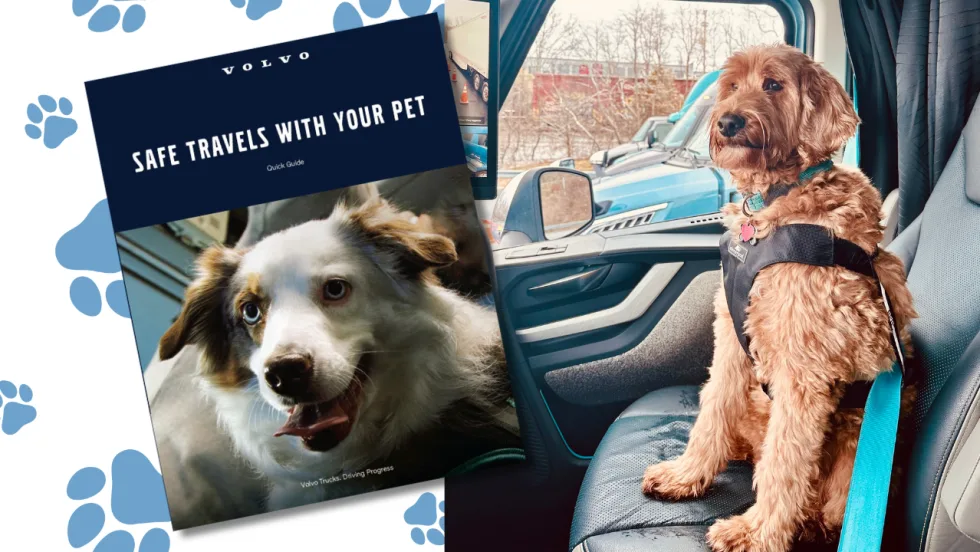
New Guide Offers Pet Safety Tips for Truck Drivers
Hundreds of thousands of pets travel in truck cabs. A new safety guide from Volvo Trucks and the Center for Pet Safety offers practical advice for truck drivers who bring dogs and cats along for the ride.
Read More →