





Read HDT Equipment Editor Jim Park's Blog:
Guinea Pigs 2.0: Can Trucking Comply with a Near Impossible NOx Reduction?
Reading Trucking’s Regulatory Roadmap for 2023 [Commentary]
What can trucking expect this year from the new Congress and regulatory agencies?
January 18, 2023
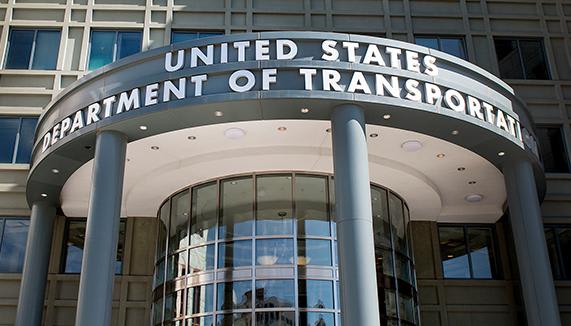
With the House now operating under Speaker Kevin McCarthy (R-CA), regulatory measures that recently came into effect or are in the works will likely incur vigorous oversight.
Photo: DOT
6 min to read
There’s no such thing as a typical year in American politics and governance — and 2023 won’t come anywhere close to being that unicorn. Not in the face of the unexpectedly weak showing of Republicans in the midterm elections that gave the GOP conrol of the House with a thin margin and cost it one seat in the Senate, just enough to give Democrats full control of that chamber.
With little expectation of sweeping bipartisan actions, expect little to no legislation directly affecting trucking to make it out of Congress to land on President Biden’s desk for signing.
But that’s not to say the biggest battle expected on Capitol Hill in 2023 — whether to raise the nation’s debt limit to ensure critical federal functions continue without a fearsomely disruptive government shutdown — is no concern of trucking. Rather, as legislation freighted with a possibly massive negative impact on the American economy, what to do about the debt limit is a huge issue for trucking lobbies to weigh in on.
Vigorous Oversight Ahead
Another key aspect for trucking of the Republicans gaining the House and operating under Speaker Kevin McCarthy (R-CA): Regulatory measures that recently came into effect or are in the works at agencies such as the Federal Motor Carrier Safety Administration will likely incur vigorous oversight from a different party (and one less enamored with regulating business in general) for the first time in four years.
On the other hand, there’s the established bipartisan working relationship of the new leadership of the House Transportation and Infrastructure Committee. Rep. Sam Graves (R-MO), previously the ranking member of T&I, is now the committee’s chairman. Representing the Democratic minority on T&I is the new Ranking Member Rick Larsen (D-WA).
“T&I will have a full agenda over the next two years,” Chairman Graves said in a statement, including oversight of the Biden administration and implementation of the massive $1.2 trillion infrastructure law. “One of my highest priorities is a bipartisan, long-term reauthorization of the Federal Aviation Administration and aviation programs. I am also looking forward to working across the aisle to develop other key authorizations for our transportation and infrastructure systems.”
“We have a lot of work to do to keep the economy moving and to build a safer and more accessible transportation system,” said Rep. Larsen in a statement. “Sam has a well-deserved reputation for serious policy-making and good faith bipartisanship, and I look forward to a fruitful partnership in the 118th Congress.”
Trucking Rules Rolling Out
Tight oversight or not, federal regulatory agencies that oversee trucking, chiefly FMCSA and the Environmental Protection Agency, will maintain their planned schedules for rolling out pre-, advance, and supplementary notices or rulemaking. They’ll continue issuing final rules and seeking input on various issues within their respective purview.
For example, at the top of this month, FMCSA proposed changes to freight broker and freight forwarder financial responsibility requirements, addressing the problem of brokers that don’t pay motor carriers. The agency is seeking comments on this proposal, which must be received on or before March 6, 2023.
The contentious issue of mandating speed limiters is squarely in the hands of the Federal Motor Carrier Safety Administration. With public comments mostly focused on what the limited speed setting should be, the agency is not close to finalizing this rule, and Congress has no role to play here. But look for a supplemental rule by summer on whether added regulations are needed for truck OEMs on speed limiters. (The current proposal is aimed at truck owners.)
Two notices of proposed rulemaking are due to come out this month:
One aims to ensure the safe introduction of commercial vehicles equipped with automated driving systems (ADS).
The second notice concerns the joint rulemaking on automatic emergency braking (AEB) by the National Highway Traffic Safety Administration and FMCSA. The agencies will seek comment on a proposal to require and/or standardize equipment performance for AEB systems on heavy trucks (2127-AM36).
Also expected this month is an advanced notice of proposed ruling (aka a “pre-rule”) that will seek information on how the agency “might use data and resources more effectively to identify unfit motor carriers and to remove them from the nation's roadways.” FMCSA said it will request public comment about the use of available safety data, including inspection data, in determining a carrier’s fitness to operate.
Plugging in Electric Trucks
A hot issue for trucking is vehicle electrification, and funds earmarked to support this area should start flowing from the gargantuan Infrastructure Investment and Jobs Act (IIJA). The bill includes $16.45 billion in continued spending through programs such as Rebuilding American Infrastructure with Sustainability and Equity (RAISE), as well as:
$5 billion in new spending through the National Electric Vehicle Infrastructure (NEVI) program.
$2.5 billion for additional charging and alternative fuel infrastructure.
$1 billion in new spending for Class 6 and Class 7 zero-emission vehicles and infrastructure.
As to the status of California’s AB5 worker-classification law that aims to reclassify independent truckers as employed drivers, Jim Ward, president of the Truckload Carriers Association, told HDT that the preliminary injunction that had kept California from enforcing that rule has been lifted.
“If that changes and/or if other states enact similar rules forcing fleets to convert owner-operators to company drivers, it will put a great strain on the supply chain,” Ward said. “Beyond that thought, we have no idea where this issue will go,” including whether other states will enact similar classification rules. “That would put a great strain on the supply chain.”
The California Trucking Association and the Owner-Operator Independent Drivers Association continue to pursue legal options in the courts to invalidate the law.
The EPA’s Emissions Earth-Shaker
While nothing new may happen to it this calendar year, there’s an 80,000-pound gorilla romping about inside the Beltway that no doubt will be a focus of heavy-duty lobbying from many directions this year.
Set to take effect in 2027, the long expected final rule on heavy-duty diesel engine NOx emissions (GHG/MPG) rules, released by EPA just before Christmas, is anathema to truck fleet operators and, of course, their truck and engine suppliers.
In writing this rule, EPA had come up with two possible avenues — dubbed “options”— to implementing the rule. And, surprisingly or not, it chose to drive the rule down the road less favored by trucking, to put it mildly.
The Truck and Engine Manufacturers Association took EPA sternly to task in its response to the EPA action, contending that aspects of the rule were technically infeasible: “Manufacturers will not produce Option 1-compliant products because the Option 1 standards are not feasible. Accordingly, the FTP/RMC certification standards for NOx must be set at Option 2-like levels, not 0.02 g/bhp-hr. Otherwise, the standards will fail to provide the requisite compliance margins, which will render them infeasible in practice, and will cause unacceptable compliance and recall risks for manufacturers.”
The NOx rule is just the first of three major actions being taken under EPA’s Clean Trucks Plan. By the end of March 2023, EPA intends to release the proposals for the remaining two steps in the Clean Trucks Plan:
Proposed “Phase 3” greenhouse gas (GHG) standards for heavy-duty vehicles beginning in Model Year 20227
Proposed “multipollutant” standards for light- and medium-duty vehicles beginning in Model Year 2027.
And keep in mind that California Air Resources Board’s sweeping Omnibus Low-NOx rule is also remains in play. Finalized in the summer of 2020, it lays out additional and, in some cases, even stricter emissions targets for engine makers. While this rule affects only fleets that operate in California, it forces engine makers to build to two different standards. Where this goes from here is anyone’s guess. Stay tuned.
More Fleet Management

New Independent Contractor Rule Gives Trucking More Clarity
The Labor Department is once again changing how it determines who's an independent contractor. This time, the rule includes specific examples addressing trucking safety requirements, CDLs, and lease-purchase agreements.
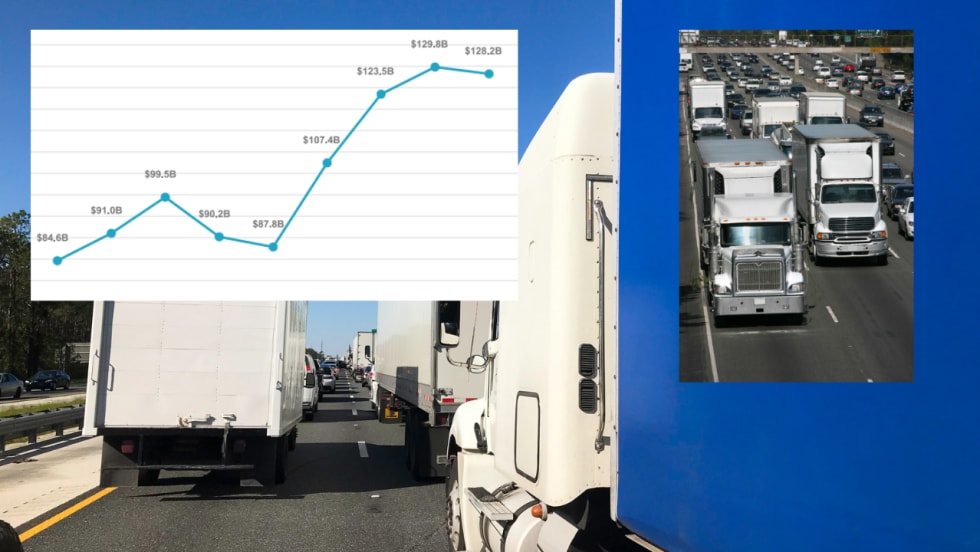
Trucking's Annual Congestion Costs Reach $128.2 Billion
That's the average cost, according to new ATRI research. And the wasted time and diesel are staggering.
How to Modernize Your TMS Without Replacing It [Podcast]
Before investing in a new transportation management system, take a closer look at what you've already got. AI, cloud technology and better integrations may offer ways to improve your trucking operations without starting over.

Could Your Truck's Connected Devices Be a Cybersecurity Risk?
ELDs, telematics systems and driver tablets help fleets operate more efficiently. But every connected device needs protection against cyberattacks.
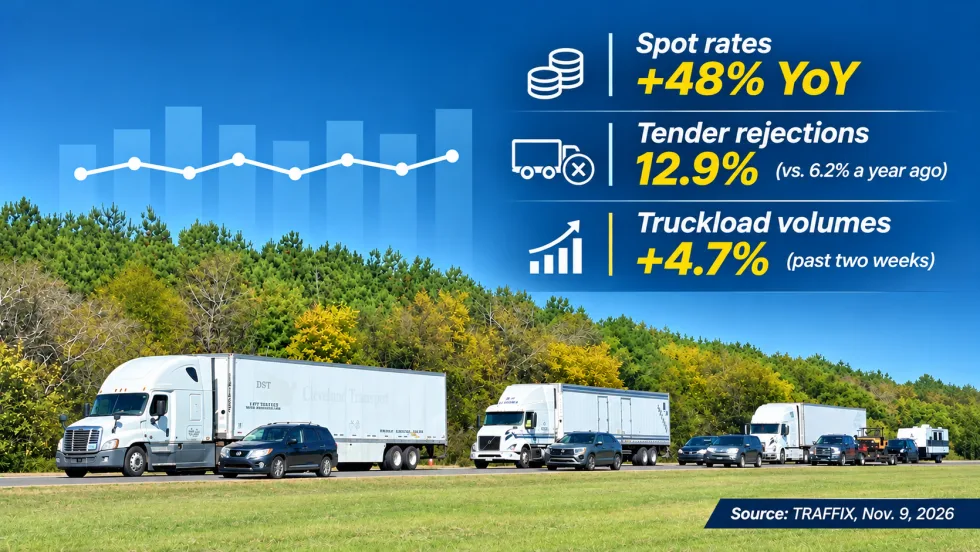
Holiday Freight Meets a Tight Trucking Market
There's no freight boom, but truckload carriers are finding themselves in a stronger position to negotiate rates. And holiday shipping demand could tighten the market further.
What Trucking Events are Happening in 2027?
Looking for trucking-related conventions, expos, and other events? Heavy Duty Trucking has developed this list of national and larger regional trucking shows and events.

Does Your Trucking Fleet Need a New TMS?
Artificial intelligence and better integrations promise less busywork and more useful data. Can your TMS help your company solve problems? Do you need additional vendors or an upgrade? Or is it time to look for a new platform?
Fleet Costs Shape ACT Expo 2027 Agenda
With diesel prices high and operating expenses under pressure, ACT Expo's 2027 agenda emphasizes fuel efficiency, AI, safety and the return on fleet technology investments.
Does Your Trucking Fleet Need a New TMS? [Video]
Cloud technology, AI and new integrations are changing what transportation management systems can do. But does taking advantage of those advances mean replacing your existing TMS?

Road Ready Becomes Saegic, Launches New Trailer Telematics Gateway
Clarience Technologies is rolling out new hardware and expanding its plans for connecting trailer telematics, maintenance data, and video.