





Dig Deeper: Is Hydrogen Really Trucking’s Fuel of the Future?
Nikola: Hydrogen Fuel-Cell Tre One Step Closer with CARB Order
“Obtaining this CARB executive order is an important step for Nikola to support the launch of the Tre FCEV in California, our first priority market for this zero-emission powertrain option."
December 22, 2022
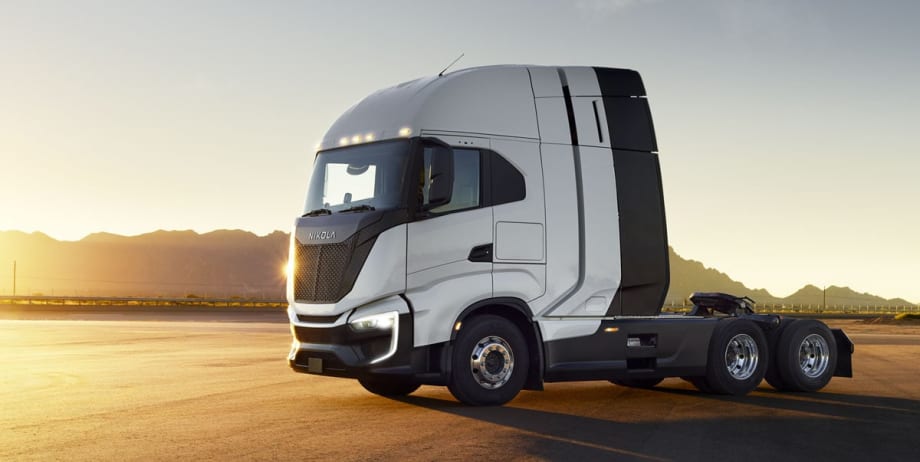
With CARB approval for the HVIP funding program, Nikola says its fuel-cell-electric truck is one step closer to production in 2023.
Photo: Nikola
3 min to read
Nikola Corp. announced that its Tre hydrogen fuel cell electric truck is one step closer to being commercially available.
Nikola received a California Air Resources Board Zero Emission Powertrain Executive Order that is a requirement for eligibility for California’s Hybrid and Zero Emission Truck and Bus Voucher Incentive Project, or HVIP. Nikola has submitted an application for eligibility of the Nikola Tre FCEV as an authorized vehicle under the HVIP program for a base incentive amount valued at $240,000 per FCEV truck.
The CARB executive order is a certificate of compliance with CARB regulations for zero-emission powertrains determined to meet specific emissions standards required for sale in California.
HVIP is a first-come, first-served incentive program that does not require the retirement and scrappage of an existing diesel vehicle as many incentive programs do, according to Nikola.
Upon final HVIP approval, purchasers of the Nikola Tre FCEV in 2023 will be able to qualify for a base incentive valued at $240,000 per truck; $270,000 per truck for drayage fleets; or up to $288,000 per truck for fleets with 10 trucks or less, performing drayage operations, and located within a disadvantaged community area. Eligible non-drayage fleets may secure up to 30 HVIP vouchers and drayage fleets may secure up to 50 vouchers.
“Obtaining this CARB executive order is an important step for Nikola to support the launch of the Tre FCEV in California, our first priority market for this zero-emission powertrain option,” explained Nikola President and CEO Michael Lohscheller. Full production deliveries are expected to start in the second half of 2023.
“We expect that the funding available through HVIP will drive a competitive total cost of ownership for the Tre FCEV truck, powered by the hydrogen fuel supply and infrastructure we are developing, and serviced by our local dealer network.”
With a range of up to 500 miles, the Nikola Tre FCEV is expected to have among the longest ranges of all commercially available zero-tailpipe-emission Class 8 tractors while realizing weight savings when compared to BEV Class 8 trucks with similar range, according to the company. The Tre FCEV is well-suited for a variety of applications ranging from drayage and intermodal to metro-regional truckload and less-than-truckload to certain specialized hauling use cases.
Nikola estimates fueling time for FCEVs at its Nikola fueling stations will be less than 20 minutes, based on expected technology improvements. Nikola has begun to implement its hydrogen dispensing station development program in California and announced three station locations in August 2022.
Purchasers of Nikola Tre battery-electric trucks and FCEVs will also qualify for an additional $40,000 in clean commercial vehicle tax credits in 2023 from the federal government due to the passage of the Inflation Reduction Act, according to Nikola.
Nikola’s Tre BEV, with a range of up to 330 miles, qualified for HVIP certification in California in January 2022. California purchasers of the Nikola Tre BEV may qualify for an incentive valued at $120,000 per truck, and $150,000 for drayage fleets, helping to reduce the total cost of ownership. The Tre BEV is also eligible for a variety of other incentives across the United States. The Tre BEV started serial production in March 2022 and is available for purchase and delivery now.
More Fuel Smarts

How Volvo Updated Its D13 for EPA 2027 [Watch]
Volvo’s updated D13 promises lower emissions without sacrificing performance or fuel economy. Take a closer look at what changed inside the engine in this HDT Spotlight video.
Read More →
Diesel Price Spike Shortens Payback for Natural Gas Trucks, Report Says
Energy Vision estimates fleets could recover the higher purchase price of an RNG-fueled Class 8 tractor in 1.3 to 2.8 years under current fuel-price scenarios.
Read More →
Calstart Becomes Catalyst Mobility, Reflecting Broader Focus
Calstart is now Catalyst Mobility, reflecting the nonprofit’s growing national role in clean transportation, including zero-emission trucks, infrastructure and incentive programs.
Read More →

Record Diesel Prices Squeeze Trucking Fleets
Average U.S. diesel prices have climbed to nearly $6 a gallon, surpassing the 2022 record as tight refinery capacity and Middle East disruptions keep fuel costs elevated.
Read More →
Sponsored•September 9, 2026
How Fuel Delivery Shapes Engine Performance
Fuel delivery depends on more than what happens at the injector. For fleet, maintenance and technical professionals, looking at the full path from pump to injector can provide useful context for understanding engine performance.
Read More →
East Coast Port Launches $45M Electric Truck Push
The Port Authority of New York and New Jersey announced millions in incentives for zero-emission drayage trucks, yard tractors, and new charging hubs near the port.
Read More →
California Bill Could Shed Light on Electric Truck Prices
Why do battery-electric Class 8 trucks remain so expensive? A California bill headed to Gov. Gavin Newsom would give fleets and state agencies more visibility into what manufacturers charge.
Read More →
Detroit Opens Orders for EPA 2027 Engines
Detroit isn’t starting from scratch to meet EPA 2027 diesel emissions standards. Its Gen 6 DD13 and DD15 engines keep much of today’s platform while updating the fuel and aftertreatment systems.
Read More →
Zero-Emission Truck Corridor Planned for West Coast
California, Oregon, Washington, British Columbia and Baja California are coordinating plans for truck charging and hydrogen fueling from Canada to Mexico.
Read More →
A Closer Look at Kenworth’s Electric T880E Vocational Truck [Video]
Learn more about Kenworth's T880E battery-electric vocational truck at the Paccar Technical Center, including its range, applications, upfitting considerations, and PTO options, in this HDT Spotlight video.
Read More →