





More about sustainable fleets: On the Glide Path to Net Zero
Fleets Share Progress, Frustrations on the Race to Cut Carbon Emissions
Four fleets on the front lines of the race to net zero carbon emissions talk about the progress they’ve made — and the long road still ahead.
May 13, 2022
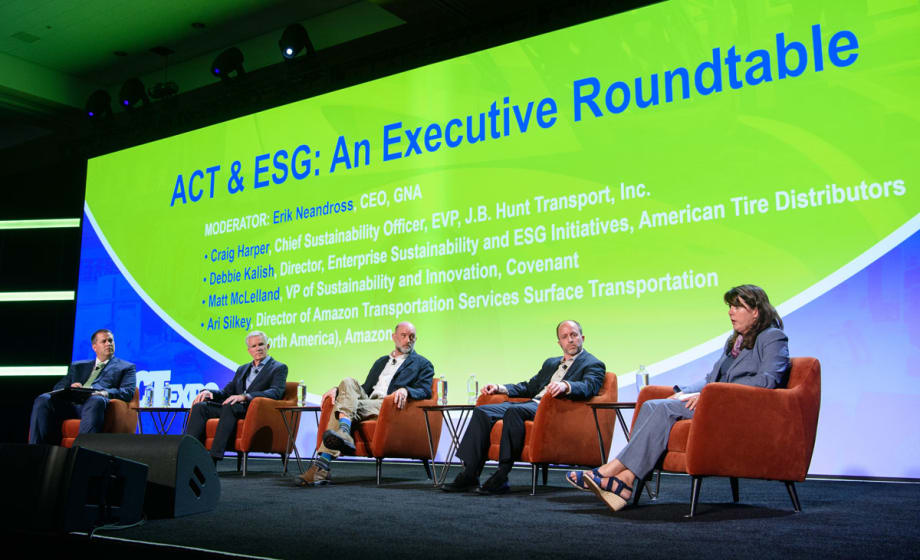
(L-R) Erik Neandross, Craig Harper, Matthew McLelland, Ari Silkey and Debbie Kalish discuss fleet efforts to reach net zero carbon emissions.
Photo: GNA/ACT Expo
6 min to read
Fleets will ultimately bear the brunt of efforts to reduce trucking’s impact on the climate crisis. And at the third and final Roundtable Discussion at the Advanced Clean Transportation Expo on May 11 in Long Beach, California, four fleets discussed how they've tackled the sustainability challenge — and the long road still ahead.
The moderator was Erik Neandross, CEO of Gladstein, Neandross & Associates, the green-transportation consulting company behind ACT Expo. The panel consisted of:
Craig Harper, chief sustainability officer, J.B. Hunt
Ari Silkey, general manager, North American Surface Transportation, Amazon
Debbie Kalish, director enterprise sustainability and ESG Initiatives, American Tire Distributors
Matt McLelland, vice president, sustainability and innovation, Covenant Logistics
Fleet Sustainability Efforts So Far
“J.B. Hunt has always been a very efficient company where efficiency and sustainability live together,” Harper said. “We’ve always looked for ways to do more work with fewer trucks. And being able to maximize the fuel mileage from every gallon of diesel was critical to that mission.”
Building on its early efforts on sustainability, J.B. Hunt moved into intermodal — a move which Harper said helps reduce a shipment's emissions by 60%.
“Today, we are looking at technology across the board,” he said. “Our J.B. Hunt 360 digital platform matches loads of customers with the capacity of carriers nationwide and has helped our fleet run 6 million fewer empty miles since 2020.”
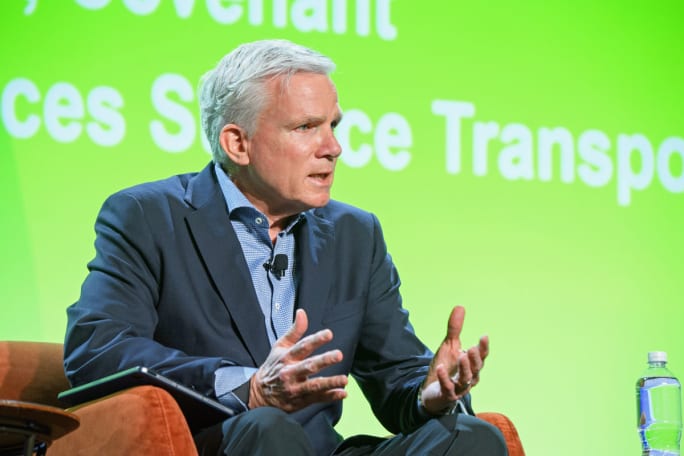
"And I get both excited and impatient wondering when the OEMs are going to let us get our hands on a new truck." — J.B. Hunt's Craig Harper
Photo: GNA/ACT Expo
Amazon’s Silkey, saying it was his first time at ACT Expo, called out the “exciting energy” on the show floor.
“We strongly got behind our climate pledge in 2019 based on the science we saw emerging to reduce greenhouse gases,” he said. “We are now focused on the equipment side of that challenge. My role in the middle mile surface transportation group is to work aggressively to reduce our carbon footprint. But there is a lot of complexity to drive the technology we need to scale. We don’t have that figured out yet.”
American Tire Distributors hired private consultants to assess the company’s carbon footprint and help determine where it needed to be.
“The first step is making your team accountable for reducing emissions,” she said. “We want to lower emissions. But this is going to be a big area of change for us. We are now using biofuels, and we are looking at a move to battery-electric vehicles. And I’m excited about hydrogen, but I recognize that we still need the technology to support it as a fuel.”
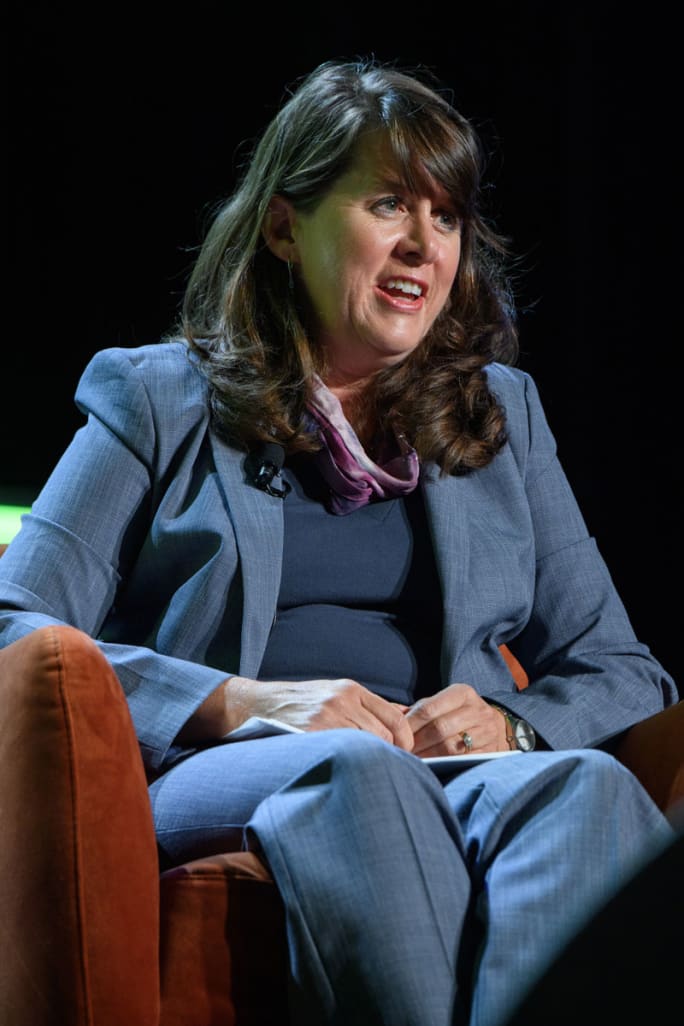
"You need to be clear on what your stakeholders are looking for. If they say GHG is important — it is." — American Tire Distributors' Debbie Kalish.
Photo: GNA/ACT Expo
“You have to keep expectations real and have a glide path to your goal,” Silkey added. “Today, 50% of Amazon’s operations are at zero carbon — including packaging materials and manufacturing. We were able to do that in eight short years. So there’s work to be done moving toward our 2040 goal, but I like our path.”
J.B. Hunt set a goal to improve its overall fleet fuel mpg 3% from 2019 by 2025 — and it’s already surpassed that goal, Harper said. Harper said the company has talked about having 25% of its straight truck fleet electric vehicles by 2035.
"I’m hoping the infrastructure we need, and the new trucks we see at this show, come on line much faster than anticipated," he said. "There are still a lot of questions out there. But we want to get there as fast as we can.”
Covenant’s McLelland said he spoke to a group recently and asked everyone in the audience what the working definition of sustainability is — and no one knew. “So there is confusion out there,” he said. “But consulting companies can help you figure out where you are, and where you need to go.”
Currently, he said, Covenant feels it is premature to set a formal carbon initiative in place. “But we have goals,” he added. “We are working on idle reduction and plan to have a certain percentage of autonomous trucks in our fleet that are autonomous in the future.”
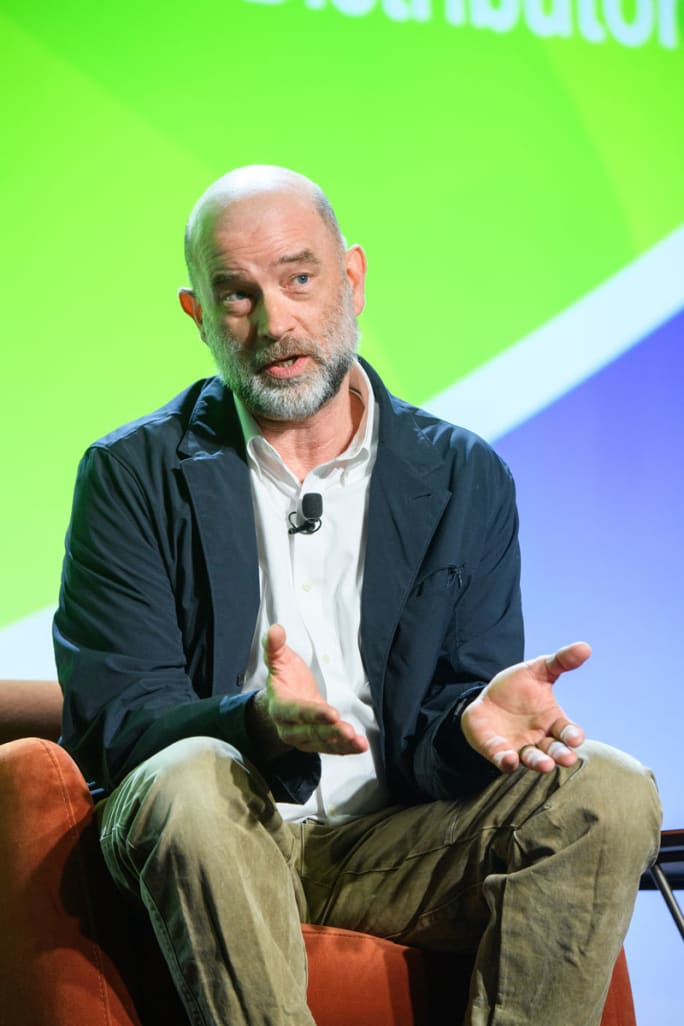
“A lot of technology we will need to get to net zero has yet to be developed." — Covenant's Matthew McLelland
Photo: GNA/ACT Expo
Having a concise and transparent way of reporting your recommendations and goals is critical, ATD’s Kalish added. “You need to be clear on what your stakeholders are looking for,” she said. “If they say GHG is important — it is. And if they say ‘water,’ you need to realize that may be more important to them than it is to you and keep that in mind.”
Carbon Offsets and Capital Planning
While J.B. Hunt waits for new, green technologies and vehicles to arrive, the company is turning to carbon offsets for customers that supply funding to reduce carbon emissions.
“We see it as a way to take action now,” Harper said. “We think they give us an advantage in our goal to eliminate emissions.”
Kalish said her company has generated a few carbon credits and feels there’s a lot of value in doing so.
“But we also make sure that whatever credit is issued will effect change," she said. "We want to be sure it’s a project that will actually be built if money goes to it.”
Neandross asked the panelists how important capital planning is for getting a fleet to net zero. Harper said J.B. Hunt wants to address all of its stakeholders as it moves toward net zero, including investors, employees, shippers, the communities J.B. Hunt serves, and its vendors.
“That’s because this is a monumental shift away from how we’ve been moving goods for years and years," he explained. "We all need to understand that this is going to be a huge shift: We don’t know many things right now. And I get both excited and impatient wondering when the OEMs are going to let us get our hands on a new truck. Then we have to figure out range, charging, weight and all these other things. And we need for costs to keep coming down. For that to happen, we need policy, market and technology to all come together. It would be easier if we knew which technology will turn out to be the best suited for our fleet. But the path forward on that is just not clear right now.”
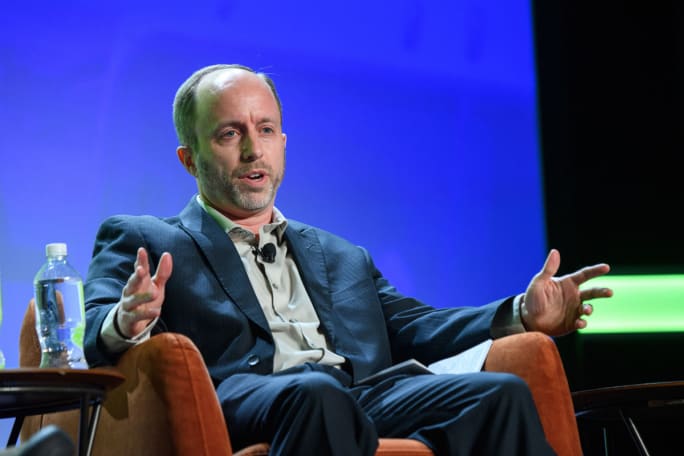
“You have to keep expectations real and have a glide path to your goal." — Ari Silkey, Amazon
Photo: GNA/ACT Expo
Amazon’s capital planning led the company to set up its own delivery service and purchase more than 50,000 tractors to populate it, Silkey said. “We want to make material change in our ecosystem,” he added.
“A lot of technology we will need to get to net zero has yet to be developed,” said Covenant’s McLelland. “We are still in the early stages — although now we see disruptive new stuff at Cummins here at this show.”
What about sharing costs with customers?
“You have to find a balance,” Silkey said. “Customers want packages as fast as they can get them, which can be at odds with sustainability. The costs on this technology are starting to turn around. There is a long way to go, though.”
[Editor's note: This article was updated on May 18 at 10:52 a.m. CT to correct typos, add clarifications, and update J.B. Hunt's goals to improve overall fleet fuel mpg, as well as correct details on its discussions to transition its straight truck fleet to EVs.]
More Fuel Smarts
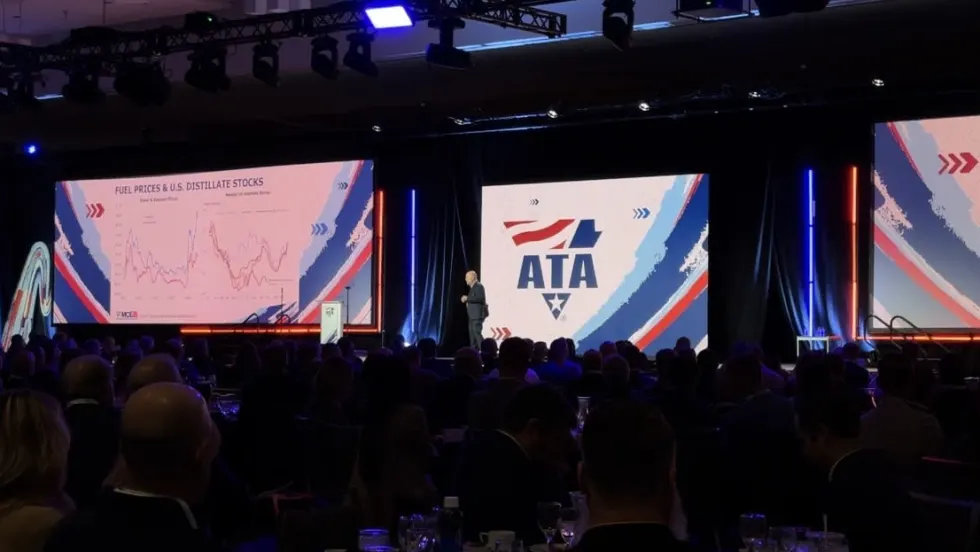
Trucking’s Diesel Squeeze Isn’t Letting Up
With diesel topping $6 a gallon nationally, ATA's Bob Costello explains why fleets should prepare for continued pressure at the pump.
Read More →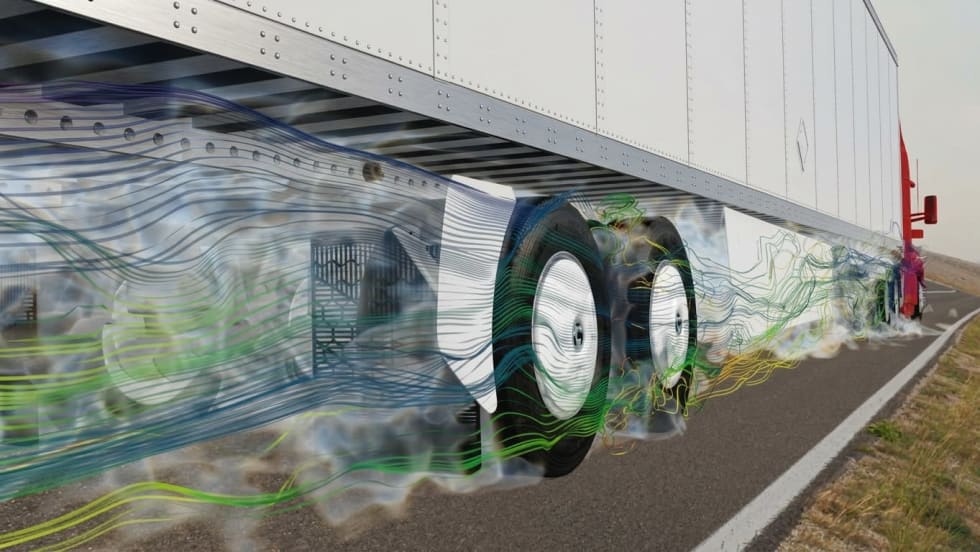
FlowBelow Redesigns Trailer AeroSlider to Cut Fuel Use
The lighter trailer aerodynamic system installs in less than 45 minutes, according to the company, with potential payback in under a year depending on fuel prices and trailer mileage.
Read More →
Why Diesel Price Relief Efforts May Fall Short
Diesel prices have eased from September’s record high, but doubts about additional Russian supply and limits on dyed-diesel tax relief mean trucking fleets still face expensive fuel. And prices could go higher.
Read More →
Why Small Fuel Savings Matter in Trucking
Can better fuel economy help pay for driver raises? In this podcast, GP Transco explains how small efficiency gains create room to reinvest in its people.
Read More →
How GP Transco Cuts Trucking Fuel Costs, a Tenth of a Gallon at a Time
What’s another tenth of a mile per gallon worth? GP Transco shares how equipment upgrades and driver coaching turn small gains into meaningful fuel savings.
Read More →
Electric Yard Tractors Move Beyond Pilots
Operating-cost savings have overtaken sustainability goals as the leading reason surveyed fleets are adopting battery-electric terminal tractors, according to new NACFE research.
Read More →
Geotab Links Fleet Card to Vehicle Data
The new card combines fuel discounts with telematics-based purchase controls. Geotab’s analysis also points to potential savings from choosing lower-priced fuel stops.
Read More →
Fleet Economics Shape Electric Truck Outlook
ACT Research expects costs, charging infrastructure, and technology improvements to drive zero-emission commercial vehicle adoption as federal regulations and incentives retreat.
Read More →
Wex Adds Cardless Fuel Payments for Over-the-Road Customers
A new fuel card feature for Wex customers offers convenience and security.
Read More →
New California Law Could Shed Light on Electric Truck Prices
Why do battery-electric Class 8 trucks remain so expensive? A California bill signed by Gov. Gavin Newsom would give fleets and state agencies more visibility into what manufacturers charge.
Read More →