




Reflections on a Changing Industry [Commentary]
HDT Editor in Chief Deborah Lockridge explores how the trucking industry has changed in the three-plus decades since she started covering it.
February 8, 2022

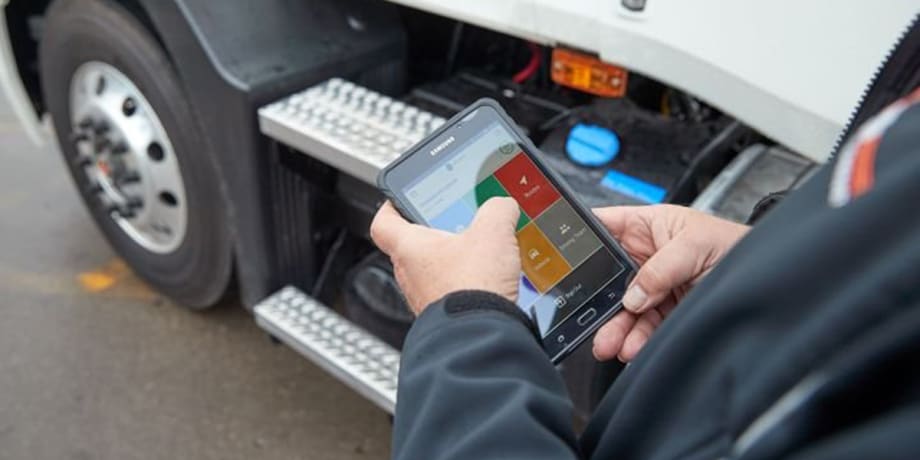
One of the biggest changes in the industry over the last three decades, according to HDT Editor in Chief Deborah Lockridge, has been in how we communicate.
File Photo: Samsara
4 min to read
As I was putting together the story about Heavy Duty Trucking’s 100th anniversary for this issue, I realized that I’ve been with HDT for nearly a quarter of that time. I got to thinking about how the trucking industry has changed, not only in the last 100 years, but in the three-plus decades since I started covering it.
Trucks are cleaner-burning, more fuel-efficient, quieter, and easier to operate than ever before. They brim with data that fleets can access remotely in real time. Equipment, motor carriers, and drivers have been increasingly subject to more safety regulations, with the Federal Motor Carrier Safety Administration founded in 2000. Antilock brakes are mandatory and new trucks must meet stopping-distance standards. Electronic logs have replaced paper logbooks. We’ve seen the addition of standards for new motor carrier entrants into the industry and new entry-level driver training standards for drivers. And that’s just a sampling of changes in the past three decades.
One of the biggest changes has been in how we communicate. Drivers no longer have to find a pay phone to do a check-in call with their dispatchers. They don’t need a personal 800-number to make talking to their families via those same pay phones affordable.
But adding more technology doesn’t automatically make communication better, as anyone who has tried to navigate an endless automated phone tree, sat through a Zoom meeting that could have been handled in an e-mail, or tried to communicate with a teenager will know.
How you use that technology, like any tool, makes a difference. The number of drivers who still feel they aren’t getting clear communication from their companies is testament to that, despite the proliferation of in-cab communications devices, smartphone and tablet apps, Facebook pages and more.
Technology has transformed how we at HDT communicate with our audience, too. When I joined the magazine in 1998, our website, Truckinginfo.com, was very new. There were internal debates over whether we were “scooping ourselves” if we posted news online before the magazine came out each month.
Sometimes, we jumped into new communication mediums that were so ahead of their time that they didn’t last, such as posting audio and video on our website in the early days of streaming media. But we returned to those mediums as technology made it more feasible, such as “On the Spot” videos with editors reporting from the field, the HDT Talks Trucking audio podcast, and most recently, a new video version of the podcast.
Editor-led webinars and virtual events offer attendees a chance to ask questions live of panelists on topics such as building a safety culture and the driver shortage.
And despite all the new ways of delivering digital content, there’s still a need for in-person interaction. So, we designed the Heavy Duty Trucking Exchange event specifically to foster networking and relationship-building.
With all these new ways of delivering the information you need, some trucking magazines have decided to stop publishing a paper product altogether. At HDT, we still believe there’s a place for magazines, although we have moved this year to 10 times a year rather than 12. We devote far less space to “news” within these pages than we used to, instead relying on our website and e-newsletters and social media to deliver that kind of timely content. The magazine is devoted to more long-form features, how-to stories, and analysis of news and trends in the industry.

Deborah Lockridge
But back to my point about technology not automatically meaning better communication. The internet is a fantastic resource, with vast amounts of content available at your fingertips. Social media has allowed people to network and connect with like-minded souls in new ways. But there’s also a vast amount of information that’s of questionable accuracy, that has an agenda, or that’s downright wrong.
That’s why, no matter what way we offer information, from traditional paper magazines to the latest technology, our team of experienced editors strives to make HDT your trusted source. We work to make sure we’re giving you the content you need to help your fleet run more safely, more efficiently, and more profitably.
This editorial commentary first appeared in the Jan/Feb 2022 issue of Heavy Duty Trucking.
Subscribe to Our Newsletter
More Fleet Management

Kodiak Lines Up Fleets for Driverless Trucking
An agreement for 75 trucks, a new Texas freight lane, and progress on safety validation move Kodiak closer to its planned driverless highway launch.
Read More →
ITS Logistics Settles Religious Harassment Case
The Nevada-based logistics firm agreed to pay more than $396,000 to settle a religious harassment charge involving an employee's Jewish identity.
Read More →
Your Trucks Are Busy. That Doesn’t Mean They’re Winning.
High utilization doesn’t always mean strong margins. Looking beyond the current load can help fleets make better dispatch decisions and get more value from each truck’s time.
Read More →
Why This Trucking Recovery Is Different
Freight demand remains sluggish, but rising costs and tougher enforcement have taken enough capacity out of the market to change the outlook for motor carriers.
Read More →
Platform Science Adds Dispatch and Safety Tools
Four additions to PS Fleet help fleets monitor loads, manage driver coaching, share truck locations and adjust video system settings.
Read More →
PrePass Intelligence Mines Fleet Bypass, Toll and Safety Data
PrePass Intelligence helps fleets measure bypass savings, flag potential toll overcharges, and spot suspicious transactions by combining data from separate systems.
Read More →
Motive Adds AI Agents for Fleet Operations
New tools automate follow-up on fleet data, from maintenance work orders to driver alerts, with two-way voice conversations planned for later this year.
Read More →
Can You Beat Our Trucking Trivia Challenge?
Test your truck knowledge with 19 trivia questions from Heavy Duty Trucking Exchange. Can you keep up with the fleet pros?
Read More →
BeyondTrucks Adds Rules Checks to Dispatch
New Compatibility Engine checks driver qualifications, equipment requirements and fleet policies before loads are dispatched.
Read More →
Diesel Prices Hijack Trucking’s Worry List
ATRI’s annual survey finds cautious optimism about freight, but diesel costs, litigation, and insurance continue to squeeze fleets. Drivers have different priorities on several issues.
Read More →