




Global News Roundup: German Company Moves into Hydrogen Trucks
ICYMI: A roundup of global trucking industry news from Quantron, Ballard Power Systems, Plus, Hyzon Motors, Volta Trucks, Volvo Trucks India, and more.

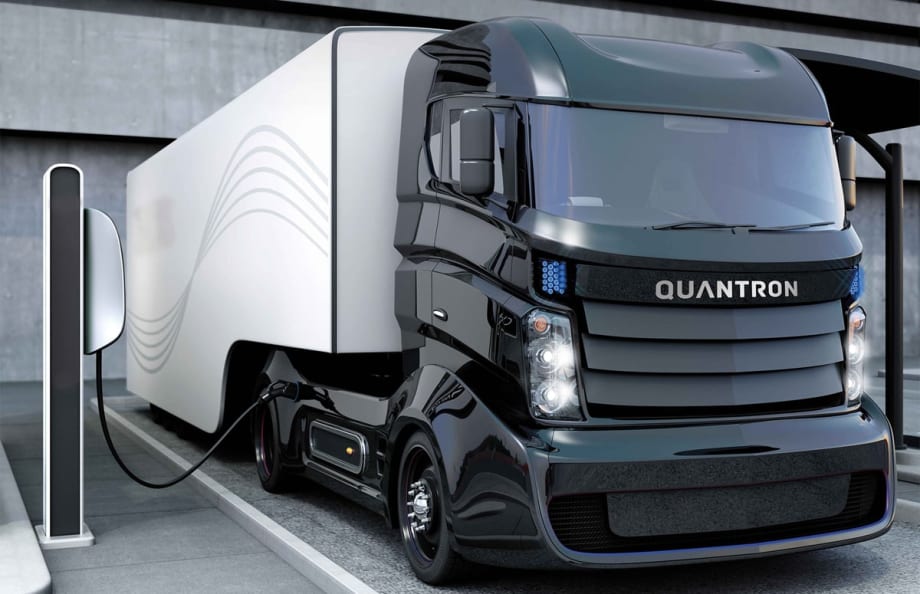
A new partnership with Ballard Power Systems will integrate Ballard’s FCmove family of heavy-duty fuel cell power modules into Quantron’s electric drivetrain and vehicles.
Photo: Quantron
Quantron, a two-year-old German company providing electrified solutions for commercial vehicles in Europe, is moving into hydrogen as well.
A new partnership with Ballard Power Systems will integrate Ballard’s FCmove family of heavy-duty fuel cell power modules into Quantron’s electric drivetrain and vehicles. Fuel-cell electric truck platforms in development include a 7.5-tonne delivery truck, a 44-tonne heavy-duty truck, and a municipal waste collection truck. Initial deployment of these fuel-cell electric trucks is scheduled for the second half of 2022.
On the lighter-duty side, working with fuel cell expert AE Driven Solutions, Ballard unveiled the Q-Light FCEV, in the 3.4- to 4.2-tonne range, available with different body variants
Quantron currently offers electrified versions of trucks such as the Mercedes-Benz Econic waste disposal vehicle. Its Quantron QHB system can either cover a range of up to 240 km (without body activity) or empty up to 1,000 refuse containers in a nine-hour shift in two refuse tours, without intermediate charging. The QHB has been in use at leading German waste management companies since May 2020.
When asked if the company plans to offer vehicles in North America, a spokesman told HDT that is one of the strategic options it is currently evaluating.
New Briefs from Around the World
Plus (formerly Plus.ai), a global provider of self-driving truck technology, delivered the initial production batch of PlusDrive autonomous driving units to Chinese truck-maker FAW in order for FAW to integrate the units and launch China’s first driver-in autonomous trucks. FAW’s new line of autonomous trucks has received thousands of units in pre-orders from large fleets in China, according to the company.
Hyzon Motors signed a memorandum of understanding with Shanghai Hydrogen HongYun Automotive for the purchase of 500 hydrogen-powered electric trucks. HongYun provides operation, leasing and maintenance service for customers in China. Under the non-binding agreement, the initial order of 100 vehicles is expected before the end of 2021, while the other 400 vehicles will be ordered in 2022. “Hydrogen fuel cell technology has been adopted more quickly in China than in the rest of the world,” said Hyzon CEO Craig Knight.
The global fuel cell trucks market is estimated to register 142,858 unit sales by 2030, with China accounting for 64% of total global sales, according to Frost & Sullivan’s analysis, Global Fuel Cell Trucks Growth Opportunities.
In China, a second-quarter decline heavy commercial vehicle sales was driven primarily by market factors, rather than economic or policy factors, according to ACT Research. With too many trucks chasing available freight, there was little improvement in freight rates, which restrained vehicle purchase demand. Sales might have been worse, were it not for strong overall economic momentum, good performance from export markets, and an emissions mandate that went into effect July 1 that generated prebuy sales.
Volta Trucks’ first Volta Zero vehicles will be manufactured in Steyr, Austria, by Steyr Automotive, formerly MAN Truck and Bus Austria. This will allow Volta Trucks to start series production in late 2022, following customer trials that will start mid-year.
Volvo Trucks India has launched six heavy-duty trucks under the FM and FMX range in India to address the increasing demands for more productive and safer trucks in the country.
More Fuel Smarts

How Volvo Updated Its D13 for EPA 2027 [Watch]
Volvo’s updated D13 promises lower emissions without sacrificing performance or fuel economy. Take a closer look at what changed inside the engine in this HDT Spotlight video.
Read More →
Diesel Price Spike Shortens Payback for Natural Gas Trucks, Report Says
Energy Vision estimates fleets could recover the higher purchase price of an RNG-fueled Class 8 tractor in 1.3 to 2.8 years under current fuel-price scenarios.
Read More →
Calstart Becomes Catalyst Mobility, Reflecting Broader Focus
Calstart is now Catalyst Mobility, reflecting the nonprofit’s growing national role in clean transportation, including zero-emission trucks, infrastructure and incentive programs.
Read More →

Record Diesel Prices Squeeze Trucking Fleets
Average U.S. diesel prices have climbed to nearly $6 a gallon, surpassing the 2022 record as tight refinery capacity and Middle East disruptions keep fuel costs elevated.
Read More →
How Fuel Delivery Shapes Engine Performance
Fuel delivery depends on more than what happens at the injector. For fleet, maintenance and technical professionals, looking at the full path from pump to injector can provide useful context for understanding engine performance.
Read More →
East Coast Port Launches $45M Electric Truck Push
The Port Authority of New York and New Jersey announced millions in incentives for zero-emission drayage trucks, yard tractors, and new charging hubs near the port.
Read More →
California Bill Could Shed Light on Electric Truck Prices
Why do battery-electric Class 8 trucks remain so expensive? A California bill headed to Gov. Gavin Newsom would give fleets and state agencies more visibility into what manufacturers charge.
Read More →
Detroit Opens Orders for EPA 2027 Engines
Detroit isn’t starting from scratch to meet EPA 2027 diesel emissions standards. Its Gen 6 DD13 and DD15 engines keep much of today’s platform while updating the fuel and aftertreatment systems.
Read More →
Zero-Emission Truck Corridor Planned for West Coast
California, Oregon, Washington, British Columbia and Baja California are coordinating plans for truck charging and hydrogen fueling from Canada to Mexico.
Read More →
A Closer Look at Kenworth’s Electric T880E Vocational Truck [Video]
Learn more about Kenworth's T880E battery-electric vocational truck at the Paccar Technical Center, including its range, applications, upfitting considerations, and PTO options, in this HDT Spotlight video.
Read More →