




Will Smaller Jobless Benefits Bring Back Drivers?
Analysis by FTR shows that unemployment benefits were competitive. In 22 states, the median wage for a heavy truck driver exceeded maximum unemployment benefits by less than $5,000 a year.
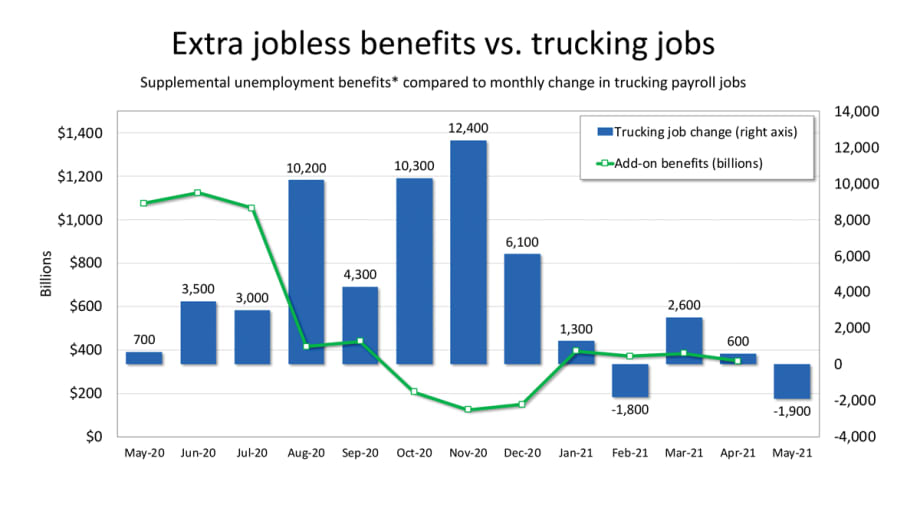
FTR compared the median annual wage for heavy truck drivers in each state with the maximum unemployment benefit in each state as compiled by job placement firm ZipRecruiter.
Graph: FTR
This summer, 22 states are opting out early from most or all of the additional federal unemployment benefits put in place during the COVID-19 pandemic. With signs that the economy is struggling to add jobs, many politicians blame generous unemployment benefits. Those benefits are slated to expire nationwide in early September, and the political winds seem clearly against further renewal.
FTR compared the median annual wage for heavy truck drivers in each state (as reflected in Bureau of Labor Statistics data for last year) with the maximum unemployment benefit (including the $300-a-week federal supplement) in each state as compiled by job placement firm ZipRecruiter. This analysis shows that unemployment benefits were surprisingly competitive. In 22 states, the median wage for a heavy truck driver exceeded maximum unemployment benefits by less than $5,000 a year. That includes five states (Massachusetts, Minnesota, New Jersey, Oregon, and Washington) where maximum benefits exceeded the median driver wage.
Of course, merely comparing the median wage to maximum benefits is too simplistic. Obviously, many drivers earned less than the median wage in their states before the pandemic. That’s just math. Moreover, many likely returned to driving or other work because they need health insurance or other benefits or just have a strong work ethic. On the other hand, we have seen sharp increases in driver pay packages over the past six to nine months, so last year’s BLS median wage figure might not truly reflect market conditions.
Nevertheless, it is clear that numerous former drivers could “earn” almost as much doing nothing as they could working in a stressful job like driving a truck.

Avery Vise, FTR
Because of changes in benefits over the past year or so, we can test the idea that loss of benefits might make a difference. The CARES Act initially set the weekly unemployment supplement at $600 a week, but that went away at the end of July. A stopgap program kept $300 a week going for a couple of months — but there was no federal supplement for essentially all the fourth quarter of 2020, until Congress renewed the $300-a-week add-on in January.
The period of strongest growth in for-hire trucking payroll employment occurred during the period when federal add-on benefits first dropped sharply and then went away almost entirely for a few months. This is mere correlation, not necessarily causation. It also correlates with a period of strong freight growth. Still, this data doesn’t contradict a link between unemployment benefits and driver employment.
However, FTR is skeptical that ending generous unemployment benefits will fundamentally change the driver situation.
For starters, we would not expect the loss of benefits to lead to a significant increase in new truck drivers, because unemployment is highest in sectors that do not seem overly compatible with the job requirements and lifestyle of driving a truck, such as leisure and hospitality and health care. Moreover, the pipeline for training and licensing new drivers has not fully recovered from the pandemic.
As for whether former drivers will return, other drains on the driver force might have loomed larger than the extra unemployment benefits. We’ve seen sharply lower U.S. labor participation due to the pandemic (possibly indicating accelerated retirements, especially among the older driver demographic), as well as competition from other industries, and the impact of the drug and alcohol clearinghouse.
Certainly, some drivers remain sidelined by the availability of unemployment benefits. By this fall, we could have an idea of how significant a factor benefits have been, assuming no other big changes in the pandemic or freight environment.
This analysis appears in the July 2021 issue of Heavy Duty Trucking.
More Drivers
Trucker Path Expands Reserved Parking Network
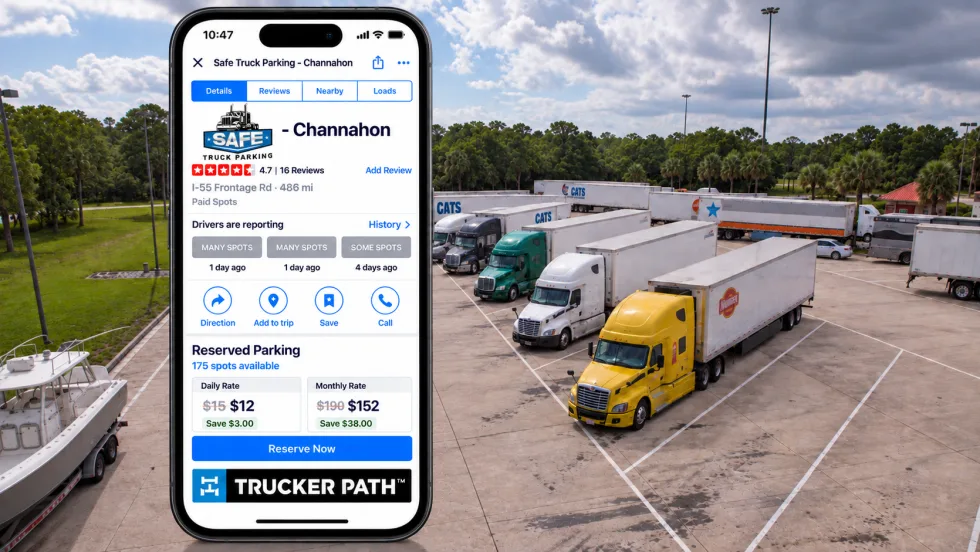
Trucker Path has added close to 6,000 more truck parking spaces to its Trucker Path Reserved Parking Network with the addition of Safe Truck Parking.
Read More →
EEOC Sues Texas Trucking Company Over Driver Age Limits
The agency says Trancasa USA rejected applicants over 65 and applied tougher driving-record standards to those over 60.
Read More →
Nussbaum, Roehl Announce Second Driver Pay Increase This Year
This year has seen a swath of major truck driver pay increases as freight capacity has tightened.
Read More →
From One Generation to the Next: How Mentorship Builds Safer Truck Drivers
After three decades in trucking, Harold Perry shares what he's learned about driver safety, mentorship, and helping the next generation build confidence behind the wheel.
Read More →
Truck Drivers Need More Than Another Alert
Fleets have more visibility into truck health, safety events, and driver activity than ever. The next challenge is turning all that information into useful guidance for the person who has to decide what to do next.
Read More →
FMCSA Removes 110 Truck Driver Training Schools from Certified ELDT List
Federal regulators also are targeting more than 160 additional training providers and launching a nationwide audit of third-party CDL skills testers as part of a broader crackdown on trucking fraud.
Read More →
Hours of Service Pilot Programs: FMCSA Readies for 2027 Rollout
Two pilot programs could eventually reshape hours-of-service rules, giving truck drivers options to pause their 14-hour clock or use longer split sleeper rest periods.
Read More →
Medical Cards, English Proficiency Reshape Roadcheck Violations
Medical-card violations jumped to the top of the driver out-of-service list during CVSA’s 2026 International Roadcheck, while English-language proficiency violations appeared among the leading violations for the first time.
Read More →
Driver Trust Can Make or Break the Success of Fleet Safety Technology
New Teletrac Navman research suggests that onboarding, transparency about driver data, and positive feedback can play a significant role in how commercial drivers respond to safety and coaching technology.
Read More →
EEOC Sues KLLM Over Alleged Sex Discrimination in Driver Training
KLLM is facing a federal sex-discrimination lawsuit over policies the EEOC alleges put female truck driver trainees at a disadvantage.
Read More →