




Truck Parking Capacity Bill Reintroduced
The Truck Parking Safety Improvement Act would dedicate federal funding for the expansion of truck parking capacity through the construction of new parking facilities and expansion of existing rest areas.

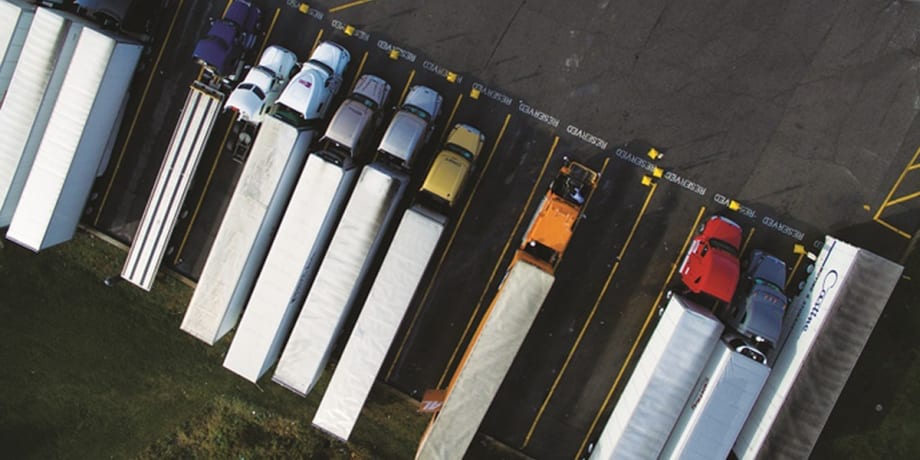
The Truck Parking Safety Improvement Act would dedicate federal funding for the expansion of truck parking capacity through the construction of new parking facilities and expansion of existing rest areas.
Photo: iStockphoto.com/skitzafrenic
U.S. Rep. Mike Bost (R-Illinois) last week reintroduced the Truck Parking Safety Improvement Act, which would dedicate federal funding for the expansion of truck parking capacity through the construction of new truck parking facilities, expansion of truck parking at existing rest areas or conversion of space at existing weigh stations.
The Truck Parking Safety Act, H.R. 2187, is an update of the same act (H.R.6104) introduced to the House last year. The legislation dedicates hundreds of millions of dollars to projects that would increase truck parking capacity, rather than electronic signage and other technology solutions that do not address the core issue of the parking shortage, Owner-Operator Independent Drivers Association officials said in a press release. Funding would be awarded on a competitive basis and applicants would be required to submit detailed proposals to the U.S. Department of Transportation.
The bill — cosponsored by Reps. Angie Craig (D-Minnesota), John Garamendi (D-California), Dusty Johnson (R-South Dakota), Susan Wild (D-Pennsylvania), and Pete Stauber (R-Minnesota) — has been referred to the House Committee on Transportation and Infrastructure.
OOIDA has applauded the bipartisan group of representatives in a press release, saying that they have shown they understand the daily challenges hundreds of thousands of long-haul truckers face finding a safe place to park and comply with hours-of-service regulations.
“I grew up in a family trucking business and spent years driving over the road,” Bost said according to an OOIDA press release. “Since then, we’ve seen the need for more trucks and drivers increase significantly, especially during the COVID-19 pandemic when trucking helped to keep our economy going. However, the number of truck parking spaces hasn’t kept pace. That means that drivers are forced to park in unsafe locations, which puts both them and other motorists at risk. Creating sufficient parking options for long-haul truckers will not only help keep truckers safe during their rest breaks but will also mean safer roads for everyone.”
OOIDA collaborated with industry stakeholders to develop and build support for the legislation. H.R. 2187 also has the support of the American Trucking Associations, Truckload Carriers Association, National Association of Small Trucking Companies, National Motorists Association, Transportation Intermediaries Association, American Highway Users Alliance and the Institute for Safer Trucking.
“The severe shortage of safe parking presents truckers with an untenable dilemma: either keep driving when they are fatigued and possibly in violation of their federal hours-of-service requirement—or park in unsafe, sometimes illegal locations, such as a roadside shoulder,” said Chris Spear, ATA president and chief executive officer. “The health and wellbeing of our drivers, the safety of the motoring public, and the sustainability of our supply chain all depend on Congress addressing this issue with adequate funding in a surface transportation bill.”
More Fleet Management

Geotab Links Fleet Card to Vehicle Data
The new card combines fuel discounts with telematics-based purchase controls. Geotab’s analysis also points to potential savings from choosing lower-priced fuel stops.
Read More →
How MFA Helps Protect Trucking Fleets
Multi-factor authentication adds protection when passwords are stolen. Here’s how it works and where fleets should start.
Read More →
How Better Freight Data Helps Trucking Teams Get Ahead of Disruption
Trucking and logistics teams have plenty of data. The problem is getting the right information in front of the right people soon enough to act. Better-connected data can help teams spot trouble earlier and make smarter decisions before small problems become big ones.
Read More →

Trimble: Taking Artificial Intelligence in Trucking Beyond Faster Tasks
At Insight 2026, Trimble executives argued that fleets may need to redesign workflows to get more from AI as it introduced new products and enhancements. AI’s value will depend on how fleets combine automation with their people's knowledge.
Read More →
Build a bulletproof fleet: Uniting ELDs and dash cams for total compliance
An ELD can prove compliance, but it cannot always prove what happened on the road. Discover how uniting accurate ELD data with AI-powered dash cam video can help your fleet strengthen compliance, defend against liability, protect drivers and reduce operational costs.
Read More →
Nominations Open for HDT Emerging Leaders
Heavy Duty Trucking is looking for accomplished trucking fleet professionals under 40 who are making an impact and helping lead the industry forward.
Read More →
Why Private Fleets Are Taking More Freight
Private fleets are putting their own trucks on demanding customers and high-cost lanes as companies seek greater control over service, costs, and capacity.
Read More →
Color Match Smarter: Tools That Restore & Perform
For fleet managers and collision repair professionals keeping heavy-duty trucks on the road, getting the color right the first time isn't just about appearance — it's about efficiency, turnaround time, and bottom-line results. Discover how today's digital color tools are transforming the repair process from guesswork to precision.
Read More →
FMCSA Pauses Biennial-Update Enforcement Amid Motus Transition
Carriers whose updates were due on or after June 1 have more time, while FMCSA works to stabilize its new registration system and warns of phishing sites impersonating its new carrier registration system, Motus.
Read More →
2026 Blueprint for Countering Smarter Supply Chain Theft
Cargo theft is no longer just the cost of doing business. It's a multi-billion-dollar criminal enterprise exploiting vulnerabilities across your fleet, drivers, and supply chain.
Read More →