




Bendix Expands Safety Technology Retrofit Program
Bendix is expanding its upgrade program that helps fleets retrofit and upgrade their trucks with Bendix advanced safety technologies.

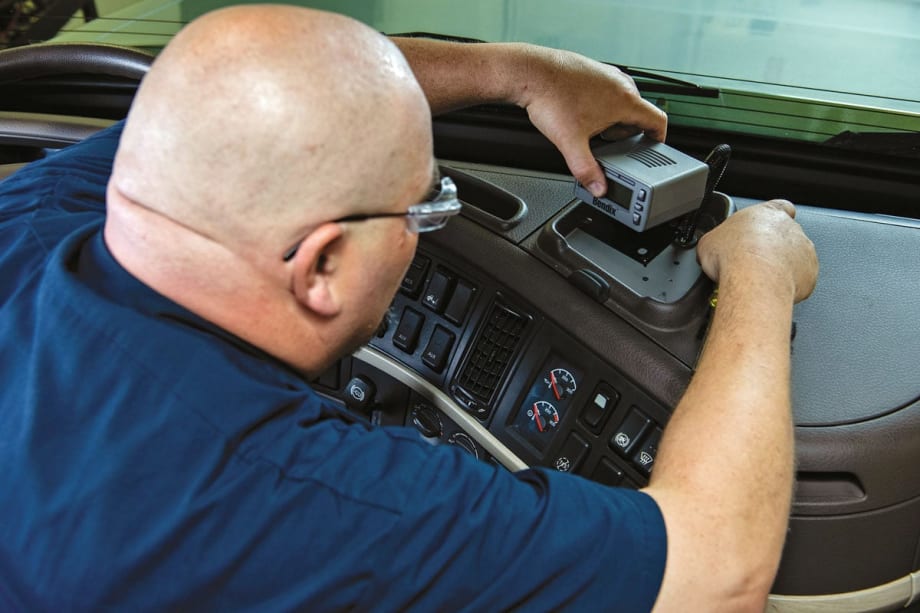
Upgrading advanced truck safety systems is highly technical work, and care must be taken to do it properly, says Bendix.
Photo: Bendix
Bendix is expanding its upgrade program that helps fleets retrofit their trucks with Bendix advanced safety technologies.
Bendix Commercial Vehicle Systems’ network of Authorized Upgrade Centers, dealers and distributors that install the advanced safety systems on existing vehicles, now includes locations in over a dozen states in the U.S., the company announced.
The Bendix Upgrade Program, launched in 2017, enables professional installation of select Bendix advanced safety technologies to upgrade select vehicles that did not come factory-equipped. Upgrades are specific to individual trucks and tractors, and include post-installation support and tracking.
“Upgrading safety systems is highly technical work, and care must be taken to do it properly,” said David Schultz, Bendix director of aftermarket business development, in a news release. “Along with our deliberate approach to expanding our AUC network, we have in place a demanding training program specifically designed to certify technicians who already meet their company’s rigorous criteria. With upgrades expected to be completed in hours, the proper certification of installers is key to getting trucks back on the road the same day, with minimal disruption to fleet operations.”
Through the Bendix Upgrade Program, fleets can consider a select range of upgrades, including Bendix’s collision mitigation and warning systems. The Bendix website bendixcvsupgrade.com is the starting point for fleets interested in finding out if their specific vehicles are eligible for an upgrade and which systems can be considered. The technology meets high quality standards, similar to when that system is installed at the factory.
“Fleets face the constant challenge of keeping their vehicles equipped with the most advanced – and rapidly evolving – driver assistance technologies available,” said TJ Thomas, Bendix director of marketing and customer solutions – Controls. “Replacing all your trucks overnight is not a practical option. The Bendix Upgrade Program, on the other hand, enhances a fleet’s safety by enabling the latest systems to be installed on vehicles not originally built with them. The safety systems help mitigate accidents and support driver coaching through video and data, while contributing to an improved, more consistent driver experience, vehicle to vehicle.”
Safety System Availability
Systems currently available for retrofit on select vehicles include:
Bendix Wingman Fusion driver assistance system. Retrofits include select features only.
Bendix Wingman Advanced Collision Mitigation Technology.
AutoVue 4G Lane Departure Warning System by Bendix CVS.
Bendix BlindSpotter side object detection system.
SafetyDirect by Bendix CVS video and data event recording.
Bendix Vorad VS-500 collision warning system for trucks and tractors without the Bendix ESP full-stability program.
Additional technologies, including the Bendix Intellipark Electronic Parking Brake, will continue to expand the scope of the program.
Bendix upgrades are fully installed and include all components, overlay harnessing, connectors, special brackets, and displays needed for a complete installation. It’s important to note that these upgrades usually look different than factory-installed systems, but the system alerts, functionality, and performance are very similar, so drivers will know just what to expect behind the wheel, according to Bendix.
Each upgrade is engineered for a fleet's specific vehicles, he explained – make, model, and year, across a broad swatch of commercial vehicles – to ensure proper fit and function. This means Bendix upgrades will fit properly, operate correctly, and avoid vehicle conflicts, such as with the CAN network.
“It’s critical that the configuration of the vehicle and the equipment already on it will integrate with the new capabilities to be added,” Thomas said. That could mean some vehicles may be upgrade-capable, and some vehicles may not be.
“Don’t overlook the necessity of post-installation quality checks and tracking, because they are vitally important,” Thomas said. “Take VIN tracking. The Bendix Authorized Upgrade Center can verify, by VIN, which trucks have been upgraded and provide that information to the fleet. Especially if you’re upgrading a larger number of vehicles – say, 30 or 50 trucks over three different locations – there’s no substitute for this tracking. Sometimes a fleet may incorrectly document that upgrades on all their trucks were completed, when in fact they were not. VIN tracking verifies which vehicles were upgraded to help keep fleet records accurate.”
More Safety & Compliance

Tesla Wants a Self-Driving Semi. Are Cameras Enough?
Could Tesla’s camera-only autonomous driving technology work on an 80,000-pound Semi? In this commentary, HDT's Deborah Lockridge takes a look at Tesla, Cybercab, and how autonomous trucks see the road.
Read More →
What DOT’s Automated Vehicle Strategy Means for Trucking
The U.S. Department of Transportation issued a new automated-vehicle strategy that outlines plans for driverless-truck regulations, cross-state freight corridors, and federal safety standards.
Read More →
NYC Expands Speed, Pedestrian Safety Tech Across Fleet
New York City is expanding intelligent speed assistance and pedestrian-alert systems across its municipal fleet, moving the technologies from pilot programs into vehicle procurement and retrofit requirements.
Read More →
FMCSA Removes 110 Truck Driver Training Schools from Certified ELDT List
Federal regulators also are targeting more than 160 additional training providers and launching a nationwide audit of third-party CDL skills testers as part of a broader crackdown on trucking fraud.
Read More →
Beyond DOT Compliance: What Makes a Trucking Fleet Truly Safe?
A trucking fleet can follow every rule and still make unsafe decisions. The real test comes when safety conflicts with freight, productivity, or cost.
Read More →
Hours of Service Pilot Programs: FMCSA Readies for 2027 Rollout
Two pilot programs could eventually reshape hours-of-service rules, giving truck drivers options to pause their 14-hour clock or use longer split sleeper rest periods.
Read More →
New Guide Offers Pet Safety Tips for Truck Drivers
Hundreds of thousands of pets travel in truck cabs. A new safety guide from Volvo Trucks and the Center for Pet Safety offers practical advice for truck drivers who bring dogs and cats along for the ride.
Read More →
Medical Cards, English Proficiency Reshape Roadcheck Violations
Medical-card violations jumped to the top of the driver out-of-service list during CVSA’s 2026 International Roadcheck, while English-language proficiency violations appeared among the leading violations for the first time.
Read More →
How Lance Evans Turns Enforcement Experience Into Better Fleet Safety
HDT Truck Fleet Innovator Lance Evans brings lessons from law enforcement to K&B Transportation’s approach to safety technology, data, driver coaching, and compliance.
Read More →
New FMCSA Chief Safety Officer Has Trucking Industry and Law Enforcement Experience
Steve Dowling joins FMCSA after serving as senior director of safety at Covenant Logistics and in leadership roles in commercial motor vehicle industry organizations.
Read More →