




Nikola Says Arizona Electric Rate Deal will Accelerate Hydrogen Production
Nikola said it has secured an innovative electric rate schedule with Arizona Public Service Company that will accelerate the development of hydrogen-based fueling solutions for the transportation industry.

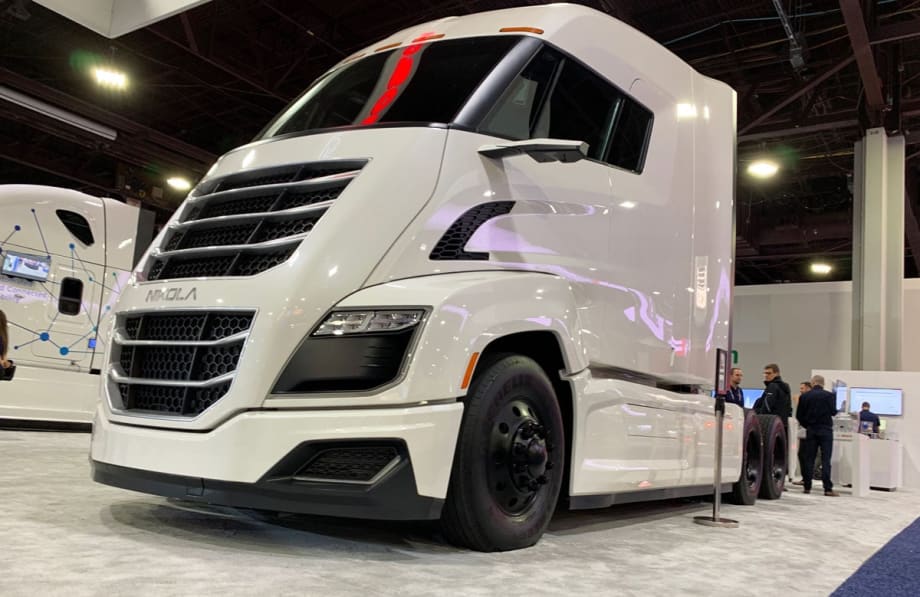
Nikola (truck in file photo from NACV 2019) said a new electric rate schedule deal with Arizona Public Service Company will accelerate the development of hydrogen-based fueling solutions.
Photo: Deborah Lockridge
After a rocky finish in 2020, Nikola announced it has secured an innovative electric rate schedule with Arizona Public Service Company that the company said makes possible the accelerated development of hydrogen-based fueling solutions for the transportation industry.
The unanimous approval of this agreement by the ACC provides Nikola with a competitive electric rate specifically designed for the production, processing, and dispensing of hydrogen, the company said. This will support, among other things, enabling a zero-emission heavy-duty freight corridor along the I-10 freeway between Los Angeles and Phoenix, according to Nikola.
Nikola said that APS’s competitive electric rate will help lead the creation of the hydrogen economy in Arizona. Nikola estimated that under the rate structure it will be able to deliver hydrogen at market-leading prices and within the ranges required for Nikola to offer competitive lease rates for its trucks customers.
In a statement, Nikola noted that it is a company "dedicated to the advancement of innovative zero-emissions truck solutions and the energy infrastructure required to make this feasible."
By facilitating low-cost production of hydrogen, the Arizona Corporation Commission’s approval of this rate schedule paves the way for the curtailment of greenhouse gases in the transportation sector, while also providing benefits to key constituents via novel grid-balancing solutions, the company added.
Nikola said it was able too negotiate a lower rate because its hydrogen production facilities will be configured to respond to the needs of the grid, for example by reducing Nikola’s energy consumption from the electric grid during heatwaves.
“Through this agreement, Nikola is assured a reliable and competitively priced source of electricity that will allow us to commence the development of hydrogen production facilities to serve the fueling needs of our truck customers," said Nikola President of Energy and Commercial Pablo Koziner. "The agreement sets an important precedent in showcasing that innovative operational solutions can be developed for the economic production of hydrogen that maximize benefits to all stakeholders.”
The approval of this agreement marks an important milestone, the company said. Going forward, Nikola will work with APS to finalize site selection and interconnection requirements to establish its first hydrogen production facility in Arizona.
“For decades, hydrogen has been a promising, but elusive, source of clean energy for both the transportation and power sectors. We simply haven’t done enough to bring hydrogen to the mainstream,” stated ACC chairwoman Lea Márquez Peterson. “As we begin to enter a new energy economy, however, I want to ensure that we take all steps necessary to promote Arizona’s gradual and innovative move towards decarbonization. By supporting this application, we are doing exactly that. Let’s make our great state the nation’s epicenter of hydrogen production, processing, and fueling, and let’s have Arizona serve as a model to other states about clean energy innovation.”
More Fuel Smarts

Electric Yard Tractors Move Beyond Pilots
Operating-cost savings have overtaken sustainability goals as the leading reason surveyed fleets are adopting battery-electric terminal tractors, according to new NACFE research.
Read More →
Geotab Links Fleet Card to Vehicle Data
The new card combines fuel discounts with telematics-based purchase controls. Geotab’s analysis also points to potential savings from choosing lower-priced fuel stops.
Read More →
Fleet Economics Shape Electric Truck Outlook
ACT Research expects costs, charging infrastructure, and technology improvements to drive zero-emission commercial vehicle adoption as federal regulations and incentives retreat.
Read More →
Wex Adds Cardless Fuel Payments for Over-the-Road Customers
A new fuel card feature for Wex customers offers convenience and security.
Read More →
New California Law Could Shed Light on Electric Truck Prices
Why do battery-electric Class 8 trucks remain so expensive? A California bill signed by Gov. Gavin Newsom would give fleets and state agencies more visibility into what manufacturers charge.
Read More →
How Volvo Updated Its D13 for EPA 2027 [Watch]
Volvo’s updated D13 promises lower emissions without sacrificing performance or fuel economy. Take a closer look at what changed inside the engine in this HDT Spotlight video.
Read More →
Diesel Price Spike Shortens Payback for Natural Gas Trucks, Report Says
Energy Vision estimates fleets could recover the higher purchase price of an RNG-fueled Class 8 tractor in 1.3 to 2.8 years under current fuel-price scenarios.
Read More →
Calstart Becomes Catalyst Mobility, Reflecting Broader Focus
Calstart is now Catalyst Mobility, reflecting the nonprofit’s growing national role in clean transportation, including zero-emission trucks, infrastructure and incentive programs.
Read More →
Record Diesel Prices Squeeze Trucking Fleets
Average U.S. diesel prices have climbed to nearly $6 a gallon, surpassing the 2022 record as tight refinery capacity and Middle East disruptions keep fuel costs elevated.
Read More →
East Coast Port Launches $45M Electric Truck Push
The Port Authority of New York and New Jersey announced millions in incentives for zero-emission drayage trucks, yard tractors, and new charging hubs near the port.
Read More →