




More on this topic: Plan Early for Electric-Vehicle Charging Infrastructure
Electrified Trucking: Getting in Gear Should Begin Now
There are complex questions to address in adding electric trucks to your fleet, but that's all the more reason to get started sooner rather than later.
by Randal Kaufman, Black & Veatch
November 24, 2020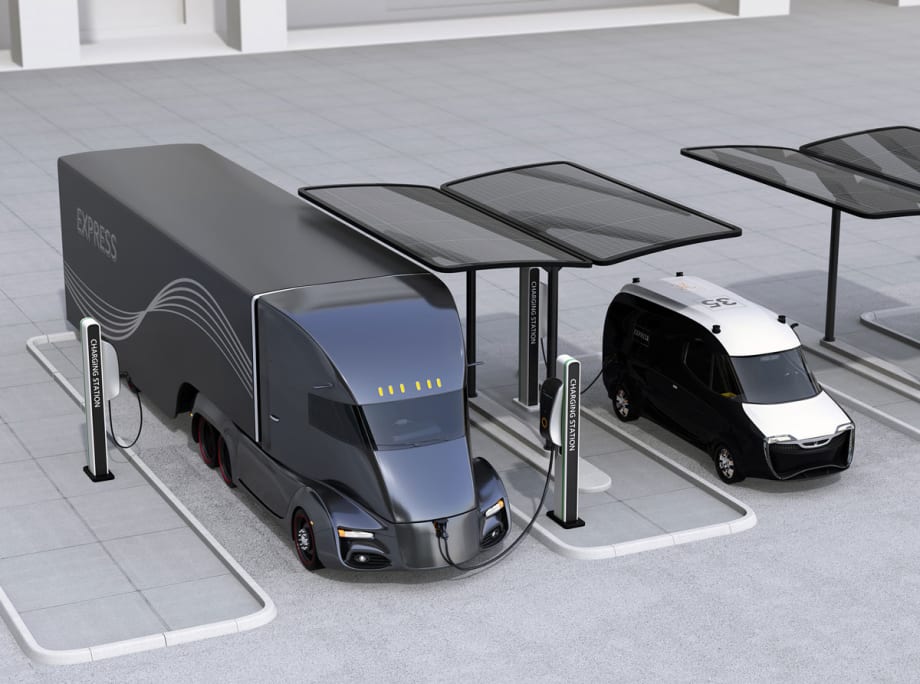
Fleet operators don’t want to buy zero-emission trucks unless they already have the means to charge them, but to build out the charging requires a decision about what kind of vehicle is best.
Illustration: Black & Veatch
4 min to read
As interest in electrified heavy-duty trucks accelerates, fleet and sustainability managers may want to gain the benefits of going cleaner and greener – but be intimidated by what it takes to make the shift.
Without question, the challenges may appear oversized. Complexities abound, from weighing and choosing technologies that best suit the enterprise’s needs, to analyzing potential charging demands, building the infrastructure, and justifying the business case for all of it.
Staying idle no longer is an option, however, as more states impose or weigh mandates requiring trucking fleets to wean themselves off diesel fuel to lower their carbon footprints. Meeting zero-emissions goals – whether it’s voluntary or required by regulatory directives – often takes years to go from concept to deployment. That means the time for action must begin now.
It’s against that backdrop that vexing but valid questions linger. Where does one begin in making such a transformational shift to battery-electric and hydrogen fuel cell electric commercial vehicles? And with diesel fuel still relatively cheap, will companies make the shift to electric or hydrogen sources that are more expensive? If so, should operators go with a pilot push to test the waters or completely take the plunge?
The short answer is that it takes bite-sized chunks at the enterprise’s own pace, with guidance from engineering and infrastructure experts.
Get Rolling: Define the Fleet, Charging Needs
The journey begins with defining the fleet requirements, mapping out things such as the number of electric trucks to be deployed, their payload capacities, routes, and sorting out whether they’ll be charged at a depot or elsewhere. That coincides with a modest investment in initial site assessment, energy monetization, and resiliency planning, which considers current utility power available, feasibility of on-site generation, and near-term technology (such as vehicles and chargers) suitable for the application.
Understanding that medium- and heavy-duty commercial fleets require considerable energy for charging helps determine the infrastructure. Managers must analyze energy demands and space and location constraints before considering which technologies to use for clean, resilient and secure on-site power generation and energy storage. Then they will need to retrofit and upgrade existing charging facilities accordingly.
Collaborating with Utilities is Key
Local utilities must be engaged at the outset, chiefly on matters involving initial design. Stakeholders should plan for long-term power capacity – looking down the road at least five to 10 years – and anticipate future infrastructure needs.
Adding high-powered charging and distributed energy resources (DER), including solar power, will require upgrades to the distribution grid – or new equipment such as utility feeders and substations. Will a new electric substation be needed, taking a couple of years to build? Substantial upgrades will drive up the cost and the time needed. A power delivery schedule without grid upgrades generally is about an eight-month process – well short of the four-year timeframe of grid improvements involving in adding a substation serviced by new transmission lines.
And there’s the persisting chicken-and-the-egg scenario: Fleet operators don’t want to buy zero-emission trucks unless they already have the means to charge them, but to build out the charging requires a decision about what kind of vehicle is best.
Getting Permits, Available Funding Help
Necessary permits and approvals must be pursued. The size of the facilities can make right-of-way and permitting more complex. Some potential issues include Americans with Disabilities Act accommodation, parking space allotment relative to building footprint, and existing buried obstructions. Only after that process, including state environmental impact filings, can ground be broken on construction.
Heavy-duty trucks that meet zero-emission demands still are only in the testing stages, but fleet choices are growing. In the heavy-duty North American market alone, according to the Rocky Mountain Institute, 19 zero-emission truck models that are either battery-electric or hydrogen fuel cell are expected to be in production in the next few years from 14 manufacturers, up 280% from the five Class 8 models commercially available now.
Such competition should drive down the costs of electrified trucks as available funding mechanisms – loans, rebates, tax credits and grants – increasingly are made available for zero-emission trucks and for required infrastructure in certain regions.
With all of the challenges in decarbonizing trucking come undeniable opportunities over the long haul. Realizing them will require fleet operators to get in gear, crunch the numbers, kick the tires of the technology, and gaze past merely the next operational quarter but years down the road.
Randal Kaufman, with Black & Veatch’s transformative technologies business, has more than 15 years of experience in the data center and fuel cell industries, including significant responsibilities in electric vehicle charging infrastructure and complementary energy delivery systems. This article was authored and edited according to HDT editorial standards and style to provide useful information to our readers.
Subscribe to Our Newsletter
More Blog Posts

Fragmented AI: Why Trucking Must Take Security More Seriously
As AI becomes embedded throughout transportation operations, the result can be a tech environment that looks more advanced on paper, but isn't necessarily more efficient, secure, or manageable in practice.
Read More →
We've Been Thinking About Truck Uptime Backward
The truck repair operations that minimize downtime aren’t necessarily the ones with the fastest technicians. They’re the ones who have the part.
Read More →
The Real Cost of Trailer Tires: Why It's Not Just a Maintenance Problem Anymore
Tire wear isn't random. The trucking fleet with a tire program that knows which trailers, positions, and routes are punishing tires the hardest is the one that buys fewer of them.
Read More →
A New Argument for Electrification: Managing Fuel Volatility
As oil prices surge amid Middle East conflict and a blocked Strait of Hormuz, fleets are feeling the squeeze in real time. In this guest column, Geotab's Neil Cawse argues electrification is no longer just about sustainability or ROI — it’s about insulating operations from what he calls a "volatility tax."
Read More →
The Time is Now to Expand Longer Combination Vehicles [Opinion]
The reauthorization of the federal highway bill offers a rare chance to advance double 53-foot LCVs. Industry leaders shouldn’t miss it, says a longtime trailer industry professional in this Guest Voices blog post.
Read More →
The Hidden Costs of 'Free' Smart Trailer Tech Installations [Commentary]
Free installation of smart trailer technologies may sound good on paper, but you could end up paying down the road.
Read More →
Protecting Small Trucking Fleets from Scammers: Lessons from the Insurance Frontlines
Hijacked DOT numbers, fake invoices, and high-tech cargo theft are on the rise. A veteran trucking insurance broker shares how to spot trouble early — and why a trusted advisor may be your strongest defense.
Read More →
Tire Retreading Makes Sense for Trucking Fleets. H.R. 3401 Could Make It Even Smarter.
Retreaded tires offer trucking fleets cost savings, sustainability gains, and supply chain security. New legislation, H.R. 3401, could make retreads even more attractive and support U.S. jobs.
Read More →
Hydrogen Fuel Cell Trucks Are Ready for the Long Haul. Now Policymakers Must Act
Accelerating the growth of hydrogen-fuel-cell-truck adoption would help make zero-emission trucking is not only possible, but practical and profitable, argues the Center for Transportation and the Environment in this Guest Voices blog.
Read More →
A New Definition for Long-Haul Heavy-Duty Trucking
Understanding the various routes that make up long haul is important as we move through trucking’s Messy Middle — a time when fleets have a variety of powertrain solutions to choose from, writes NACFE's Mike Roeth.
Read More →