




Transport Canada Names First ELD Certification Body
While the U.S. has allowed suppliers to self-certify that their equipment meets certain technical standards, Transport Canada requires third-party certification to help ensure the devices are not prone to tampering, with FPInnovations to the first body to certify ELDs as Canada prepares to mandate the technology.
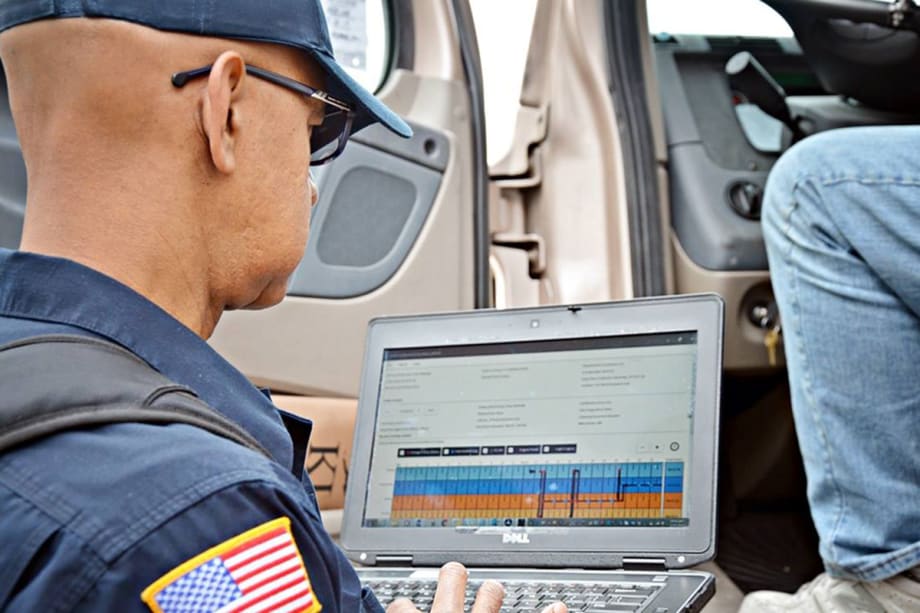
Photo: FMCSA
While the U.S. has allowed suppliers to self-certify that their equipment meets certain technical standards, Transport Canada requires third-party certification to help ensure the devices are not prone to tampering, with FPInnovations to the first body to certify electronic logging devices (ELDs) as Canada prepares to mandate the technology.
Federally regulated carriers will need to equip trucks with certified ELDs beginning June 12, 2021.
Glen Legere, FPInnovations senior director – Fibre Supply Innovation Centre of Excellence, referred to the accreditation process as “rigorous.”
“We have demonstrated our expertise in testing these devices and the validity of the results of our methodology. FPInnovations understands the importance of the electronic logging device mandate and is ready and committed to helping improve road safety in Canada by taking up the challenge of certifying these devices,” he said. “FPInnovations will soon announce guidelines on how electronic logging device providers can apply for device certification.”
FPInnovations’ transportation research group had already established an optional service that can be used to ensure that devices meet U.S. technical standards.
“I look forward to seeing even more companies accredited in the near future,” said Transport Minister Marc Garneau. “The start of Electronic Logging Device certification is a major milestone on our path towards improving road safety in Canada by having these devices installed in commercial vehicles.”
ELD Benefits
Transport Canada has calculated that mandatory ELDs will reduce the risk of fatigue-related collisions by about 10%, while also reducing administrative burdens such as the need for paper daily logs and the time enforcement officers need to verify compliance.
The Canadian Trucking Alliance (CTA) and Teamsters Canada quickly emerged with statements applauding the move.
“The process for ELD validation is expected to take three to four weeks with the certifying body being able to handle multiple ELD vendors at the same time,” said CTA president Stephen Laskowski. “All systems are a go for a new era of hours of service compliance beginning in June 2021, which covers the Canadian trucking industry engaged in inter-provincial and international trade.”
Provinces and territories will still determine whether ELDs are required for trucks that remain within their borders.
Teamsters Canada, meanwhile, sees the approaching mandate as benefitting safety.
“We are now one step closer to a future where all trucking companies have to play by the same set of rules and put safety first. Third party certified ELDs will help enforce hours of service rules designed to reduce driver fatigue, prevent accidents and ultimately save lives,” said Teamsters Canada president François Laporte.
But Mike Millian, president of the Private Motor Truck Council of Canada, continues to raise concerns about the related timelines.
“We’re glad to hear that we’ve reached this stage in the regulation finally, and it’s a positive that we now finally do have an approved third-party certification body,” Millian said. “But it does not change our opinion we are still going to run into issues with the timelines, with there only being 7-1/2 months left until the June 12 deadline.”
With the certification process expected to take four to six weeks, that leaves fleets less than six months to work with a list of certified devices, he said.
“It doesn’t change our opinion that we are still going to look at some form of enforcement delay.”
Regulators have repeatedly told Today’s Trucking that there are no plans to delay enforcement beyond June 12, 2021.
Transport Canada adds that the ELD mandate also addresses a recommendation following the Saskatchewan Coroners Service recommendation, following a multi-fatality collision involving a bus carrying members of the Humboldt Broncos hockey team.
Chantal Guay, CEO of the Standards Council of Canada, referred to it as a “critical step” for improving safety, and cited collaboration with the council, Transport Canada, and industry alike.
“This important milestone is an example of the positive impact of Canada’s standardization system on the overall health and safety of Canadians,” Guay said.
John G. Smith is the editorial director of Today's Trucking, where this article originally appeared. This content was used with permission from Newcom Media as part of a cooperative editorial agreement.
More Safety & Compliance

FMCSA Pauses Biennial-Update Enforcement Amid Motus Transition
Carriers whose updates were due on or after June 1 have more time, while FMCSA works to stabilize its new registration system and warns of phishing sites impersonating its new carrier registration system, Motus.
Read More →
ZF Expands Commercial Vehicle Push in North America
ZF is expanding its North American commercial-vehicle presence with new transmission applications, electrification, trailer technology and autonomous-driving systems.
Read More →
Truck Drivers Need More Than Another Alert
Fleets have more visibility into truck health, safety events, and driver activity than ever. The next challenge is turning all that information into useful guidance for the person who has to decide what to do next.
Read More →
Tesla Wants a Self-Driving Semi. Are Cameras Enough?
Could Tesla’s camera-only autonomous driving technology work on an 80,000-pound Semi? In this commentary, HDT's Deborah Lockridge takes a look at Tesla, Cybercab, and how autonomous trucks see the road.
Read More →
What DOT’s Automated Vehicle Strategy Means for Trucking
The U.S. Department of Transportation issued a new automated-vehicle strategy that outlines plans for driverless-truck regulations, cross-state freight corridors, and federal safety standards.
Read More →
NYC Expands Speed, Pedestrian Safety Tech Across Fleet
New York City is expanding intelligent speed assistance and pedestrian-alert systems across its municipal fleet, moving the technologies from pilot programs into vehicle procurement and retrofit requirements.
Read More →
FMCSA Removes 110 Truck Driver Training Schools from Certified ELDT List
Federal regulators also are targeting more than 160 additional training providers and launching a nationwide audit of third-party CDL skills testers as part of a broader crackdown on trucking fraud.
Read More →
Beyond DOT Compliance: What Makes a Trucking Fleet Truly Safe?
A trucking fleet can follow every rule and still make unsafe decisions. The real test comes when safety conflicts with freight, productivity, or cost.
Read More →
Hours of Service Pilot Programs: FMCSA Readies for 2027 Rollout
Two pilot programs could eventually reshape hours-of-service rules, giving truck drivers options to pause their 14-hour clock or use longer split sleeper rest periods.
Read More →
New Guide Offers Pet Safety Tips for Truck Drivers
Hundreds of thousands of pets travel in truck cabs. A new safety guide from Volvo Trucks and the Center for Pet Safety offers practical advice for truck drivers who bring dogs and cats along for the ride.
Read More →