COVID-19 does not seem to have slowed down the staff at the Federal Motor Carrier Safety Administration, which is juggling multiple rulemakings and research projects as it approaches the last months of the current administration’s term, from younger drivers to additional hours-of-service flexibility.
COVID-19 does not seem to have slowed down the staff at the Federal Motor Carrier Safety Administration, which is juggling multiple rulemakings and research projects as it approaches the last months of the current administration’s term, from younger drivers to additional hours-of-service flexibility.
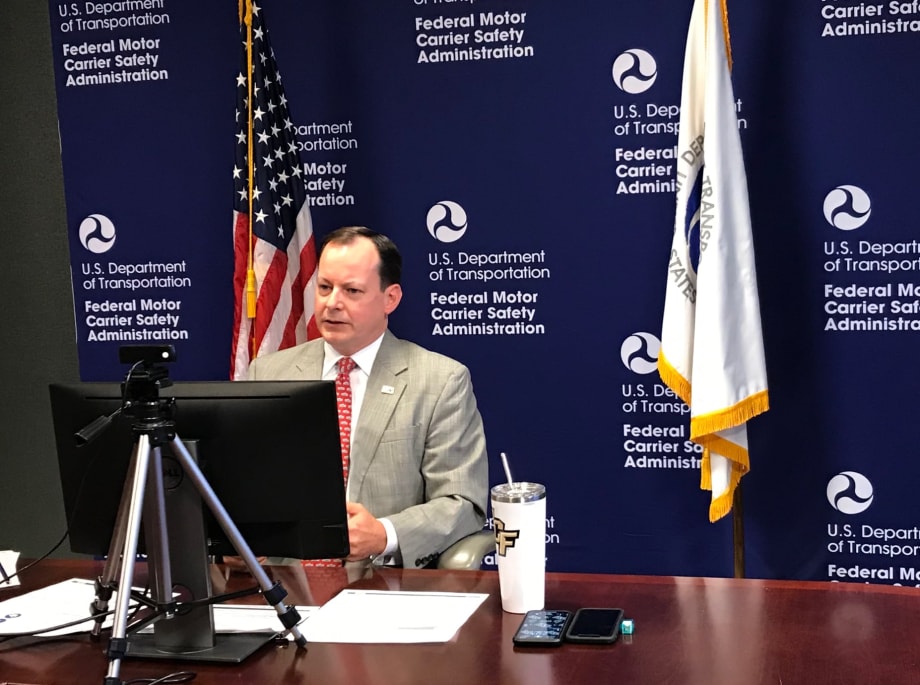
In a session at the American Trucking Association’s virtual version of its Management Conference and Exhibition Oct. 23, FMCSA Deputy Administrator Wiley Deck admitted that the agency has not made much progress in its effort to study the safety of under-21-year-old drivers in interstate commerce. A pilot program that officially was supposed to begin in June 2019 to allow younger drivers with military driver training to operate in interstate commerce has attracted only three approved drivers, along with 42 approved motor carriers.
“We are struggling in trying to get drivers in,” said Deck, who for all practical purposes is acting administrator following Jim Mullen leaving the department at the end of August. “We’ve engaged the National Guard, the Reserves, we’ve gone out to speak to large classes of drivers at training facilities, but we haven’t made any headway on this. While this study is supposed to run for three years, it’ll have to be extended, because we’re not getting the drivers.”
In response, FMCSA recently published two proposals to expand its study of younger drivers:
On Oct. 9, it issued a proposal to expand the Military Occupational Specialties (MOS) classifications from seven to 16 to open the program to a wider pool of candidates. Comments are due by Nov. 9.
In September, the agency proposed a new under-21 pilot program for younger drivers who were part of approved apprenticeship programs or who had a certain amount of safe intrastate driving under their belts already. Comments for this program also are due by Nov. 9.
“The average age of drivers entering industry is 36,” Deck said. “The current average age is 56, 57. We need to find a way to encourage the younger drivers to enter into the industry.
“No one’s collecting data on the under-21 driver operating intrastate. FMCSA is the only entity in the U.S. that can do this kind of research. We’re trying to grab that data and find out if we can introduce them safely into the industry.
“What we’re looking at is, drivers can drive from southern California to the Oregon border, from El Paso to Houston, but you can’t even go 20 miles across a state line. We’re using some common sense, but also collecting the data that’s necessary for us to move forward.”
Hair-Testing and Split Sleeper Rulemakings
Two other rulemakings have comment periods also quickly coming to a close: the Department of Health and Human Services’ hair-testing guidelines, and a pilot program to study a proposal to “pause the clock” that didn’t make it into this year’s major rulemaking changing hours of service to make them more flexible.
The HHS hair-testing guidelines must be in place before the FMCSA can embark on its own rulemaking to allow hair-testing in place of urine testing for pre-employment drug screenings of safety-sensitive workers such as truck drivers. HHS published its proposal for Mandatory Guidelines for Federal Workplace Drug Testing Programs using Hair on Sept. 10 and the comment period expires Nov. 9. Proponents of hair-testing in trucking said the proposal fell short, in part because it requires a urine test to verify a positive hair test. Hair-testing’s longer detection window, say proponents, allow it to detect lifestyle drug users. Requiring the confirmation of a positive hair test with a urine test that has a shorter detection window, eliminates the benefit of hair testing.
Another pilot program would test allowing drivers to pause their on-duty driving period with one off-duty period up to three hours. The pilot program would allow drivers one off-duty break of at least 30 minutes, but not more than three hours, which would pause a truck driver's 14-hour driving window, provided the driver takes 10 consecutive hours off-duty at the end of the work shift. This would allow, for instance, drivers to take up to a three-hour break to wait out rush hour, without it affecting their maximum on-duty time. Comments must be received on or before Nov. 2.
New CDL, Autonomous-Driving Rules in the Works
Even as the comments are still coming in on these rulemakings, the agency is working on several more, involving commercial drivers’ licenses and automated driving systems.
In July of 2019, FMCSA published two Notices of Proposed Rulemaking on CDLs. Current regulations prohibit a third-party skills test examiner from administering the CDL skills test to an applicant who received skills training from that same examiner. This rule was put into place in 2013 to address “fraud and unintended bias in skills testing,” following several scandals involving skills testers who gave passing grades to students who flunked the test. The 2019 proposal would reverse this rule and allow states to permit a third-part skills examiner to administer the CDL skills test to applicants they trained.
Also in July of 2019, FMCSA published a notice of proposed rulemaking to allow driver applicants to take their knowledge tests in any state, even if they don’t live there.
FMCSA is evaluating the comments received on these proposals and drafting final rules.
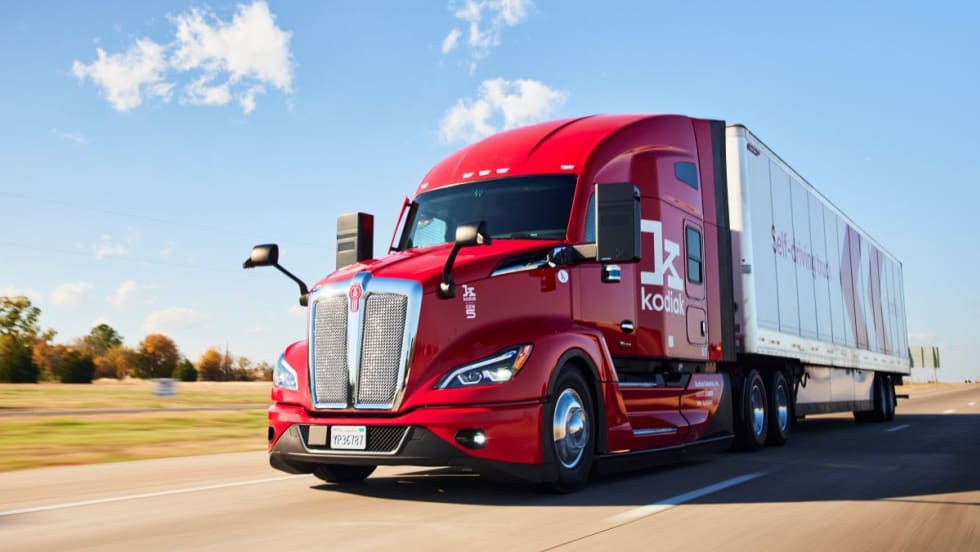
Another rule in the works is one on automated driving systems, or autonomous technology. In May 2019, the FMCSA published an advanced notice of proposed rulemaking seeking comments on issues it should consider in determining what changes may be needed for the safe introduction of this technology. The agency drafted a notice of proposed rulemaking, which is currently under departmental review and must be reviewed by the White House Office of Management and Budget before it is published.
“The proposed changes to the FMCSRs would prioritize safety and security, promote innovation, and foster a consistent regulatory approach to ADS-equipped CMVs, and would recognize the difference between human operators and ADS,” Deck’s presentation slide explained.
“It’s coming, it’s happening,” Deck said in the ATA session. “We want to ensure that those vehicles are operate in a safe manner and to ensure that our law enforcement partners know what to do. How do you pull one over? How do they put out safety triangles when disabled on the side of the road? That’s stuff that will have to be addressed and considered.”
The Future of CSA
The FAST Act required FMCSA to look at its Compliance, Safety, Accountability program and the Safety Measurement System to work with the National Academies of Science “to address some statistical challenges,” and the NAS recommended using something called Item Response Theory.
“I’m not going to get into the details of that, because I would need some guys with lab coats behind me” to help explain it, Deck said. “We are in the final review now of IRT and how it could help improve our system.”
In July of 2018, FMCSA said it was planning to run a full-scale IRT model by April of 2019 and get it rolled out fully by September of 2019. As happens with many initiatives, the agency is behind schedule. Some now are questioning whether it will happen at all.
Using IRT is a challenge, Deck explained, including the need to be able to explain how it works to come up with the safety scores. “Under the current system, you can easily calculate what your score is,” he said. That wouldn’t be the case under IRT. “We hope to make an announcement in the near future on the path forward we are going to take.”
David Osiecki, president of Scopelitis Transportation Consulting, recently said he was going out on a limb and predicted that the agency would give up on this complex replacement method for CSA scores.
Meanwhile, the agency’s new Crash Preventability Determination Program went into effect in May, addressing a key complaint about the way CSA scores penalized companies for crashes beyond their control. Deck cited examples of part of an overpass falling down on a truck, or an animal suddenly jumping on front of it. The agency has received nearly 9,000 crashes so far, and 97% of those were determined to be not preventable. In the future, Deck said, the program may be expanded beyond the 16 crash types currently included.
FMCSA's COVID-19 Response
Deck also highlighted the agency’s actions during the COVID-19 pandemic to help keep the supply chain moving, from an unprecedented national emergency exemption to providing flexibility for random drug testing requirements and extending deadlines for expired driver’s licenses and permits.
He suggested that the data to be gleaned from a wide swath of the industry operating under hours-of-service exemptions could help the agency in future rulemakings.
The agency also helped distribute more than 3 million face coverings to drivers, and it will be working with the Department of Transportation and other government agencies on COVID-19 vaccine distribution logistics.