





Related: DTNA's New Engineering Chief on Autonomous Tech, Electric Trucks and More
Torc’s Fleming: Retrofitting Trucks for Autonomy 'Not Commercially Viable'
Unlike their competitors, Daimler Trucks and Torc Robotics won’t give a definitive timeline to deployment for driverless trucks — and say that in their development, they must be built from the ground up.
September 3, 2020
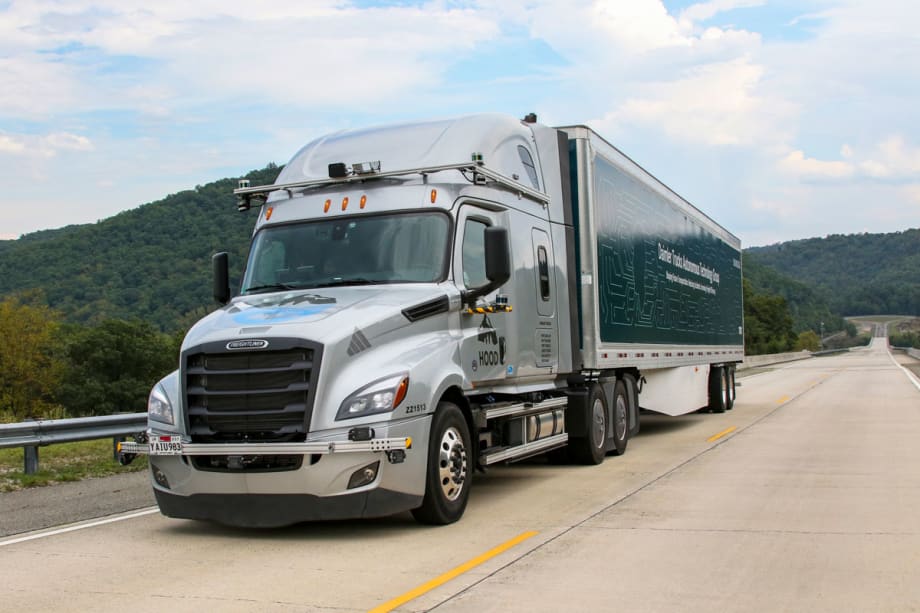
One of the Level 4 autonomous trucks being tested by Daimler Trucks and Torc Robotics.
Photo: Daimler Trucks
7 min to read
A year into their autonomous-truck collaboration, Daimler Trucks and Torc Robotics cautioned that it’s too early to nail down a definitive timeline for when self-driving trucks will become a part of trucking operations – but do predict significant progress within the next decade.
In a Zoom roundtable, Daimler and Torc updated trucking reporters on the progress of a collaboration that started in spring of 2019 with the goal of bringing “highly automated” SAE Level 4 trucks into commercial production "within the decade, and with significant impact on the logistics industry," said Peter Vaughan Schmidt, head of Daimler Truck’s Autonomous Technology Group.
Vaughan Schmidt explained that much earlier than that, the company will deploy small pilots with customers, “complete a few missions in selected [operations] in selected areas in the Southwest region of the U.S. and then grow it from there over time.”
Michael Fleming, CEO of Torc Robotics, emphasized that “we’re not setting a hard date. Our approach is we will deploy the product when it’s safe.”
Vaughan Schmidt added, “It’s a marathon, it’s not a sprint. Safety will dictate our timeline.”
This is in contrast to a recent announcement from Navistar and autonomous technology company TuSimple they were targeting production of a Level 4 autonomous truck by 2024.
One issue, Fleming said, is that the cameras, radar, and lidar needed just aren’t where they need to be yet. Daimler, he said, is using its relationship with suppliers to drive improvements to meet specifications that address not only safely, but also efficiency and cost-effectiveness.
“There isn't, in my opinion, [automated driving] hardware commercially available that meets all three today,” he said. “But through the Daimler family, we're able to leverage those tier one relationships to accelerate the development of these sensors with the right specifications and leverage the volume on the Daimler side to drive down the cost.”
Taking Aim at the Self-Driving Truck Competition
The call also took some swipes at competitors, especially startups.
“We are focused on a product – not a demo,” Fleming said. “We are not following a startup playbook. We are two well-established companies that understand the complexities of bringing a safe product to market.”
And a key part of bringing a product to market, he said, is putting customers first. The need to think about how to integrate autonomous trucks into fleet operations is why Daimler said it already is engaging customers in the effort.
“With Daimler being the market share leader, they have established very strong relationships with all of the fleets,” Fleming said. “And when I look at a competitive advantage of Torc and Daimler, it's leveraging those relationships, making sure we get those requirements right with the customers.”
In fact, Fleming said, “I do not believe you can do that outside of an OEM.” Some in the industry, he said, are looking at separating the virtual software driver from the truck. “In my opinion, retrofitting is not commercially viable. Daimler is reinventing the truck to be a self- driving truck. You have to look at this as a complete product stack. By optimizing that entire IP product stack, you can bring a cost-effective safe product [to market] that creates value. We’re not really promoting customers, because we’re focused on the product as opposed to headlines.”
When asked by HDT how the industry can make a determination about which autonomous technology companies to trust, Fleming said, “If you have a new company… it's very difficult to trust them, because you don't have many data points. There's not consistency. One of the things that I think we appreciated about Daimler and Daimler appreciated about us is neither one of us was a startup. We had a long track record. And I think that any new company in any new area that doesn't have a track record, I think it's going to be challenging to really trust them. And I believe one of the reasons that Daimler and Torc joined forces is we both have a long track record of finding ways to bring product to market.”
“We're also taking the approach here of not making promises that self-driving trucks will be commercially available in one year. Because as someone who has been in the space for 15 years, I'll tell you very frankly, that that will not happen, or will not happen in a safe fashion.”
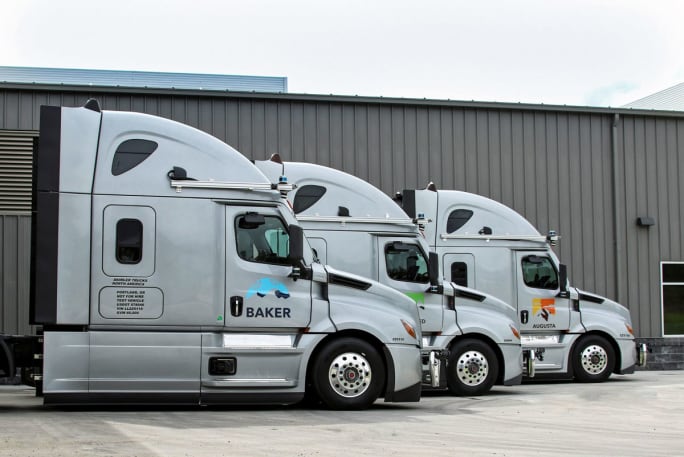
Although it hasn't trumpeted the fact, customers are very much a part of Daimler and Torc autonomous product development.
Photo: Daimler Trucks
Progress so far
Daimler Trucks and Torc started their collaboration in spring 2019, with initial public road testing on highways starting last September in southwest Virginia, where Torc is headquartered. Closed-track road testing is also conducted in Madras, Oregon, at Daimler Trucks North America’s High Desert Proving Grounds. In February, the two announced plans to expand testing of automated truck technology to additional locations, adding new public routes in the U.S., but that was postponed due to the COVID-19 pandemic. During the pandemic downtime, the teams focused on running simulations, and resumed public road testing in Virginia in June.
Now, Daimler's Autonomous Technology Group is building a new testing center in Albuquerque, New Mexico, which will support testing for more use cases on public roads starting this fall.
All automated test drives require a safety conductor overseeing the systems and a safety driver certified by Daimler Trucks and Torc. All safety drivers, Daimler said, hold commercial driver’s licenses and are trained in vehicle dynamics and automated systems.
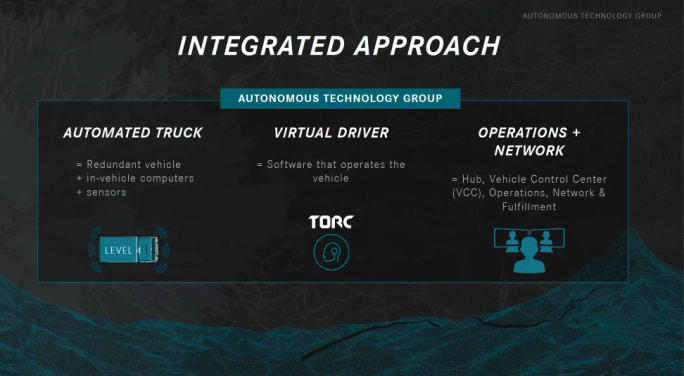
Daimler and Torc are taking a three-legged approach to integrating the truck, the virtual driver, and the operating environment.
Photo: Screen shot from Zoom call with trucking media.
In order to meet their goal of putting autonomous trucks into real-world use, Daimler and Torc said they are taking an integrated approach based on three pillars:
The automated truck
The virtual driver
The operations and network
Daimler is working on the first one, “reinventing the truck” to refine the vehicle safety systems that are critical to developing safe automated driving. The goal is to refine a truck chassis that is perfectly suited for highly automated driving and includes the redundancy of systems needed to achieve safe, reliable driving.
Torc is working on the virtual driver, the software that actually makes the driving decisions. Torc has 15 years of experience in commercializing self-driving technology in heavy-duty, safety-critical applications, according to the company, and its “Asimov” autonomous driving system has been tested on public roads, including a cross-country journey.
Daimler and Torc stressed this integrated approach on the media call.
“We have software and we have hardware that have to come together in a robust, well-balanced product,” said Fleming.
Some of the operational and network issues that need to be addressed include things such as the protocol to make sure it’s safe to send a truck on a mission, Vaughan Schmidt explained. “Has someone inspected the truck and the tires and the trailer? Is the route clear? Once the truck is on the way, is everything OK, does anything happen? I think this technology platform should be provided by us and developed… the execution but also how to embed it into our customers’ systems. We would foresee that maybe we even have different options depending on customer preference.”
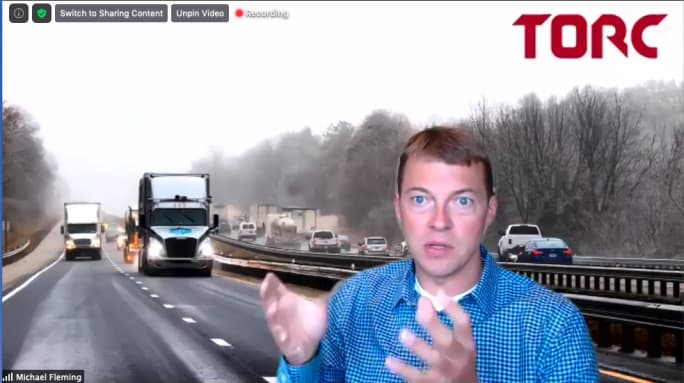
Michael Fleming, CEO of Torc Robotics: “We’re not setting a hard date...we will deploy the product when it’s safe.”
Photo: Screen shot from Zoom call with trucking media.
As Fleming said, “there will be things we need to do to accommodate the virtual driver that Daimler’s customers do not do today.” As an example, he said, there would need to be a human on call to intercede in situations where the virtual driver’s programming doesn’t cover what to do. He offered as an example a scenario where a policeman is standing in the middle of the highway directing traffic around an accident. “There’s a level of uncertainty with the truck as they encounter a situation they don’t know how to handle.” The truck at that point would come to a safe stop and send a video and other information to the tele-operator, who would interpret what the police officer is asking the truck to do and let the truck’s virtual driver know what steps to take next.
Asked about the lack of federal regulations or guidelines on autonomous truck development, Daimler and Torc said there’s a danger in developing regulations too soon. Fleming explained, “Right now, Torc and Daimler are working with the regulators to bring them up to speed with the complexity of the technology, to educate and, encourage regulators not to roll out regulations prematurely, because that may drive industry down the wrong path.”
More Fleet Management
Motive Adds AI Agents for Fleet Operations
New tools automate follow-up on fleet data, from maintenance work orders to driver alerts, with two-way voice conversations planned for later this year.
Read More →
Can You Beat Our Trucking Trivia Challenge?
Test your truck knowledge with 19 trivia questions from Heavy Duty Trucking Exchange. Can you keep up with the fleet pros?
Read More →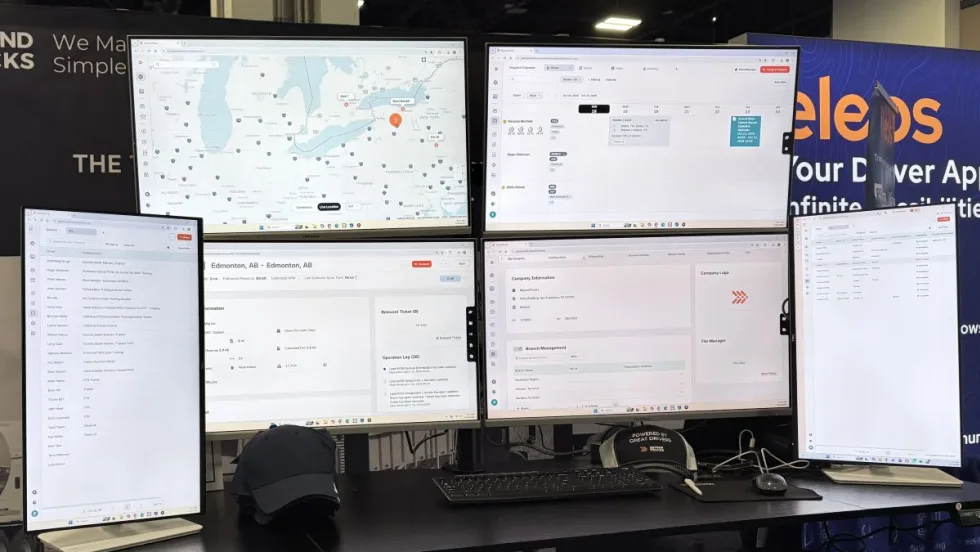
BeyondTrucks Adds Rules Checks to Dispatch
New Compatibility Engine checks driver qualifications, equipment requirements and fleet policies before loads are dispatched.
Read More →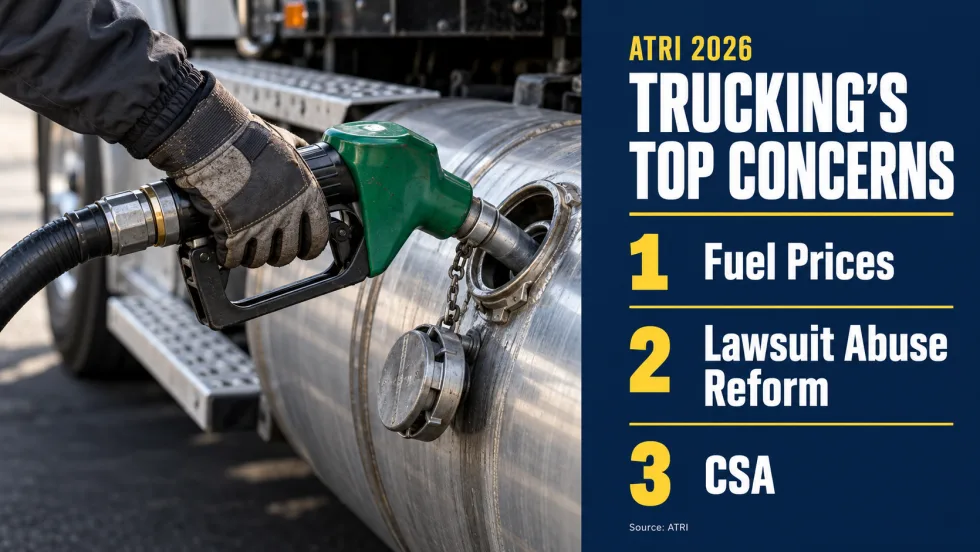
Diesel Prices Hijack Trucking’s Worry List
ATRI’s annual survey finds cautious optimism about freight, but diesel costs, litigation, and insurance continue to squeeze fleets. Drivers have different priorities on several issues.
Read More →
Nomination Deadline Extended for HDT Emerging Leaders
Just a few more days to nominate accomplished trucking fleet professionals under 40 who are making an impact and helping lead the industry forward for the HDT Emerging Leaders award. Deadline extended to October 20!
Read More →
What Will ATA’s New Leader Bring to Trucking's Table?
Incoming President and CEO Mark Colson’s record in Alabama offers clues about his priorities and approach following Chris Spear’s abrupt departure as the head of the American Trucking Associations.
Read More →
Volvo, Waabi Start Commercial Autonomous Operations in Texas
Volvo VNL Autonomous trucks, powered by the Waabi Driver, are hauling freight directly to third-party facilities for a customer in Texas.
Read More →
Samsara Launches Custom AI Agent Builder
Agent Studio lets fleets create AI tools for hours-of-service monitoring, reporting and driver support, including agents that communicate by phone.
Read More →
Einride Driverless Electric Trucks Begin Daily Freight Operations in Ohio
Two cabless electric trucks are hauling freight between EASE Logistics facilities in Marysville, Ohio, as part of a multi-state truck automation project.
Read More →
Geotab Links Fleet Card to Vehicle Data
The new card combines fuel discounts with telematics-based purchase controls. Geotab’s analysis also points to potential savings from choosing lower-priced fuel stops.
Read More →