





Related: Waiver Cuts Drug-Testing Costs for Rehiring Drivers as Business Ramps Back Up
FMCSA May 'Exercise Discretion' Enforcing Random Drug Testing
The Federal Motor Carrier Safety Administration announced that in some locations, it may “exercise discretion” and not enforce minimum annual random drug and alcohol testing rates in areas still affected by the COVID-19 pandemic.
July 7, 2020

FMCSA emphasized that fleets must document any problems getting random drug testing completed.
Photo: Quest Diagnostics
2 min to read
The Federal Motor Carrier Safety Administration announced that in some locations, it may “exercise discretion” and not enforce minimum annual random drug and alcohol testing rates in areas still affected by the COVID-19 pandemic.
In FMCSA's July 6 notice, the agency says, “in some regions of the United States, motor carrier employers subject to controlled substance (drug) and alcohol testing under 49 CFR part 382 may be unable to comply with certain testing requirements due to the ongoing impacts of the emergency. In recognition of these barriers to full compliance in some locations, the Agency may exercise discretion to determine not to enforce the minimum annual percentage random testing rates for drugs and alcohol, and the requirement that each employer ensure that the dates for administering random drug and alcohol tests are spread reasonably throughout the calendar year, as set forth in 49 CFR 382.305(b)(1) and (2) and49CFR 382.305(k), respectively. FMCSA emphasizes, however, that employers capable of meeting these requirements must continue to do so.”
Employers must continue to select drivers at the required rate of 50% of their average number of driver positions for controlled substances, and 10% for random alcohol testing during the calendar year 2020.
If a test cannot be completed due to the COVID-19 public health emergency, the motor carrier must maintain written documentation of the specific reasons for non-compliance. For example, employers should document closures or restricted use of testing facilities or the unavailability of testing personnel. The agency said companies also should document actions taken to identify alternative testing sites or other testing resources.
Similarly, employers who are unable to ensure that the dates for administering random controlled substances and alcohol tests are spread reasonably throughout the calendar year should document the specific reasons why they did not meet this requirement. For example, in addition to the lack of available testing facilities or personnel, there may be other factors, such as prolonged or intermittent driver furloughs due to the impacts of COVID-19.
“This notice is not intended, and should not be perceived, as suspending the current random testing requirements,” the agency emphasized.
It also said that FMCSA may exercise enforcement discretion in connection with motor carrier investigations in 2021.
More Safety & Compliance

Farewell, CDL: Why I'm Giving Up My Commercial Driver's License
After more than 20 years as a CDL holder, HDT Executive Editor Jack Roberts is letting his commercial license expire. Not because he wants to — but because trucking's nuclear verdict crisis has made the risks of public-road test drives too great for editors, manufacturers, and everyone involved.
Read More →
Sponsored•July 1, 2026
Enhance Fleet Performance with High-Efficiency Auxiliary Power Units
Drive sustainable cost savings while increasing driver comfort during short- and long-haul logistics operations.
Read More →
Wabash Trailers Recalled for Improperly Installed Underride Guards
More than 900 Wabash dry van trailers may not comply with the Federal Motor Vehicle Safety Standard for rear impact guards.
Read More →

Why K&B Trucking Is Embracing AI and Driver Safety Technology
Crunching data and embracing artificial intelligence are key in K&B Trucking's safety efforts, says the company's safety director.
Read More →
The Hidden Problem Behind FMCSA's ELD Revocations
NMFTA researchers say dozens of registered ELDs may be built on the same software platforms, allowing compliance and security concerns to persist even after individual devices are removed from the market.
Read More →
ATRI Wants Motor Carriers for Driver-Facing Camera Study
In this new study, the American Transportation Research Institute will explore how driver-facing cameras can impact safety and operational metrics in trucking fleets.
Read More →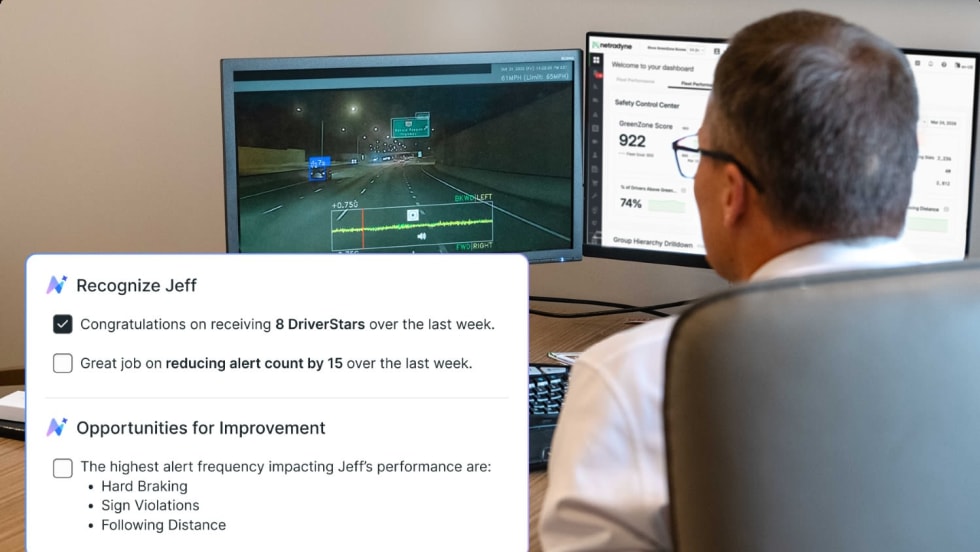
Netradyne Intelligence Uses New AI Agents to Automate Response to In-Cab Camera Data
The company called the next-generation in-cab camera safety platform "a fundamental shift from systems that report on what happened to systems that actively drive what should happen next."
Read More →Mack, Volvo Issue ‘Do Not Drive’ Recall on Possible Wheel-Offs
Owners will be sent advance notice not to operate their affected vehicles until the remedy is performed.
Read More →
Fleetworthy Integrates Lytx Video Snapshots into Safety+ Platform
A new Fleetworthy-Lytx integration gives fleet managers access to video context alongside safety event data, streamlining driver coaching and incident review.
Read More →
How Waste Connections is Using Data, Telematics, and AI
How do you manage and maintain more than 18,000 connected trucks? Data. Lots of it.
Read More →