




ZF Details Research on Passenger Monitoring System
ZF says its new Interior Observation System can monitor drivers and passengers in a vehicle to help save lives and reduce injuries during an accident.

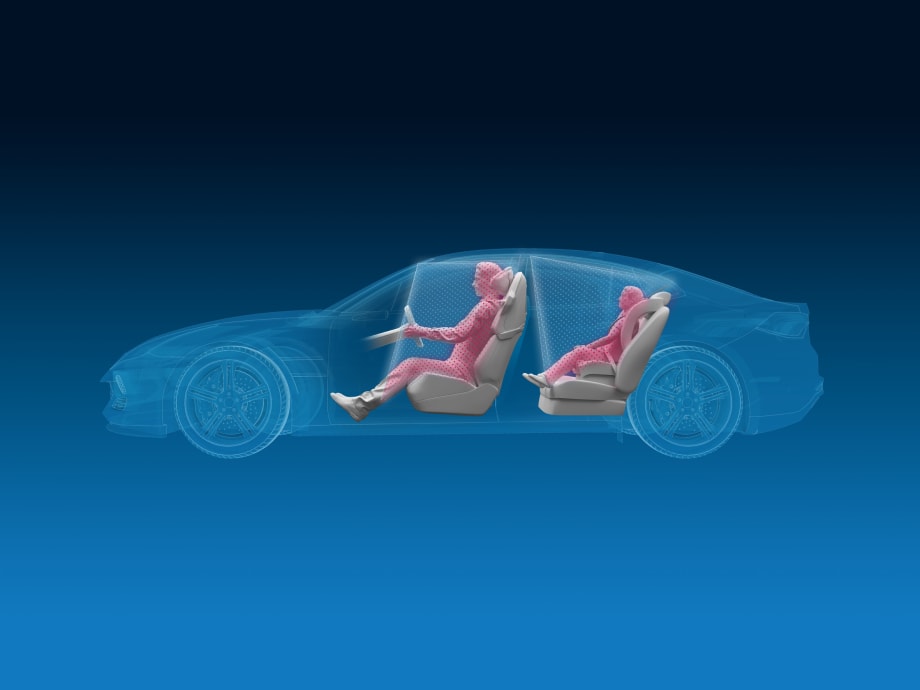
ZF says its new IOS 3D interior camera system can monitor driver and passengers, includling the ability to recognize when a child has been left unattended in a vehicle and needs help. Photo: ZF
Tier 1 automotive and commercial vehicle supplier ZF is developing a three-dimensional Interior Observation System capable of detecting and classifying vehicle occupants, determining their size, location and position, and whether or not they are in active control of the vehicle via the steering wheel or monitoring the automated driving systems – all key data to assist with advanced safety and automated driving functions.
ZF has been recognized as an innovator in external camera systems for vehicles for some time. Now, the company says it has also been working on the development of interior observation cameras for more than ten years. Due to the trend toward advanced safety and vehicle automation, interest in interior camera technology has intensified and ZF is now developing a 3D camera interior observation system supporting a broad variety of potential safety, comfort and AD applications.
A prime example of the technology ZF is pursuing focuses on occupant position sensing. ZF engineers say seat-mounted sensors are already used to determine whether airbag and seat belt pre-tensioners should be deployed and at what force, and a 3D IOS camera can augment this information regarding the size and real-time position and posture of occupants, including out-of-position detection such as reclined seats – all information that can help tailor occupant energy management prior or in the event of a crash. Just knowing if an occupant or other object is present in a seating position can help determine if and with which adaptive occupant safety functions to deploy in that position. The camera can complement existing seatbelt buckle sensors with visual verification if the occupant is properly belted, and give guidance to do so with a reminder or other action if this is not the case.
ZF says occupant sensing can also be extremely valuable in situations where small children may be left in the car – leading to emergency situations particularly in extreme temperatures – the IOS system can be calibrated to determine the presence of a child and activate emergency actions such as an automatic call to the vehicle owners mobile phone, lowering automatic call to the vehicle owners mobile phone, lowering electric windows and opening a moonroof to reduce interior temperatures, activation of the horn and emergency flashers so others nearby can assist, or a call to emergency providers such as OEM emergency service providers or local police and first responders to assist in rescuing the child.
As vehicles become increasingly equipped with automated functions, intelligently networked interior sensors can determine if the driver’s hands are on the steering wheel and are in active control of the vehicle, and if the driver’s head is facing the road and monitoring the vehicle while making proper use of the seatbelt system. The system can indicate that the driver is in an automated mode and when a potential emergency situation is detected can trigger alerts.
“The bottom line is that visual data from the interior of the vehicle can be highly valuable from many standpoints,” said Norbert Kagerer, senior vice president, engineering for the occupant safety systems business.
“The development of our 3D interior observation system leads to enhanced safety, convenience and helps support the evolution toward automated vehicles.
ZF says the IOS system is expected to be production ready by late 2021.
Related: ZF Unveils its Roadmap to Automated and Electric Trucks
More Equipment

How Volvo Updated Its D13 for EPA 2027 [Watch]
Volvo’s updated D13 promises lower emissions without sacrificing performance or fuel economy. Take a closer look at what changed inside the engine in this HDT Spotlight video.
Read More →
Michelin Tire Improves Efficiency and Durability for Regional Fleets
The Michelin X Multi Energy D2 is a regional haul drive tire engineered to help fleets improve fuel efficiency, durability and traction in demanding stop-and-go operations.
Read More →
ZF Expands Commercial Vehicle Push in North America
ZF is expanding its North American commercial-vehicle presence with new transmission applications, electrification, trailer technology and autonomous-driving systems.
Read More →
Tesla Wants a Self-Driving Semi. Are Cameras Enough?
Could Tesla’s camera-only autonomous driving technology work on an 80,000-pound Semi? In this commentary, HDT's Deborah Lockridge takes a look at Tesla, Cybercab, and how autonomous trucks see the road.
Read More →
Kodiak: Driverless Long-Haul Truck Launch on Track for 2026
Kodiak AI says its driverless long-haul safety case is 93% complete and it remains on track to begin commercial operations by year-end 2026.
Read More →
What DOT’s Automated Vehicle Strategy Means for Trucking
The U.S. Department of Transportation issued a new automated-vehicle strategy that outlines plans for driverless-truck regulations, cross-state freight corridors, and federal safety standards.
Read More →
East Coast Port Launches $45M Electric Truck Push
The Port Authority of New York and New Jersey announced millions in incentives for zero-emission drayage trucks, yard tractors, and new charging hubs near the port.
Read More →
PlusAI Going Public to Fund Autonomous Truck Launch
A SPAC deal could provide PlusAI with up to $300 million as it works toward a 2027 commercial launch of factory-built autonomous trucks.
Read More →
NHTSA Moves to Rewrite Truck Fuel-Economy Rules
The National Highway Traffic Safety Administration says it lacks authority to regulate medium- and heavy-duty truck engines separately from complete vehicles, but the existing standards have not yet been eliminated.
Read More →
Detroit Opens Orders for EPA 2027 Engines
Detroit isn’t starting from scratch to meet EPA 2027 diesel emissions standards. Its Gen 6 DD13 and DD15 engines keep much of today’s platform while updating the fuel and aftertreatment systems.
Read More →