





How the Nation’s Largest Railroads are Partnering with Trucking
What a Rail Strike Could Mean for Trucking
With an interdependent supply chain, a nationwide rail stoppage could spell bad news for trucking. For now, the threat of a strike is paused as union members consider a tentative deal.
September 16, 2022
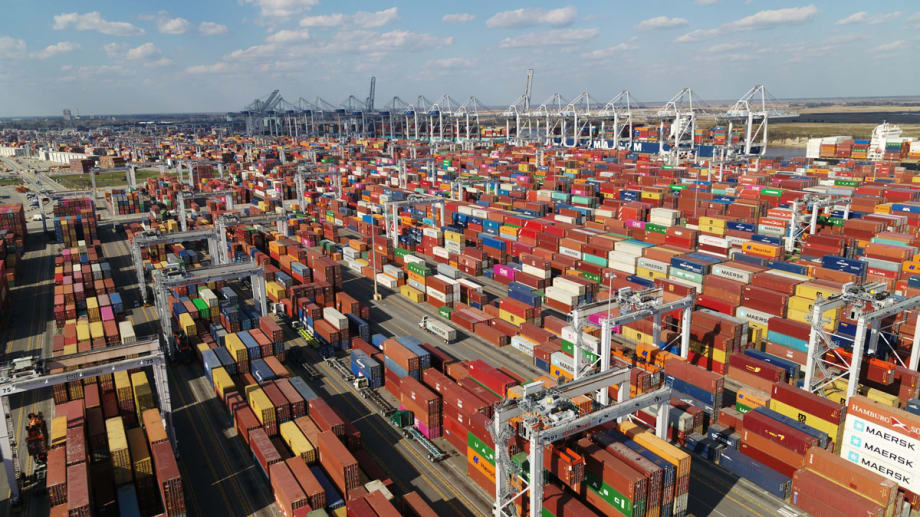
While trucking and rail companies compete for ground freight, trucking is the largest customer of the rail industry, according to ATA President Chris Spear.
File Photo: Georgia Ports Authority / Jeremy Polston
3 min to read
A tentative deal to at least temporarily prevent a freight rail labor strike was reached on Sept. 15. Rail workers threatened to a strike or lockout in October or November, calling for wage increases and improved quailty of life, such as sick leave and time off.
Three unions representing 60,000 active Class I railroad workers have said they will not strike as union members consider a deal that would include as 24% wage increase over a five-year period, with an immediate wage increase of 14% once compounded. The deal also calls for annual lump sum bonus payments totaling $5,000 and no increases to insurance copays and deductibles, according to a statement from union leaders.
Workers are not only asking for pay increases, but their key demand is to have the ability to take sick leave and to take time off.
“For the first time ever, the agreement provides our members with the ability to take time away from work to attend routine and preventative medical, as well as exemptions from attendance policies for hospitalizations and surgical procedures,” according to a statement by Jeremy Ferguson of SMART Transportation Division and Denise Pierce of the Brotherhood of Locomotive Engineers and Trainmen.
Bargaining for a contract started in January 2020. The tentative agreements follow Aug. 16 recommendations from the Presidential Emergency Board.
This is a win for the economy and for the American people.
Rail workers will get better pay, improved working conditions, and peace of mind around their health care costs.
I thank both the unions and rail companies for negotiating in good faith. https://twitter.com/secmartywalsh/status/1570338865403117569— President Biden (@POTUS) September 15, 2022
What Would a Rail Strike Mean for the Trucking Industry?
While trucking and rail companies compete for ground freight, trucking is the largest customer of the rail industry and trucks deliver the last mile of virtually every product that rail transports, explained American Trucking Associations President and CEO Chris Spear in a letter sent to Capitol Hill earlier this month.
“Both industries rely on one another to keep our supply chains healthy and efficient,” Spear wrote.
The Intermodal Association of North America reports that in 2021 alone, transportation companies moved 18,435,249 intermodal units
“Idling all 7,000 long distance daily freight trains in the U.S. would require more than 460,000 additional long-haul trucks every day, which is not possible based on equipment availability and an existing shortage of 80,000 drivers,” Spear wrote. “As such, any rail service disruption will create havoc in the supply chain and fuel inflationary pressures across the board.”
What’s Next?
The Brotherhood of Locomotive Engineers and Trainmen (BLET), a Division of the Rail Conference of the International Brotherhood of Teamsters, and the Transportation Division of the International Association of Sheet Metal, Air, Rail, and Transportation Workers (SMART-TD) will begin the process of submitting the tentative agreement to a vote by the membership of the union.
If the union members reject the deal, they could still decide to move to a strike or lockout.
More Fleet Management

Sponsored•September 16, 2026
Color Match Smarter: Tools That Restore & Perform
For fleet managers and collision repair professionals keeping heavy-duty trucks on the road, getting the color right the first time isn't just about appearance — it's about efficiency, turnaround time, and bottom-line results. Discover how today's digital color tools are transforming the repair process from guesswork to precision.
Read More →
FMCSA Pauses Biennial-Update Enforcement Amid Motus Transition
Carriers whose updates were due on or after June 1 have more time, while FMCSA works to stabilize its new registration system and warns of phishing sites impersonating its new carrier registration system, Motus.
Read More →
Sponsored•September 14, 2026
2026 Blueprint for Countering Smarter Supply Chain Theft
Cargo theft is no longer just the cost of doing business. It's a multi-billion-dollar criminal enterprise exploiting vulnerabilities across your fleet, drivers, and supply chain.
Read More →


Sponsored•September 1, 2026
How Telematics Improves Visibility, Control, and Performance in Refrigerated Fleets
Explore how telematics help refrigerated fleets improve visibility, uptime, efficiency, compliance, and cargo protection across connected cold chain operations.
Read More →
What the U.S.-Canada Trade War Means for Trucking
Escalating U.S.-Canada tariffs could disrupt cross-border freight, reduce truck volumes, raise costs, and create new uncertainty for carriers on both sides of the border.
Read More →
What Are Trucking’s Top Concerns for 2026?
The American Transportation Research Institute wants to know what's worrying trucking fleet managers, drivers, and other stakeholders in its annual Industry Issues survey.
Read More →
American Trucking Associations Looks for a New Leader
ATA President and CEO Chris Spear abruptly left his job at the association on August 21, at a pivotal time for the trucking industry.
Read More →
Public Wi-Fi Cybersecurity Risks: How Truck Drivers and Fleets Can Protect Their Data
Public Wi-Fi can expose truck drivers and fleets to credential theft, malware, and other cyber threats. Here’s how to reduce the risk on the road.
Read More →
For Nicky Cupp, Fleet Innovation Starts With Frustration
HDT Truck Fleet Innovator Nicky Cupp turns everyday pain points at Fraley & Schilling into opportunities for better technology and smarter processes.
Read More →
Adam Buttgenbach’s Approach to Electric Trucks: Start With Where They Fit
HDT Truck Fleet Innovator Adam Buttgenbach helped PepsiCo build one of North America’s largest EV fleets by focusing on where electric trucks make operational sense.
Read More →