





Related: Volvo to Sell Electric Class 8 Truck in the U.S. by End of 2020
Volvo Fielding Heavy-Duty Electric Concept Trucks Overseas
Sweden’s Volvo Group has developed electric concept trucks for construction and regional-distribution applications in Europe.
December 10, 2019
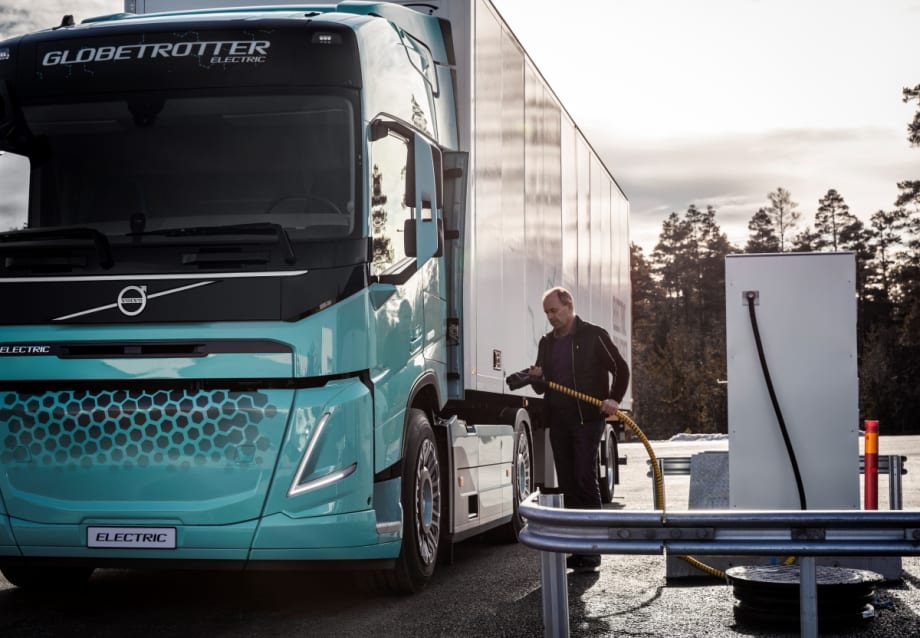
Volvo electric regional-concept truck about to get charged up in Europe.
Photo: Volvo Group
3 min to read
Peering beyond its recent sales launch of electric trucks for urban use, Sweden’s Volvo Group has developed electric concept trucks for construction and regional-distribution applications.
The global truck maker stated in a Dec. 10 news release that these concept vehicles will help it “explore and demonstrate different solutions for the future” and reflects its belief that “electrification can become a competitive alternative” for heavier-duty trucks.
It should be noted that on this side of the Atlantic, Volvo Trucks North America announced earlier this fall that it will begin selling a battery-electric version of its VNR Class 8 regional hauler— dubbed the EVNR— “at the end of 2020.”
Once the EVNR hits the market in North America, it will “in the beginning be aimed at local and regional distribution fleets and for [short-haul] drayage operations,” Johan Agebrand, VTNA’s director of product marketing, told HDT in October.
"We see great potential for heavy-duty electric trucks for regional transport and construction in the longer term,” said Roger Alm, President of Volvo Trucks in the Dec. 10 news release. “With our concept trucks, we aim to explore and demonstrate different solutions for the future while evaluating the level of interest in the market and in society."
Alm emphasized that “to increase demand for electrified trucks, the charging infrastructure needs to be rapidly expanded, while stronger financial incentives must be created for haulers who act as pioneers by choosing new vehicles with a lower environmental and climate footprint.”
Volvo contends that heavy-duty electric trucks can help improve the work environment for drivers and construction workers thanks to their low noise level and zero emissions during operation.
In addition, the elimination of emissions from such trucks will have “a significant and positive effect on air quality in cities with many ongoing construction projects. Due to the lack of noise disturbance, these trucks also make it possible to perform transport operations for more hours per day, which opens up new possibilities for streamlining operations, for instance in large construction projects and for transports in and around cities.”
As for the potential impact on regional distribution, the OEM stated that reduction of the overall climate impact of the transport sector could be reduced by using heavy electric vehicles in this application.
"In Europe there is an enormous number of trucks used for regional goods transport that have an average annual mileage of 80,000 km [almost 50,000 miles],” said Lars Mårtensson, Volvo's director of environment and innovation. “This means that increased use of electric vehicles for regional distribution would result in significant climate gains, provided the electricity is [generated] fossil-free."
Volvo said it’s aiming to start on construction and regional trucks by having selected customers in Europe pilot a small number of future such electric vehicles, adding that, “More extensive commercialisation will follow at a later point.”
Mårtensson pointed out that how quickly trucks are electrified will depend not just on charging infrastructure. He said that regional power networks will have to be capable of generating “sufficient transfer capacity in the long term” and that financial incentives will be needed “to induce more haulers to invest in electric vehicles.” He added that shippers and those using the services of vocational trucks can “contribute by offering longer contracts and being more willing to pay for sustainable transports. Many haulage operators have very small margins, so every new investment must be profitable.”
On the other hand, Volvo took pains to state that electric trucks are far from the be-all and end-all. “Ongoing improvement of the efficiency of combustion engines will continue to play a key role for long-haul truck transport for many years to come.”
"Today's truck engines are efficient energy converters that can run on diesel or various renewable fuels, such as liquefied biogas or HVO, and the technology still has potential for further development," noted Mårtensson.
More Fuel Smarts

How Volvo Updated Its D13 for EPA 2027 [Watch]
Volvo’s updated D13 promises lower emissions without sacrificing performance or fuel economy. Take a closer look at what changed inside the engine in this HDT Spotlight video.
Read More →
Diesel Price Spike Shortens Payback for Natural Gas Trucks, Report Says
Energy Vision estimates fleets could recover the higher purchase price of an RNG-fueled Class 8 tractor in 1.3 to 2.8 years under current fuel-price scenarios.
Read More →
Calstart Becomes Catalyst Mobility, Reflecting Broader Focus
Calstart is now Catalyst Mobility, reflecting the nonprofit’s growing national role in clean transportation, including zero-emission trucks, infrastructure and incentive programs.
Read More →

Record Diesel Prices Squeeze Trucking Fleets
Average U.S. diesel prices have climbed to nearly $6 a gallon, surpassing the 2022 record as tight refinery capacity and Middle East disruptions keep fuel costs elevated.
Read More →
Sponsored•September 9, 2026
How Fuel Delivery Shapes Engine Performance
Fuel delivery depends on more than what happens at the injector. For fleet, maintenance and technical professionals, looking at the full path from pump to injector can provide useful context for understanding engine performance.
Read More →
East Coast Port Launches $45M Electric Truck Push
The Port Authority of New York and New Jersey announced millions in incentives for zero-emission drayage trucks, yard tractors, and new charging hubs near the port.
Read More →
California Bill Could Shed Light on Electric Truck Prices
Why do battery-electric Class 8 trucks remain so expensive? A California bill headed to Gov. Gavin Newsom would give fleets and state agencies more visibility into what manufacturers charge.
Read More →
Detroit Opens Orders for EPA 2027 Engines
Detroit isn’t starting from scratch to meet EPA 2027 diesel emissions standards. Its Gen 6 DD13 and DD15 engines keep much of today’s platform while updating the fuel and aftertreatment systems.
Read More →
Zero-Emission Truck Corridor Planned for West Coast
California, Oregon, Washington, British Columbia and Baja California are coordinating plans for truck charging and hydrogen fueling from Canada to Mexico.
Read More →
A Closer Look at Kenworth’s Electric T880E Vocational Truck [Video]
Learn more about Kenworth's T880E battery-electric vocational truck at the Paccar Technical Center, including its range, applications, upfitting considerations, and PTO options, in this HDT Spotlight video.
Read More →