




Updated Sleep Apnea Screening Urged for Drivers
New recommendations have been released by a joint task force, offering an updated approach to the screening and management of obstructive sleep apnea (OSA) among commercial truck drivers.
New recommendations have been released by a joint task force, offering an updated approach to the screening and management of obstructive sleep apnea (OSA) among commercial truck drivers.
The recommendations include a more thorough screening and evaluation process, modified criteria for returning to work after treatment, and provide follow-up and recertification recommendations. Published as a supplement to the September issue of the Journal of Occupational and Environmental Medicine, the recommendations come from the American College of Chest Physicians, American College of Occupational and Environmental Medicine and the National Sleep Foundation.
“Sleepiness and inattention contribute to a significant number of CMV crashes each year and OSA has been shown to significantly increase a driver’s risk of driving drowsy. Yet, current CMV screening and treatment procedures for OSA are ambiguous and not reflective of the latest advancements in the diagnosis and management of OSA,” said Dr. Nancy Collop, Sleep Institute, American College of Chest Physicians. “Conflicting approaches to screening and management of OSA have left drivers undiagnosed, which puts the driver and general public at risk. We hope our joint recommendations will assist the Federal Motor Carrier Safety Administration and states to update screening and treatment guidelines for sleep apnea which, in turn, may help identify and treat more CMV drivers who suffer from this serious condition.”
Guidelines for the diagnosis and treatment of sleep apnea from the Federal Motor Carrier Safety Administration (FMCSA) are based on a 1991 report sponsored by the Federal Highway Administration. Current FMCSA guidance for certification cites that drivers must have “no established medical history or clinical diagnosis of respiratory dysfunction likely to interfere with the ability to control and drive a commercial motor vehicle.”
New recommendations are based on an extensive review of the latest sleep apnea research and existing medical guidelines related to OSA from the U.S. Department of Transportation agencies. Recommendations provide an updated description of sleep apnea, based on how sleep apnea is currently defined by professional organizations and other federal agencies.
Patients with sleep apnea include those with repetitive partial or complete obstruction of upper airway tissues during sleep, resulting in sleep disruption, gas exchange abnormalities, and cardiovascular changes. In addition, sleep experts advise that the diagnosis and severity of sleep apnea be established using the apnea-hypopnea index.
The joint task force also suggests a screening process that bases driver certification on severity of sleep apnea. These recommendations suggest certifying a driver at lower risk for sleep apnea for a maximum of three months, pending a medical evaluation (in-service evaluations), while drivers with more severe risk factors or a motor vehicle crash likely related to sleep disturbances should be prohibited from returning to work until they receive a medical evaluation (out-of-service evaluations). Furthermore, the task force suggests expanding the screening process to include a more extensive medical and physical history, flagging such risk factors as body mass index, neck circumference, family history of OSA, and history of comorbidities. For those diagnosed with sleep apnea, experts strongly recommend using positive airway pressure for a minimum of four hours within a 24-hour period via a machine that is able to measure time on pressure. Current guidelines do not specify minimum use of positive airway pressure.
“Difficulty in identifying those drivers at highest risk of OSA and accidents due to OSA has been a significant challenge for the commercial driver medical examiner. In addition, outdated guidance from the FMCSA has left medical examiners in conflict with current sleep guidelines,” said Dr. Natalie P. Hartenbaum, American College of Occupational and Environmental Medicine. “With recommendations based on current literature, and accepted by both occupational medicine and sleep medical organizations, a more consistent process for medical certification of these drivers can occur, decreasing the risk of accidents.”
Although the task force recommends more thorough screening, their recommendations suggest a shorter return-to-work time. Under current FMCSA guidelines, CMV operators who are being treated for sleep apnea can return to work a minimum of one month after initiation of treatment. The task force’s recommendations include reducing return-to-work time to two weeks after treatment initiation in certain situations. Reevaluation after four weeks to ensure compliance with therapy and improvement in symptoms is also recommended.
“Sleep apnea is a highly treatable disorder. The new return-to-work standards we suggest are more reflective of current clinical knowledge related to the treatment of sleep apnea,” said Barbara Phillips, MD, FCCP, National Sleep Foundation. “With appropriate therapy and compliance, drivers who suffer from sleep apnea will be addressing a significant risk for impaired performance on the job.”
A study sponsored by the FMCSA and the American Trucking Associations estimated that nearly one in three commercial truck drivers suffers from mild to severe OSA. The study found that the risk of having sleep apnea depended on two major factors – age and degree of obesity – with prevalence increasing with both. Population projections by FMCSA indicate the number of older drivers will increase by 50 percent over the next 20 years. Other research demonstrates that drivers with undiagnosed OSA have an increased risk (two to seven times) for falling asleep at the wheel. It also increases the possibility of an individual developing significant health problems, such as hypertension, stroke, and ischemic heart disease.
For a copy of the recommendations, contact the ACOEM at (847) 818-1800. For more information, visit www.acoem.org, www.chestnet.org, and www.sleepfoundation.org.
More Safety & Compliance

A Camera Isn't a Safety Program. Here's What Brokers Are Screening for Now
Footage alone may not be enough to pass broker vetting processes. Here's what counts as a defensible safety program now.
Read More →
Marijuana and Trucking’s Drug-Testing Dilemma
Marijuana is getting stronger, laws are changing, and drug tests still can’t reliably establish impairment. What does that mean for truck drivers and the fleets that employ them?
Read More →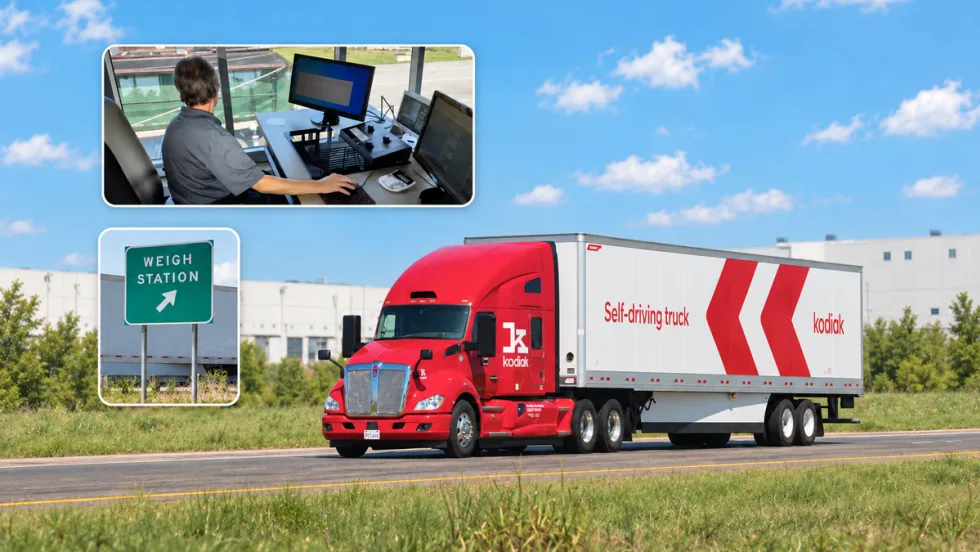
PrePass, Kodiak Connect Driverless Trucks to Roadside Enforcement
The system will allow enforcement agencies to verify Enhanced Inspection information and decide whether Kodiak’s autonomous trucks can bypass roadside screening sites.
Read More →

From One Generation to the Next: How Mentorship Builds Safer Truck Drivers
After three decades in trucking, Harold Perry shares what he's learned about driver safety, mentorship, and helping the next generation build confidence behind the wheel.
Read More →
FMCSA Pauses Biennial-Update Enforcement Amid Motus Transition
Carriers whose updates were due on or after June 1 have more time, while FMCSA works to stabilize its new registration system and warns of phishing sites impersonating its new carrier registration system, Motus.
Read More →
ZF Expands Commercial Vehicle Push in North America
ZF is expanding its North American commercial-vehicle presence with new transmission applications, electrification, trailer technology and autonomous-driving systems.
Read More →
Truck Drivers Need More Than Another Alert
Fleets have more visibility into truck health, safety events, and driver activity than ever. The next challenge is turning all that information into useful guidance for the person who has to decide what to do next.
Read More →
Tesla Wants a Self-Driving Semi. Are Cameras Enough?
Could Tesla’s camera-only autonomous driving technology work on an 80,000-pound Semi? In this commentary, HDT's Deborah Lockridge takes a look at Tesla, Cybercab, and how autonomous trucks see the road.
Read More →
What DOT’s Automated Vehicle Strategy Means for Trucking
The U.S. Department of Transportation issued a new automated-vehicle strategy that outlines plans for driverless-truck regulations, cross-state freight corridors, and federal safety standards.
Read More →
NYC Expands Speed, Pedestrian Safety Tech Across Fleet
New York City is expanding intelligent speed assistance and pedestrian-alert systems across its municipal fleet, moving the technologies from pilot programs into vehicle procurement and retrofit requirements.
Read More →