




Uncertainty Holding Back Growth, Says Economist at ATA MC&E
LAS VEGAS -- There is a lot of uncertainty about where the economy is headed, but there is reason for hope that it and business conditions for trucking are slowing improving.

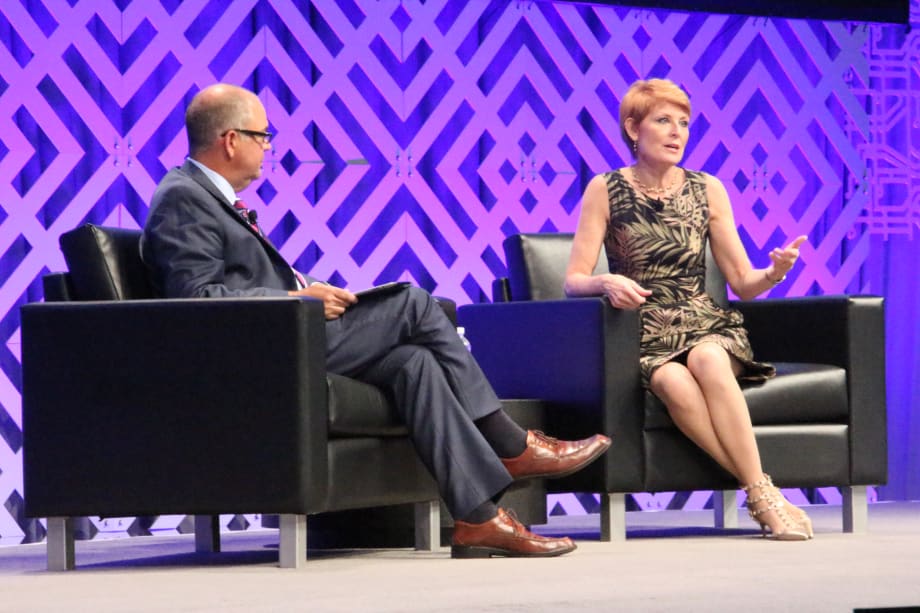
The economy and its effect on trucking was the topic of a general session on Sunday, hosted by American Trucking Associations' Chief Economist Bob Costello and his guest and analyst Diane Swonk, at the ATA's annual convention in Las Vegas. Photo: Evan Lockridge

LAS VEGAS -- There is a lot of uncertainty about where the economy is headed, but there is reason for hope that it and business conditions for trucking are slowing improving.
That was the message Sunday afternoon at the American Trucking Associations’ Management Conference & Exhibition in Las Vegas during a session hosted by ATA Chief Economist Bob Costello and his guest Diane Swonk, analyst, founder and CEO of DS Economics.
According to Swonk, the American economy is at a “turning point,” meaning business conditions are expected to rebound from their current “subpar growth” for several reasons.
One, she said, consumers are “holding their own,” meaning they are continuing to spend, which helps drive a lot of freight movements. Two, job growth has been fairly strong, although Swonk believes there are still people sitting on the sidelines.
Costello said he expects job growth to decelerate at some point, while Swonk pointed out that the millennial generation (those who reached adulthood around the turn of the century) spend more money on services rather than products – a negative for trucking – and it won’t be at least until 2022 before this generation “gets over the hurdle of their student debt legacy” meaning they have less money to spend.
Add to this the fact that online shopping is growing by leaps and bounds, resulting in what Swonk called “shifting to this hybrid of bricks and clicks,” and millennials taking jobs once held by older, higher paid workers, and it’s no wonder why there is uneasiness about how some of these trends will affect trucking.
Even technology got some of the blame from Swonk for the economy not being in better shape. She noted in a good labor market, such as in 1999, “we'd be using technology to bring people into the labor market, but today we're using it to cut them out.”
Swonk cited a "dearth of investment" by companies as one reason for sluggish economic growth. "One of the most worrisome things is capital expenditures," she said. Many companies are opting to repurchase shares or issue dividends rather than invest in the future, she said. Nevertheless, she does think manufacturing is coming back.
Swonk is also "somewhat bullish on the energy sector." Increased productivity is bringing down the break-even point of crude oil where U.S. companies can make a profit in more-expensive fracking and horizontal drilling operations. Oil prices, she said, are "moving into a sweet spot" where they're high enough for oil companies to start investing in U.S. operation again, but gas prices are still affordable enough for consumers to keep spending and to be able to take jobs they must commute to. "I think we're going to stay betewen the $40 and $50 a barrel range for the enxt couple of years. We're already seeing investment pick up."
Looking more directly at trucking, Costello said the industry has seen soft volumes in 2016 due to bloated inventories and a weak manufacturing environment.
"The current cycle of larger than normal inventories has taken longer than usual to resolve itself," he said. "Coupled with weakness in the manufacturing sector, we've seen softer than typical volumes in both the truckload and less-than-truckload sectors. However, I am hopeful that we are nearing the bottom of this cycle and will soon expect a modest rebound."
Costello said both truckload and less-than-truckload carriers added truck capacity in 2015, which makes the current environment feel even more challenging. Smaller fleets, he said, added more capacity than larger ones.
"Also, truckload carriers have added trailer capacity of late, likely in advance of the approaching electronic logging device compliance deadline," he said. "More small and medium fleets will, I believe, try to compensate for the impact of ELDs by doing more drop and hook to reduce wait times."
While trucking and the economy aren’t seeing as good of times as just a couple of years ago, Swonk noted in this post-Great Recession environment the U.S. has still “recovered faster than any other country from a crisis like this ever.”
Fiscal policy is one problem area, and Swonk predicted that the Fed will raise interest rates before the end of the year.
"We're at a turning point," Swonk said. "There should be things kicking in, in a reasonable environment. But there's this external uncetainty about polkicy and where we're going. And it's not just the U.S.; it's global in scope." Some of the themes happening in this year's election campaign, she noted, are happening in Europe as well. "Populism and extremism are on the rise, nationalism, isolationism, this idea of closing down trade ... all of that is feeding into this hesitation in investment."
The problem, she said, is that it feels “as if we're all running in mud, and the mud is the uncertainties of the global economy and the slow growth."
More Fleet Management
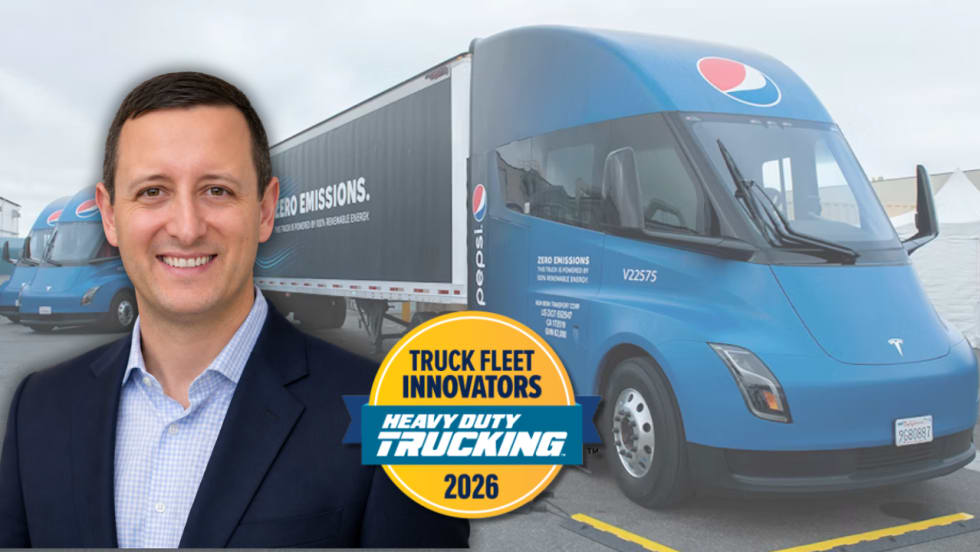
Adam Buttgenbach’s Approach to Electric Trucks: Start With Where They Fit
HDT Truck Fleet Innovator Adam Buttgenbach helped PepsiCo build one of North America’s largest EV fleets by focusing on where electric trucks make operational sense.
Read More →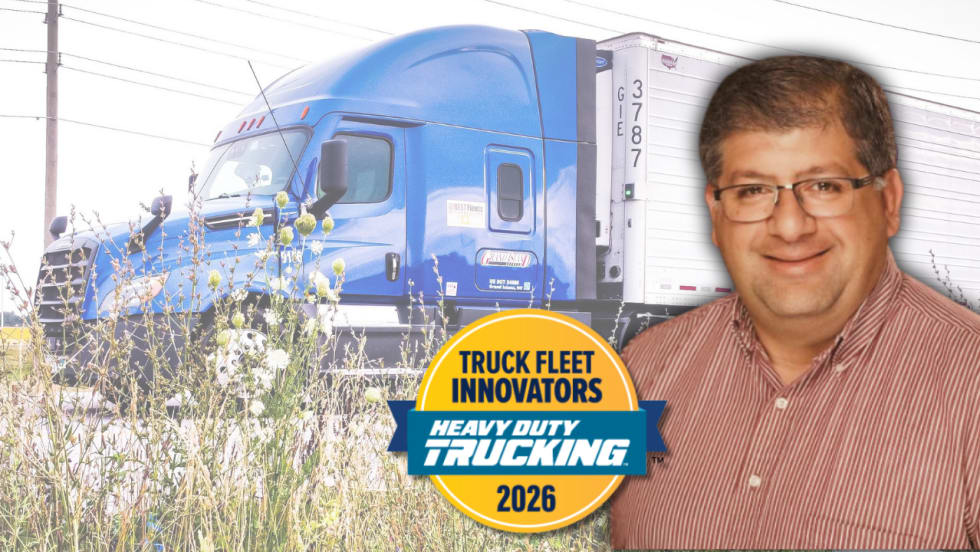
Deen Albert: Let Automation Do the Math, People Make the Decisions
HDT Truck Fleet Innovator Deen Albert makes sure people are still at the heart of operations at Grand Island Express, even while adopting artificial intelligence tools. AI-assisted dispatch helped boost revenue 25% with the same number of trucks.
Read More →
Trimble’s New AI Agent Takes Aim at Fleet Back-Office Busywork
Arc Agent works across Trimble TMS products to automate repetitive tasks such as freight orders, maintenance, invoices, fuel costs and more.
Read More →
How HDT’s 2026 Truck Fleet Innovators Are Rethinking Fleet Operations
Meet five trucking leaders who are challenging assumptions, solving operational problems, and putting innovative ideas to work.
Read More →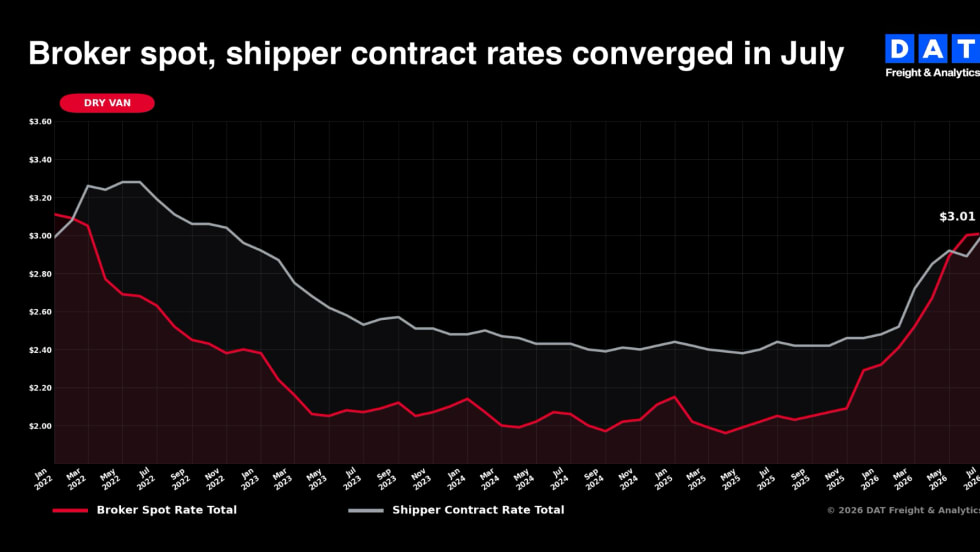
Tight Trucking Capacity Pushes Rates Higher Even as Freight Volumes Fall
“Spot rates moving ahead of contract rates have historically signaled a tightening market, but we haven’t seen a capacity-driven market quite like this one,” said DAT's Dean Croke.
Read More →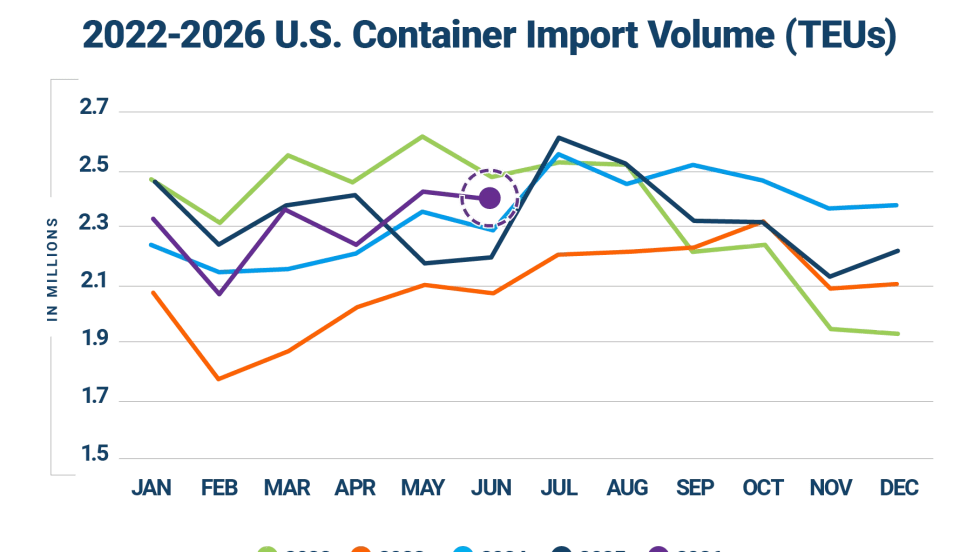
Import Cargo’s Early Peak Season is Winding Down
There was an early start to peak season this year at the nation's gateway ports, as retailers brought in merchandise ahead of tariff changes in late July and responded to other supply chain uncertainties,
Read More →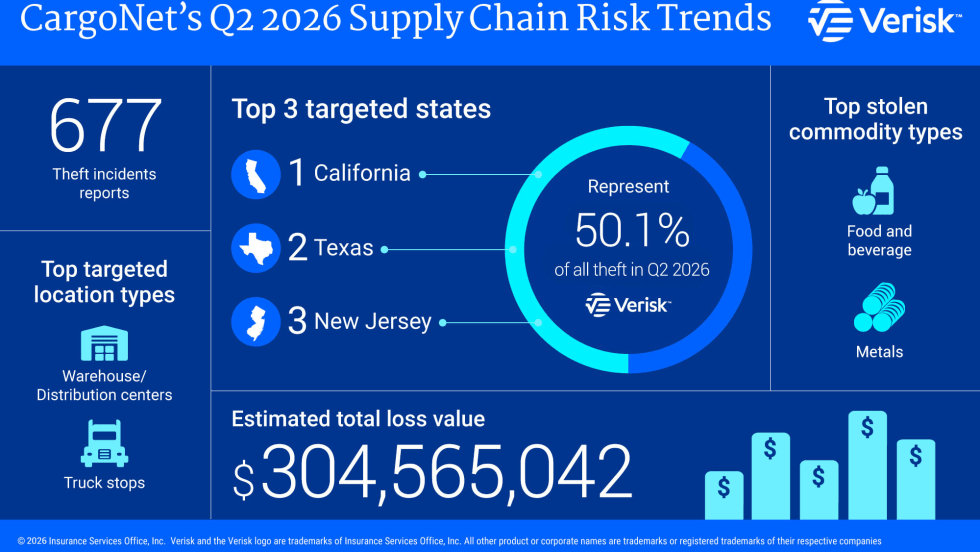
Fewer Cargo Thefts, Bigger Losses: Criminals Target Higher-Value Loads
CargoNet says organized theft rings are stealing fewer shipments but choosing more valuable freight, including metals and technology, resulting in record losses.
Read More →
How Innovative Trucking Leaders Turn Change Into an Advantage
As the pace of change accelerates in trucking, the fleets that adapt best have more than the latest technology. They have cultures that embrace improvement.
Read More →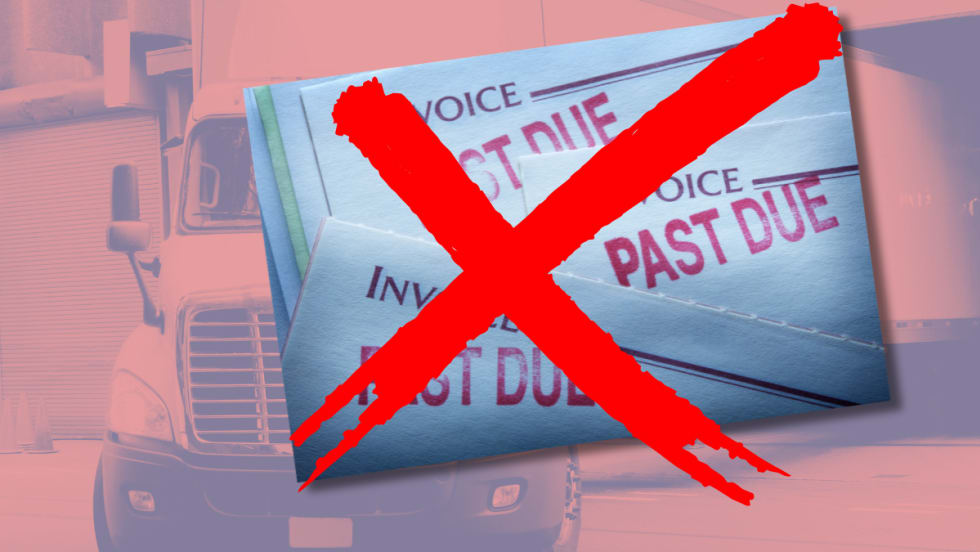
Freight Broker Bonds Just Got Harder to Get. Here's What That Means for Your Fleet.
When it gets harder for a freight broker to prove they are financially sound, the ones who cannot clear that bar get pushed out of the market. And those are exactly the brokers who used to leave motor carriers holding the bag.
Read More →
Long-Awaited Canadian Border Bridge to Open in Detroit
For trucking, the bridge opening should offer immediate improvements in efficiency and reliability, with new customs facilities, expanded inspection capacity, and direct freeway-to-freeway connections.
Read More →