




UMTRI, Con-way Study Integrated Crash Warning System
An integrated system of crash warning technologies designed to enhance the safety of commercial trucks was found in a 10-month study to help drivers stay in their lane and avoid crashes
An integrated system of crash warning technologies designed to enhance the safety of commercial trucks was found in a 10-month study to help drivers stay in their lane and avoid crashes.
The University of Michigan Transportation Research Institute and Con-way Freight this week announced the results of their year-long field test. The results were made available in a newly issued report: "The Integrated Vehicle-Based Safety Systems Heavy-Truck Field Operational Test, Key Findings Report (DOT HS 811 362). Program funding was provided by the Research and Innovative Technology Administration (RITA) Intelligent Transportation Systems Joint Program Office of the U.S. Department of Transportation.
Con-way Freight provided 10 Class 8 tractors equipped with the Integrated Vehicle-Based Safety System (IVBSS) technology for the test. Over the course of the 10-month study, which began in February 2009, 18 Con-way Freight drivers operated the trucks out of the company's Detroit service center as part of its normal business operations, logging 601,844 miles in 22,724 trips, and generating 13,678 hours of data. While the test vehicles were driven, data acquisition systems recorded driver actions and responses to the integrated warning system. UMTRI researchers then analyzed the data to study the effect that the integrated warning system had on driver acceptance and changes in driver behavior.
The majority of drivers perceived that the integrated crash warning system would increase driver safety, and it made them more aware of the traffic environment around their vehicle and their position in the lane.
Seven drivers reported the integrated system prevented them from potentially having a crash.
Fifteen out of 18 drivers said they prefer a truck equipped with the integrated safety system and would recommend that their employers purchase such a system.
In terms of satisfaction, drivers rated warnings for lane departures the highest, and second highest in terms of perceived usefulness.
The integrated crash warning system had a statistically significant effect helping drivers maintain lane positions closer to the center.
Overall, drivers responded more quickly to potential rear-end crash scenarios with the system.
Con-way Moves Forward With Technology
Based on its experience with the study, Con-way Freight chose to invest in the new technologies for all new replacement units added to the fleet this year -- more than 1,300 Freightliner Cascadia Class 8 tractors, representing an investment of some $100 million, explained Bob Petrancosta, the company's vice president of safety. (See "Con-way Freight Adds Safety Technologies to New Trucks," 7/1/2010)
"The insight we gained from the IVBSS study confirmed the feedback we got from our drivers -- these technologies are ready for prime time and are effective at helping drivers avoid the most common instances of crashes involving commercial trucks," he noted. "Safety is our number one core value. Investing in these technologies is consistent with that objective and our goal of sharing the road as safely as possible with the motoring public."
The 1,300 new tractors were each equipped with an integrated suite of "detect, alert and respond" systems which provide for rollover stability, front collision warning with radar-based adaptive cruise control, and lane departure warning. The safety technologies for the new tractors, all of which have gone into service, represent a cumulative investment of about $5 million.
On Oct. 20, the U.S. Department of Transportation will present the full results of the report during a one-day public meeting at Eagle Crest Conference Center in Ypsilanti, Mich. For more information, visit http://www.umtri.umich.edu/public/ivbss/.
More Safety & Compliance

ZF Expands Commercial Vehicle Push in North America
ZF is expanding its North American commercial-vehicle presence with new transmission applications, electrification, trailer technology and autonomous-driving systems.
Read More →
Truck Drivers Need More Than Another Alert
Fleets have more visibility into truck health, safety events, and driver activity than ever. The next challenge is turning all that information into useful guidance for the person who has to decide what to do next.
Read More →
Tesla Wants a Self-Driving Semi. Are Cameras Enough?
Could Tesla’s camera-only autonomous driving technology work on an 80,000-pound Semi? In this commentary, HDT's Deborah Lockridge takes a look at Tesla, Cybercab, and how autonomous trucks see the road.
Read More →
What DOT’s Automated Vehicle Strategy Means for Trucking
The U.S. Department of Transportation issued a new automated-vehicle strategy that outlines plans for driverless-truck regulations, cross-state freight corridors, and federal safety standards.
Read More →
NYC Expands Speed, Pedestrian Safety Tech Across Fleet
New York City is expanding intelligent speed assistance and pedestrian-alert systems across its municipal fleet, moving the technologies from pilot programs into vehicle procurement and retrofit requirements.
Read More →
FMCSA Removes 110 Truck Driver Training Schools from Certified ELDT List
Federal regulators also are targeting more than 160 additional training providers and launching a nationwide audit of third-party CDL skills testers as part of a broader crackdown on trucking fraud.
Read More →
Beyond DOT Compliance: What Makes a Trucking Fleet Truly Safe?
A trucking fleet can follow every rule and still make unsafe decisions. The real test comes when safety conflicts with freight, productivity, or cost.
Read More →
Hours of Service Pilot Programs: FMCSA Readies for 2027 Rollout
Two pilot programs could eventually reshape hours-of-service rules, giving truck drivers options to pause their 14-hour clock or use longer split sleeper rest periods.
Read More →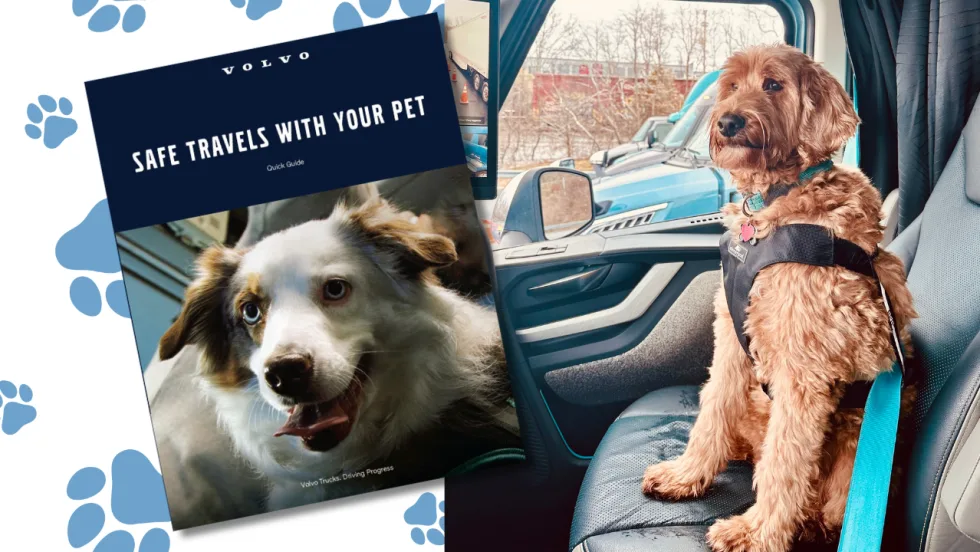
New Guide Offers Pet Safety Tips for Truck Drivers
Hundreds of thousands of pets travel in truck cabs. A new safety guide from Volvo Trucks and the Center for Pet Safety offers practical advice for truck drivers who bring dogs and cats along for the ride.
Read More →
Medical Cards, English Proficiency Reshape Roadcheck Violations
Medical-card violations jumped to the top of the driver out-of-service list during CVSA’s 2026 International Roadcheck, while English-language proficiency violations appeared among the leading violations for the first time.
Read More →