




UMTRI, Con-way Freight Launch Field Testing of Safety Warning System
The University of Michigan Transportation Research Institute has joined Con-way Freight to begin field operational testing of an integrated crash warning system installed in commercial trucks under the Integrated Vehicle-Based Safety System program
The University of Michigan Transportation Research Institute has joined Con-way Freight to begin field operational testing of an integrated crash warning system installed in commercial trucks under the Integrated Vehicle-Based Safety System program.
IVBSS is a cooperative agreement with the U. S. Department of Transportation.
The IVBSS technology fully integrates multiple crash warning features, including forward collision, lane departure and lane change-merge warning systems into the commercial truck platform. The program provides drivers with situational awareness of the vehicle's surroundings, and warns drivers when they are about to inadvertently leave the roadway, are in danger of colliding with another vehicle while attempting a lane change or are at risk of colliding with the vehicle ahead.
"We volunteered to participate in this project, since safety is one of Con-way Freight's core values and we expect this type of technology to figure prominently in future safety initiatives in the transportation industry," said Bob Petrancosta, vice president of safety for Con-way Freight.
Con-way Freight recently purchased 10 Class 8 tractors equipped with the IVBSS technology. Over the next 10 months, 20 Con-way Freight truck drivers will operate the trucks out of the company's Detroit service center as part of normal business operations, logging an estimated 700,000 miles. Data on driver response to IVBSS will be recorded along with extensive data collection on naturalistic use and the driving conditions. Researchers will then use the data to evaluate the potential safety benefits of integrating multiple crash warning systems.
IVBSS uses information gathered by inertial, video and radar sensors, plus a global positioning system, to warn drivers of potentially dangerous situations to prevent or lessen the severity of crashes. UMTRI will launch similar testing of systems for passenger cars in April.
Program partners for the IVBSS commercial-truck research include Eaton Corp., TK Holdings, International Truck and Engine Corporation, Con-way Freight and Battelle. The cooperative agreement is with the U.S. Department of Transportation and is administered by National Highway Traffic Safety Administration with assistance from the Federal Motor Carrier Safety Administration. Program funding is provided by the Research and Innovative Technology Administration of the U.S. Department of Transportation.
More info: www.its.dot.gov/ivbss/
More Safety & Compliance
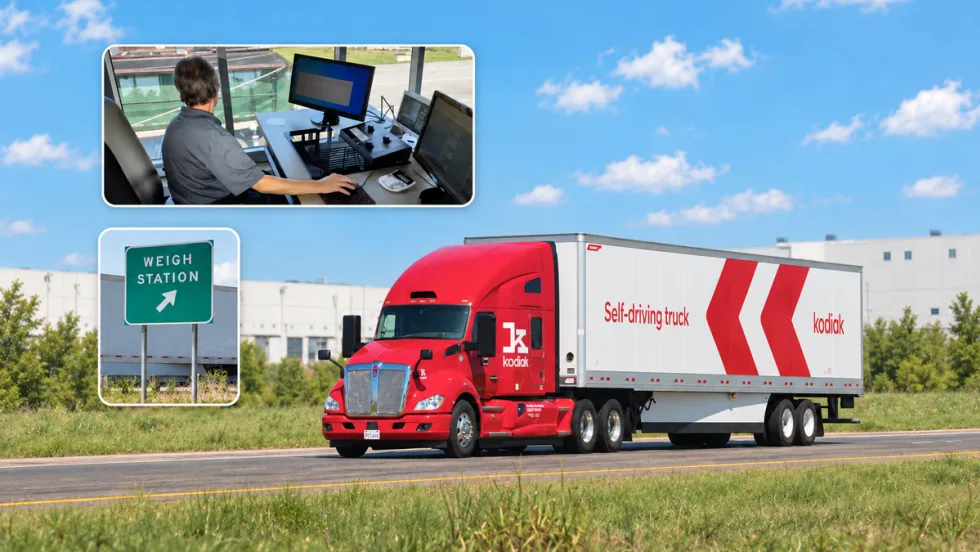
PrePass, Kodiak Connect Driverless Trucks to Roadside Enforcement
The system will allow enforcement agencies to verify Enhanced Inspection information and decide whether Kodiak’s autonomous trucks can bypass roadside screening sites.
Read More →
From One Generation to the Next: How Mentorship Builds Safer Truck Drivers
After three decades in trucking, Harold Perry shares what he's learned about driver safety, mentorship, and helping the next generation build confidence behind the wheel.
Read More →
FMCSA Pauses Biennial-Update Enforcement Amid Motus Transition
Carriers whose updates were due on or after June 1 have more time, while FMCSA works to stabilize its new registration system and warns of phishing sites impersonating its new carrier registration system, Motus.
Read More →
ZF Expands Commercial Vehicle Push in North America
ZF is expanding its North American commercial-vehicle presence with new transmission applications, electrification, trailer technology and autonomous-driving systems.
Read More →
Truck Drivers Need More Than Another Alert
Fleets have more visibility into truck health, safety events, and driver activity than ever. The next challenge is turning all that information into useful guidance for the person who has to decide what to do next.
Read More →
Tesla Wants a Self-Driving Semi. Are Cameras Enough?
Could Tesla’s camera-only autonomous driving technology work on an 80,000-pound Semi? In this commentary, HDT's Deborah Lockridge takes a look at Tesla, Cybercab, and how autonomous trucks see the road.
Read More →
What DOT’s Automated Vehicle Strategy Means for Trucking
The U.S. Department of Transportation issued a new automated-vehicle strategy that outlines plans for driverless-truck regulations, cross-state freight corridors, and federal safety standards.
Read More →
NYC Expands Speed, Pedestrian Safety Tech Across Fleet
New York City is expanding intelligent speed assistance and pedestrian-alert systems across its municipal fleet, moving the technologies from pilot programs into vehicle procurement and retrofit requirements.
Read More →
FMCSA Removes 110 Truck Driver Training Schools from Certified ELDT List
Federal regulators also are targeting more than 160 additional training providers and launching a nationwide audit of third-party CDL skills testers as part of a broader crackdown on trucking fraud.
Read More →
Beyond DOT Compliance: What Makes a Trucking Fleet Truly Safe?
A trucking fleet can follow every rule and still make unsafe decisions. The real test comes when safety conflicts with freight, productivity, or cost.
Read More →