




Uber Freight Expands into Less-Than-Truckload
Uber Freight announced it is expanding into the less-than-truckload market, giving shippers a single freight-matching platform for both truckload and LTL needs.

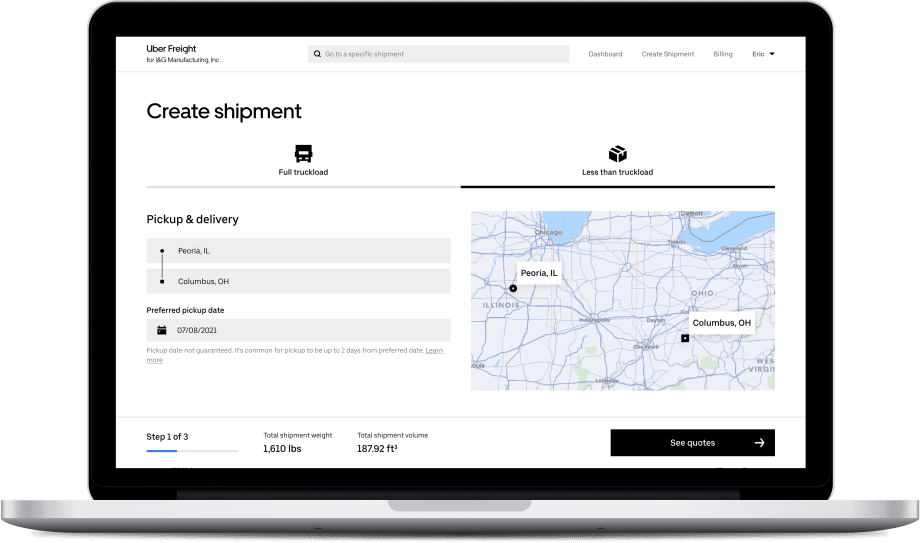
Uber Freight will now offer shippers the ability to book both truckload and less-than-truckload freight through its platform.
Photo: Uber Freight
Uber Freight announced it is expanding into the less-than-truckload market, giving shippers a single freight-matching platform for both truckload and LTL needs.
In an announcement, Uber Freight said there is room for efficiency improvements in LTL. It’s especially difficult, the company said, for small and medium-size shippers, “that often have to navigate multiple logins and touchpoints on antiquated LTL websites in order to ship their freight.”
By opening up its shipper platform to support LTL, Uber said it has given shippers a direct connection to its growing marketplace of truckload carriers and a leading group of LTL carriers, offering real-time access to market prices and capacity.
Uber Freight is leveraging technology infrastructure and LTL expertise from major third-party logistics provider BlueGrace Logistics, which has “significant scale and experience in the space,” according to the announcement.
Shippers looking to book LTL freight will be able to:
Rapidly compare quotes across truckload and LTL within a single platform
Receive quotes based on item details, pickup and delivery locations, and dates
Select from a list of LTL carriers directly within the platform
Schedule pickups and deliveries
Manage LTL billings
Track shipments end to end
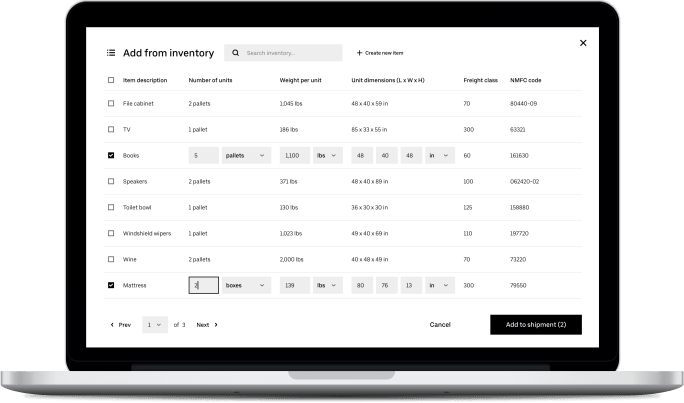
Shippers will be able to compare quotes based on factors such as item details.
Photo: Uber Freight
LTL has been one of the most requested features since Uber Freight launched its shipper platform in 2018, according to the company.
Uber Freight first launched for owner-operators and small fleets in 2017 as an app to match trucking companies with loads to haul, looking to transform the world of freight transport much as it changed the world of taxis with its ride-sharing app. Since then, among other things, it has introduced one-touch booking at fixed rates, real-time pricing and capacity APIs.
“After a year of unprecedented volatility, choice and flexibility are more important than ever to shippers,” said Lior Ron, head of Uber Freight, in a release. “Just as we did with the full truckload market, we’re using all our marketplace technology and data science expertise to bring much-needed transformation and new opportunities to LTL. It’s a segment of the industry that is not only in high demand but also furthers our journey to support shippers across first-to-final-mile logistics.”
H&M USA, an ingredients distributor based in New York, has been using the new LTL offering and is seeing promising results, according to Uber Freight.
“As an ingredients distributor to the nutritional, food, and pharmaceutical industries, there are many instances where our business doesn’t need to fill an entire trailer,” says David Qiu of H&M. “The ability to now book LTL directly within the Uber Freight shipper platform means that we can rely on one solution for all of our shipping needs. Be it FTL or LTL, Uber Freight removes anxiety from the tendering process. The experience is efficient, flexible, and transparent, and I always feel confident that our business’s goods will be shipped in a timely and cost-effective manner.”
More Fleet Management

Color Match Smarter: Tools That Restore & Perform
For fleet managers and collision repair professionals keeping heavy-duty trucks on the road, getting the color right the first time isn't just about appearance — it's about efficiency, turnaround time, and bottom-line results. Discover how today's digital color tools are transforming the repair process from guesswork to precision.
Read More →
FMCSA Pauses Biennial-Update Enforcement Amid Motus Transition
Carriers whose updates were due on or after June 1 have more time, while FMCSA works to stabilize its new registration system and warns of phishing sites impersonating its new carrier registration system, Motus.
Read More →
2026 Blueprint for Countering Smarter Supply Chain Theft
Cargo theft is no longer just the cost of doing business. It's a multi-billion-dollar criminal enterprise exploiting vulnerabilities across your fleet, drivers, and supply chain.
Read More →


How Telematics Improves Visibility, Control, and Performance in Refrigerated Fleets
Explore how telematics help refrigerated fleets improve visibility, uptime, efficiency, compliance, and cargo protection across connected cold chain operations.
Read More →
What the U.S.-Canada Trade War Means for Trucking
Escalating U.S.-Canada tariffs could disrupt cross-border freight, reduce truck volumes, raise costs, and create new uncertainty for carriers on both sides of the border.
Read More →
What Are Trucking’s Top Concerns for 2026?
The American Transportation Research Institute wants to know what's worrying trucking fleet managers, drivers, and other stakeholders in its annual Industry Issues survey.
Read More →
American Trucking Associations Looks for a New Leader
ATA President and CEO Chris Spear abruptly left his job at the association on August 21, at a pivotal time for the trucking industry.
Read More →
Public Wi-Fi Cybersecurity Risks: How Truck Drivers and Fleets Can Protect Their Data
Public Wi-Fi can expose truck drivers and fleets to credential theft, malware, and other cyber threats. Here’s how to reduce the risk on the road.
Read More →
For Nicky Cupp, Fleet Innovation Starts With Frustration
HDT Truck Fleet Innovator Nicky Cupp turns everyday pain points at Fraley & Schilling into opportunities for better technology and smarter processes.
Read More →
Adam Buttgenbach’s Approach to Electric Trucks: Start With Where They Fit
HDT Truck Fleet Innovator Adam Buttgenbach helped PepsiCo build one of North America’s largest EV fleets by focusing on where electric trucks make operational sense.
Read More →