




TSA Recalls Improperly Encoded TWIC Cards
The integrated circuit chips on approximately 26,000 previously issued Transportation Worker Identification Credentials (TWICs) issued prior to April 5, 2011 were improperly encoded and may not work with TWIC card readers
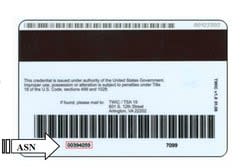
The integrated circuit chips on approximately 26,000 previously issued Transportation Worker Identification Credentials (TWICs) issued prior to April 5, 2011 were improperly encoded and may not work with TWIC card readers.
The Transportation Security Administration says it will replace these cards at the cardholder's request at no cost.
Every TWIC contains a Federal Agency Smart Credential Number (FASC-N) on its ICC. The FASC-N uniquely identifies each card. When TWIC cards are read by a card reader, the FASC-N is one of the pieces of information the reader obtains from the card.
Due to a card production system error, the number of characters in the FASC-N on some TWICs was shortened (truncated), causing readers to not recognize the card as a valid TWIC. The system error causing the FASC-N to be truncated was corrected on April 5, 2011.
TWICs issued after that date do not have truncated FASC-Ns. TWICs issued before April 5, 2011 could potentially have this issue and as a result, TWIC readers could have problems reading these cards.
If your card has this issue, it is still valid and provides evidence of your eligibility for unescorted access to secure areas. This issue only affects your card when using it with some readers.
If you currently do not use your TWIC with a card reader, then you do not need to get a replacement right away -- you will be able to get one later.
If you currently need to use your TWIC with a card reader and you are experiencing problems, you should get a replacement TWIC as soon as possible.
The TWICs that have this problem can be identified by the 8-digit Agency Serial Number (ASN) printed on the back of the TWIC. The ASN is on the bottom left side of the back of the card, as shown in the red box in the illustration above.
If the ASN on your TWIC matches a number on the TSA list, then your card has a truncated FASC-N and you may need to obtain a replacement depending on how you use your card.
If your TWIC is identified on the TSA list of cards with truncated FASC-Ns you can receive a no-cost replacement by calling the TWIC Help Desk at 1-866-347-8942, Monday through Friday, 8AM to10PM Eastern.
Please identify that your card has a truncated FASC-N, and the Customer Service Representative will assist you with ordering a replacement. You must designate the enrollment center where you will pick up your replacement TWIC.
You must turn in your TWIC with the truncated FASC-N when you return to pick up your replacement TWIC.
View the TSA Truncated card list here.
More Safety & Compliance

Marijuana and Trucking’s Drug-Testing Dilemma
Marijuana is getting stronger, laws are changing, and drug tests still can’t reliably establish impairment. What does that mean for truck drivers and the fleets that employ them?
Read More →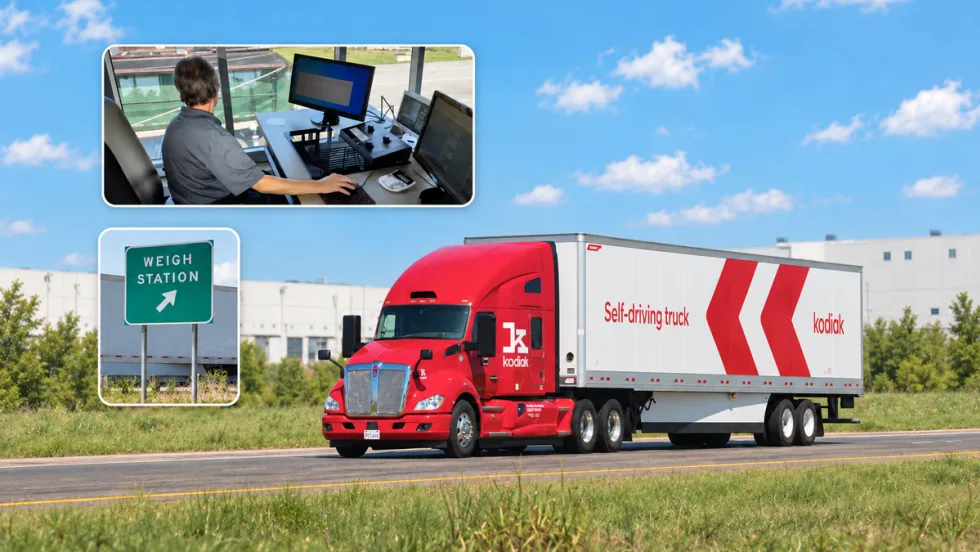
PrePass, Kodiak Connect Driverless Trucks to Roadside Enforcement
The system will allow enforcement agencies to verify Enhanced Inspection information and decide whether Kodiak’s autonomous trucks can bypass roadside screening sites.
Read More →
From One Generation to the Next: How Mentorship Builds Safer Truck Drivers
After three decades in trucking, Harold Perry shares what he's learned about driver safety, mentorship, and helping the next generation build confidence behind the wheel.
Read More →
FMCSA Pauses Biennial-Update Enforcement Amid Motus Transition
Carriers whose updates were due on or after June 1 have more time, while FMCSA works to stabilize its new registration system and warns of phishing sites impersonating its new carrier registration system, Motus.
Read More →
ZF Expands Commercial Vehicle Push in North America
ZF is expanding its North American commercial-vehicle presence with new transmission applications, electrification, trailer technology and autonomous-driving systems.
Read More →
Truck Drivers Need More Than Another Alert
Fleets have more visibility into truck health, safety events, and driver activity than ever. The next challenge is turning all that information into useful guidance for the person who has to decide what to do next.
Read More →
Tesla Wants a Self-Driving Semi. Are Cameras Enough?
Could Tesla’s camera-only autonomous driving technology work on an 80,000-pound Semi? In this commentary, HDT's Deborah Lockridge takes a look at Tesla, Cybercab, and how autonomous trucks see the road.
Read More →
What DOT’s Automated Vehicle Strategy Means for Trucking
The U.S. Department of Transportation issued a new automated-vehicle strategy that outlines plans for driverless-truck regulations, cross-state freight corridors, and federal safety standards.
Read More →
NYC Expands Speed, Pedestrian Safety Tech Across Fleet
New York City is expanding intelligent speed assistance and pedestrian-alert systems across its municipal fleet, moving the technologies from pilot programs into vehicle procurement and retrofit requirements.
Read More →
FMCSA Removes 110 Truck Driver Training Schools from Certified ELDT List
Federal regulators also are targeting more than 160 additional training providers and launching a nationwide audit of third-party CDL skills testers as part of a broader crackdown on trucking fraud.
Read More →