




Related: DOT Issues Emergency Declaration for Commercial Vehicles Delivering Coronavirus Relief
Trucking Not Hindered by New Covid-19 Border Restrictions
The Canada-U.S. border has been tightened in the fight against the Covid-19 virus, but remains open for the business of trucking between the two countries.
by John G. Smith
March 16, 2020
The Ambassador Bridge connects Detroit, Michigan, with Windsor, Ontario.
Photo: Jim Park
5 min to read
The Canada-U.S. border has been tightened in the fight against the COVID-19 virus, but remains open for the business of trucking between the two countries.
“Travel restrictions announced today will not apply to commerce,” stressed Prime Minister Justin Trudeau, who has been in self-isolation since his wife tested positive for COVID-19.
“At this point, we are closing our borders to all non-Canadians or non-permanent residents of Canada. We are recognizing for the moment that measure does not apply to U.S. citizens.”
But the new measures are far-reaching. Among them, airlines are being mandated to keep travelers who display symptoms from boarding planes, and international travelers will be routed through four specific airports. Canadians are also being encouraged to avoid non-essential travel outside the country until further notice.
“If you’re abroad, it’s time for you to come home. If you’ve just arrived, you must self-isolate for 14 days,” Trudeau said, also encouraging other Canadians to stay home.
“We recognize that the level of integration of our two economies and the coordination that we’ve had over the past while, puts the U.S. in a separate category from the rest of the world,” he said, when questioned why the U.S. is exempt from these measures. “But we will continue to coordinate with the U.S. and we will continue to examine next steps and measures that must be taken.”
Border Measures
Officials on both sides of the border have informed the Canadian Trucking Alliance (CTA) that drivers will face additional scrutiny and questioning. “But they will attempt to prioritize the efficient movement of truck drivers and goods as much as possible moving forward,” the alliance said in a statement.
Those U.S.-bound truck drivers that have returned from a known international “hot spot” for the virus in the past 14 days, however, will be denied entry.
“The Canada Border Services Agency (CBSA) is committed to limiting the spread of COVID-19 in Canada. Health and safety remains our top priority. Canada’s border services officers are professionals and have experience ensuring the health and safety of Canadians and Canada’s economy,” CBSA president John Ossowski said in a statement issued on Friday night.
He referred to the agency’s responses as “measured, proportional and responsive – based on the best available scientific evidence on the disease transmission and the World Health Organization’s recommendations.”
Agency spokeswoman Isabelle Vigneault told Today’s Trucking that it involves “adjusting our operational posture accordingly.”
This includes increasing the presence of officers at major ports of entry.
Additional Border Officers
“The additional officers are conducting public health screening and public outreach by visually observing arriving travelers and engaging with them to ensure that they are aware of the guidance provided by the Public Health Agency of Canada,” Vigneault said. “CBSA officers will use their training to approach any traveler displaying signs of illness for further questioning.”
General COVID-19 information is being distributed at all ports of entry, and officers have access to gloves, eye/face protection, and masks if they will be near a potentially infected traveler for a prolonged period of time, she added.
Those arriving at airports from any international destination were already being asked specific questions as to whether they currently have a cough, difficulty breathing, or feel they have a fever. They are also asked to acknowledge that they’ve been asked to isolate themselves for 14 days.
But the border agency has been criticized in recent days for the limited screening that had taken place.
“We will adjust our posture as the situation warrants,” Ossowski said. “We have capacity to add additional measures as required to keep Canada safe.”
‘Tighten Up the Border’
Ontario Premier Doug Ford had called for tighter measures earlier on Monday.
“We need the federal government to tighten up the border,” Ford said during a press briefing. “We are taking every step possible to slow the spread of this virus and we need our partners to do the same.”
“I’d be OK to closing the border to visitors – not to trade and commerce,” he said. “We have to keep the supply chain moving.”
Stephen Laskowski, CTA’s president, was clearly relieved to learn that truckers would not face the requirements for 14-day voluntary quarantines unless they are exhibiting symptoms of the virus.
“We’ve had zero reports – zero reports – of drivers with symptoms of COVID-19 … It’s important for the supply chain in Canada and the U.S. to recognize that our driver community is healthy,” he said. “Having 14-day quarantines for essential services like trucking wasn’t the right thing to do for Canada.”
Best Practices for Truckers
The alliance is in the midst of developing a series of best practices that fleets can use for drivers and office staff alike.
“Paperwork has now become a challenge,” Laskowski said as an example, referring to evolving operational issues. “People are sometimes anxious about dealing with paperwork these days, or e-signature machines — things that we took as simple tasks for drivers.”
Mike Millian, president of the Private Motor Truck Council of Canada (PMTC), said he was relieved that trade continues to flow.
“The Number 1 concern has to be protecting the health and welfare,” he said. “Our two countries are so reliant on each other, if you closed the border to trade you could almost be said to be harming the health and welfare of our citizens.”
In addition to encouraging social distancing, some fleets that belong to PMTC have been providing drivers with bottles of disinfectant for trucks, as well as protective gloves for drivers, he said.
A ‘Sound’ Supply Chain
Various government representatives also continue to stress that the supply chain is sound, even amid reports of grocery store shelves emptied of food staples and toilet paper.
Laskowski knows of one Canadian carrier that delivered up to 40 loads to a grocery retailer over the weekend. Its typical volumes were closer to eight or nine loads during that time period.
While some private fleets have seen business slow, those that supply retailers and deliver medical and industrial cleaning supplies are seeing a surge in activity, Millian said. “They’re suffering a shortage of manpower right now because of the demands placed on their drivers and their warehouse workers.”
“I’d like to complement the retail folks,” Ford said during his press conference, noting that they’ve assured him that the supply chain is able to handle the additional pressure. “There’s no need to rush out to stores and panic buy.
“There’s plenty of food and household essentials to go around.”
But more changes and restrictions could still come to the border itself.
“Things are constantly evolving,” Vigneault added in her response to Today’s Trucking. “There may be yet another update.”
Topics:Safety & Compliance
More Safety & Compliance

More Trailer Data Through the Same Seven-Way [Video]
Can trucking’s standard seven-way connector handle more cameras and trailer data? Grote’s Adam Slade shows HDT how the company is using new technology with its 4See trailer system, not only to add a new backup camera but also to expand other capabilities — without adding another connection.
Read More →
PrePass Intelligence Mines Fleet Bypass, Toll and Safety Data
PrePass Intelligence helps fleets measure bypass savings, flag potential toll overcharges, and spot suspicious transactions by combining data from separate systems.
Read More →
Fatal Crash Exposes Toll Plaza Risks
An NTSB investigation found that last-minute lane changes and large speed differences at an Ohio toll plaza created a hazard the truck driver couldn't avoid in time.
Read More →
When Language Stops the Truck: The Return of ELP Out-of-Service Orders
English language proficiency rules for commercial drivers aren’t new, but renewed out-of-service enforcement has raised the stakes. Here’s what carriers need to know before a driver reaches a roadside inspection.
Read More →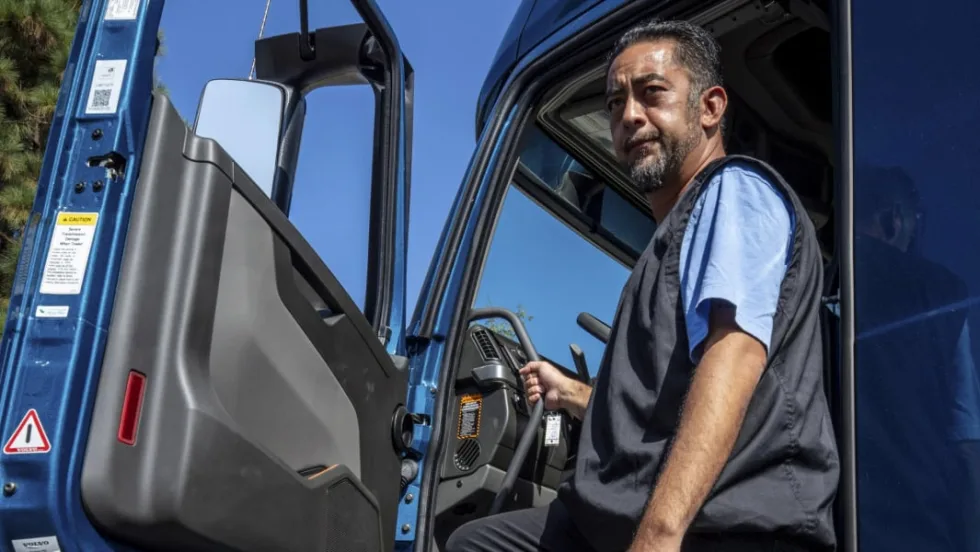
Sponsored•October 6, 2026
A Camera Isn't a Safety Program. Here's What Brokers Are Screening for Now
Footage alone may not be enough to pass broker vetting processes. Here's what counts as a defensible safety program now.
Read More →
Marijuana and Trucking’s Drug-Testing Dilemma
Marijuana is getting stronger, laws are changing, and drug tests still can’t reliably establish impairment. What does that mean for truck drivers and the fleets that employ them?
Read More →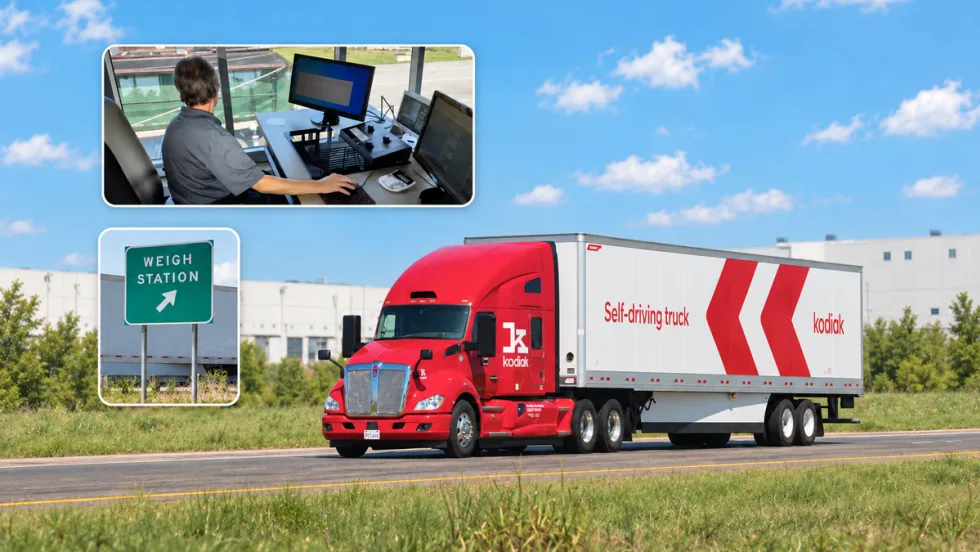
PrePass, Kodiak Connect Driverless Trucks to Roadside Enforcement
The system will allow enforcement agencies to verify Enhanced Inspection information and decide whether Kodiak’s autonomous trucks can bypass roadside screening sites.
Read More →
From One Generation to the Next: How Mentorship Builds Safer Truck Drivers
After three decades in trucking, Harold Perry shares what he's learned about driver safety, mentorship, and helping the next generation build confidence behind the wheel.
Read More →
FMCSA Pauses Biennial-Update Enforcement Amid Motus Transition
Carriers whose updates were due on or after June 1 have more time, while FMCSA works to stabilize its new registration system and warns of phishing sites impersonating its new carrier registration system, Motus.
Read More →
ZF Expands Commercial Vehicle Push in North America
ZF is expanding its North American commercial-vehicle presence with new transmission applications, electrification, trailer technology and autonomous-driving systems.
Read More →