




Trucking and Others Renew Fight Against Tolls
Businesses and organizations from numerous sectors of the U.S. economy, including in trucking, have renewed their efforts opposing tolls on existing federal interstates.

Photo: Somerset toll booth, Pennsylvania turnpike, by Doug Kerr, via Wikimedia Commons.
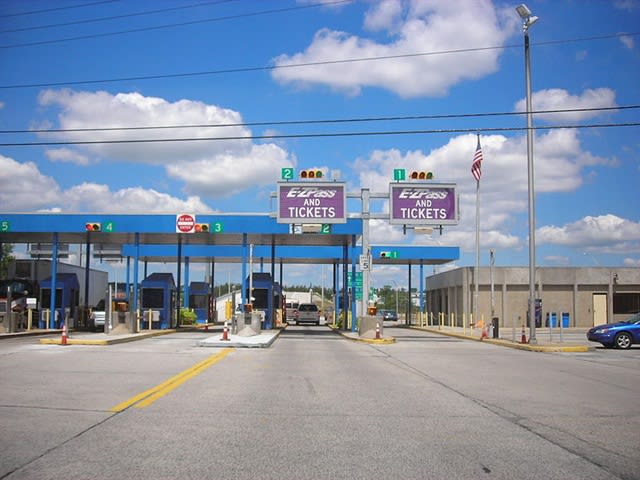
Photo: Somerset toll booth, Pennsylvania turnpike, by Doug Kerr, via Wikimedia Commons.
Businesses and organizations from numerous sectors of the U.S. economy, including trucking, have renewed their efforts opposing tolls on existing federal interstates.
The lobby group, the Alliance for Toll-Free Interstates, says it is “focused on educating the public and policymakers about the negative impact that tolling existing interstates will have on citizens, businesses, and the U.S. economy.” As part of the announcement, the group released a video explaining its position on the issue.
Many businesses are concerned that tolls on existing interstates will impact their bottom line, especially establishments that serve customers traveling the interstate, according to a release from the coalition.
“Since its inception, The Federal Interstate Highway System has facilitated unrestricted commerce and travel throughout the country. It is vital to the U.S. supply chain and has revolutionized the way America does business,” said Jay Perron, ATFI member and vice president of government affairs and public policy for the International Franchise Association. “Tolling existing interstates would reverse this progress, raising costs for travelers, businesses, and consumers, and harming the many businesses and communities located along interstate routes subject to new tolls.”
Logistics companies such as Old Dominion Freight Line are concerned about the increased business cost of tolling existing interstate lanes.
“The creation of the federal highway system opened an avenue of commerce never before seen in the U.S. This concept of unrestricted movement is a pillar of the modern economy,” said Bill Cranfill, general counsel for Old Dominion Freight Line and member of ATFI. “We support increased funding for highways but oppose tolls on current federal interstate capacity. Tolls are an inefficient method of funding, would increase the cost of moving goods, and would decrease efficiency by pushing interstate traffic onto less safe and slower local roads.”
While federal law prohibits tolls on existing Interstate highway lanes, a federal pilot program allows three states to place tolls on existing lanes within their borders, but not one has implemented tolling under the program.
ATFI is calling on Congress to repeal the pilot program claiming since it was created, numerous states have spent millions of dollars seeking Federal Highway Administration approval to participate, but have yet to set up a tolling program due to public opposition.
Congress is debating long-term transportation funding as states look for additional revenue, with some calling for lawmakers to change federal law allowing tolls along existing Interstate routes. President Obama released his plan on Wednesday.
ATFI claims numerous studies analyzing the impacts of tolling existing interstate lanes have found that “tolls create significant traffic diversion onto secondary roads, carry an astronomically high cost to administer and hurt the local and regional economies surrounding the toll facilities.”
ATFI currently has over 100 members nationwide including: the American Trucking Associations, FedEx, NATSO, Specialized Carriers & Rigging Association, Truckload Carriers Association and UPS.
More Fleet Management

Color Match Smarter: Tools That Restore & Perform
For fleet managers and collision repair professionals keeping heavy-duty trucks on the road, getting the color right the first time isn't just about appearance — it's about efficiency, turnaround time, and bottom-line results. Discover how today's digital color tools are transforming the repair process from guesswork to precision.
Read More →
FMCSA Pauses Biennial-Update Enforcement Amid Motus Transition
Carriers whose updates were due on or after June 1 have more time, while FMCSA works to stabilize its new registration system and warns of phishing sites impersonating its new carrier registration system, Motus.
Read More →
2026 Blueprint for Countering Smarter Supply Chain Theft
Cargo theft is no longer just the cost of doing business. It's a multi-billion-dollar criminal enterprise exploiting vulnerabilities across your fleet, drivers, and supply chain.
Read More →


How Telematics Improves Visibility, Control, and Performance in Refrigerated Fleets
Explore how telematics help refrigerated fleets improve visibility, uptime, efficiency, compliance, and cargo protection across connected cold chain operations.
Read More →
What the U.S.-Canada Trade War Means for Trucking
Escalating U.S.-Canada tariffs could disrupt cross-border freight, reduce truck volumes, raise costs, and create new uncertainty for carriers on both sides of the border.
Read More →
What Are Trucking’s Top Concerns for 2026?
The American Transportation Research Institute wants to know what's worrying trucking fleet managers, drivers, and other stakeholders in its annual Industry Issues survey.
Read More →
American Trucking Associations Looks for a New Leader
ATA President and CEO Chris Spear abruptly left his job at the association on August 21, at a pivotal time for the trucking industry.
Read More →
Public Wi-Fi Cybersecurity Risks: How Truck Drivers and Fleets Can Protect Their Data
Public Wi-Fi can expose truck drivers and fleets to credential theft, malware, and other cyber threats. Here’s how to reduce the risk on the road.
Read More →
For Nicky Cupp, Fleet Innovation Starts With Frustration
HDT Truck Fleet Innovator Nicky Cupp turns everyday pain points at Fraley & Schilling into opportunities for better technology and smarter processes.
Read More →
Adam Buttgenbach’s Approach to Electric Trucks: Start With Where They Fit
HDT Truck Fleet Innovator Adam Buttgenbach helped PepsiCo build one of North America’s largest EV fleets by focusing on where electric trucks make operational sense.
Read More →