




Truck Parts and Labor Costs Continue to Slide
A new report from TMC and Decisiv has found that parts and labor costs are trending downward for the second quarter of improvement since 2023.

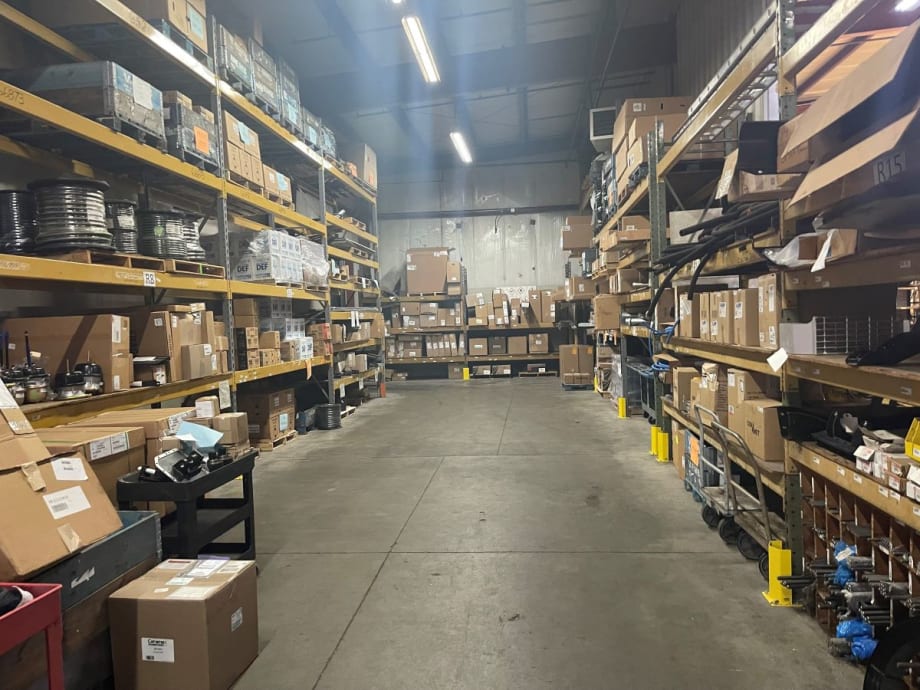
A continuing influx of new trucks and the resolution of supply chain issues are helping commercial asset service operations realize a widespread drop in parts costs.
Photo: Jack Roberts
The American Trucking Associations’ Technology & Maintenance Council and Decisiv said that combined parts and labor expenses fell 1.7% during the first quarter of 2024, according to data released in the latest Decisiv/TMC North American Service Event Benchmark Report.
“Lower parts and labor costs are welcome news to fleets, who have been weathering substantial increases for much of the last several years,” said TMC executive director Robert Braswell. “This important parts and labor cost analysis report is an excellent tool to help Council members compare how their operations are performing relative to industry trends and plan accordingly.”
Technician Shortage Lingers
The report shows these costs across 25 key VMRS systems continued a downward trend seen in the previous quarter when those costs fell 1.4%.
Reversing the upward trend seen earlier last year quarter-over-quarter combined parts and labor costs were up in only seven of the 25 VMRS systems, about 50% fewer than the 13 systems in the previous quarter.
Reflecting the data in the report is that the cost of parts rose in seven systems, and labor costs increased in 12 systems, but overall cost decreases were evident for both parts and labor.
In the first quarter, parts costs were down 2.4%, the second quarterly decline in a row, and labor costs fell 0.8% after two consecutive quarterly increases.
On a year-over-year basis, combined costs also dropped, down 2.3% from the same quarter last year. However, labor costs from year to year rose 0.9%, although the increase was significantly smaller than the 4.0% rise seen in the previous quarterly report.
“While more new trucks and greater parts availability are helping commercial asset service operations realize an across-the-board drop in costs, the ongoing shortage of new technicians entering the workforce continues to drive up labor costs,” said Decisiv president and CEO Dick Hyatt. “The recent findings are certainly positive. The ongoing efforts by commercial asset service operations to streamline management and execution of maintenance and repair activities are clearly playing a role in keeping costs down.”
Newer Equipment Contributing to Cost Decreases
A continuing influx of new trucks and the resolution of supply chain issues are helping commercial asset service operations realize a widespread drop in parts costs.
At the same time, however, the ongoing shortage of new technicians entering the workforce continues to drive up labor costs by requiring higher spending to attract and retain qualified help from a shrinking workforce.
The data that Decisiv collects and analyzes for the Decisiv/TMC North American Service Event Benchmark Reports on 25 Vehicle Maintenance Reporting Standard system level codes accounts for more than 97% of total parts and labor costs for more than seven million assets and over 300,000 monthly maintenance and repair events at more than 5,000 service locations.
ATA’s Technology & Maintenance Council issues the reports to its fleet members. The reports are organized based on the Council’s Vehicle Maintenance Reporting Standards sorted by VMRS-coded vehicle systems and geographic location.
More Equipment

How Volvo Updated Its D13 for EPA 2027 [Watch]
Volvo’s updated D13 promises lower emissions without sacrificing performance or fuel economy. Take a closer look at what changed inside the engine in this HDT Spotlight video.
Read More →
Michelin Tire Improves Efficiency and Durability for Regional Fleets
The Michelin X Multi Energy D2 is a regional haul drive tire engineered to help fleets improve fuel efficiency, durability and traction in demanding stop-and-go operations.
Read More →
ZF Expands Commercial Vehicle Push in North America
ZF is expanding its North American commercial-vehicle presence with new transmission applications, electrification, trailer technology and autonomous-driving systems.
Read More →
Tesla Wants a Self-Driving Semi. Are Cameras Enough?
Could Tesla’s camera-only autonomous driving technology work on an 80,000-pound Semi? In this commentary, HDT's Deborah Lockridge takes a look at Tesla, Cybercab, and how autonomous trucks see the road.
Read More →
Kodiak: Driverless Long-Haul Truck Launch on Track for 2026
Kodiak AI says its driverless long-haul safety case is 93% complete and it remains on track to begin commercial operations by year-end 2026.
Read More →
What DOT’s Automated Vehicle Strategy Means for Trucking
The U.S. Department of Transportation issued a new automated-vehicle strategy that outlines plans for driverless-truck regulations, cross-state freight corridors, and federal safety standards.
Read More →
East Coast Port Launches $45M Electric Truck Push
The Port Authority of New York and New Jersey announced millions in incentives for zero-emission drayage trucks, yard tractors, and new charging hubs near the port.
Read More →
PlusAI Going Public to Fund Autonomous Truck Launch
A SPAC deal could provide PlusAI with up to $300 million as it works toward a 2027 commercial launch of factory-built autonomous trucks.
Read More →
NHTSA Moves to Rewrite Truck Fuel-Economy Rules
The National Highway Traffic Safety Administration says it lacks authority to regulate medium- and heavy-duty truck engines separately from complete vehicles, but the existing standards have not yet been eliminated.
Read More →
Detroit Opens Orders for EPA 2027 Engines
Detroit isn’t starting from scratch to meet EPA 2027 diesel emissions standards. Its Gen 6 DD13 and DD15 engines keep much of today’s platform while updating the fuel and aftertreatment systems.
Read More →