




Related: Fleets, Trucking Associations Work to Get Drivers Face Masks
Truck Drivers Crossing Canadian Border Must Wear Masks
The Public Health Agency of Canada (PHAC) has advised, effective immediately, that all essential workers crossing the Canada-U.S. border must wear a non-medical mask or face covering.
by Today's Trucking
April 16, 2020
The Centers for Disease Control and Prevention has offered a number of mask alternatives, including one made from an old t-shirt.
Source: CDC
2 min to read
The Public Health Agency of Canada (PHAC) has advised, effective immediately, that all essential workers crossing the Canada-U.S. border must wear a non-medical mask or face covering.
Truck drivers, being essential workers, must comply with the new policy to help curb the spread of COVID-19, but will not be turned away from entering into Canada. The Canada Border Services Agency (CBSA), which has been directed to implement the face-mask policy, will attempt to provide drivers with a mask should they not have one, the Canadian Trucking Alliance (CTA) reports.
Non-medical masks are not medical devices, and not regulated like medical masks or respirators. A homemade non-medical mask is made of a cloth, like cotton, and may include pockets to insert other masks or filters and can be worn over N95 respirators.
CBSA recently indicated that any face mask that demonstrates a reasonable “good-faith” effort to adhere to the requirement will be accepted, as they understand there is a limited supply of medical grade masks available. This could include the use of scarfs, bandanas or other materials.
Though non-medical masks may not be effective at blocking all virus particles that could be transmitted by coughing or sneezing, medical masks such as the N95 model need to be kept for healthcare workers and other people providing direct care to Covid-19 patients.
Non-essential travelers who are allowed across the border will be required to wear the face coverings in addition to isolating themselves for 14 days if they have symptoms of Covid-19, or entering a quarantine for 14 days if they don’t show symptoms.
Essential workers like truck drivers who do not show symptoms of Covid-19 are not required to enter a 14-day quarantine when crossing the border. But those who show symptoms will be told to isolate themselves for 14 days.
“Canada’s response to COVID-19 is based on the latest scientific evidence. As we learn more about this illness, we must adapt our public health measures and our border measures appropriately,” Chief Public Health Officer of Canada Dr. Theresa Tam said in a related statement.
“These new requirements for travelers are part of our multilayered pan-Canadian response to this epidemic. We will continue to keep Canadians informed about the risks of COVID-19 and the actions we must all take to plank the curve of this epidemic.”
The border officials are not the first to require such masks. New Jersey has since April 10 required workers and customers to wear cloth face coverings when at essential retail businesses, warehouses and construction sites. A related order required the businesses to provide such face coverings for employees at their expense.
Updated at 4 p.m. EDT to add additional guidance from the Canada Border Services Agency.
More Safety & Compliance
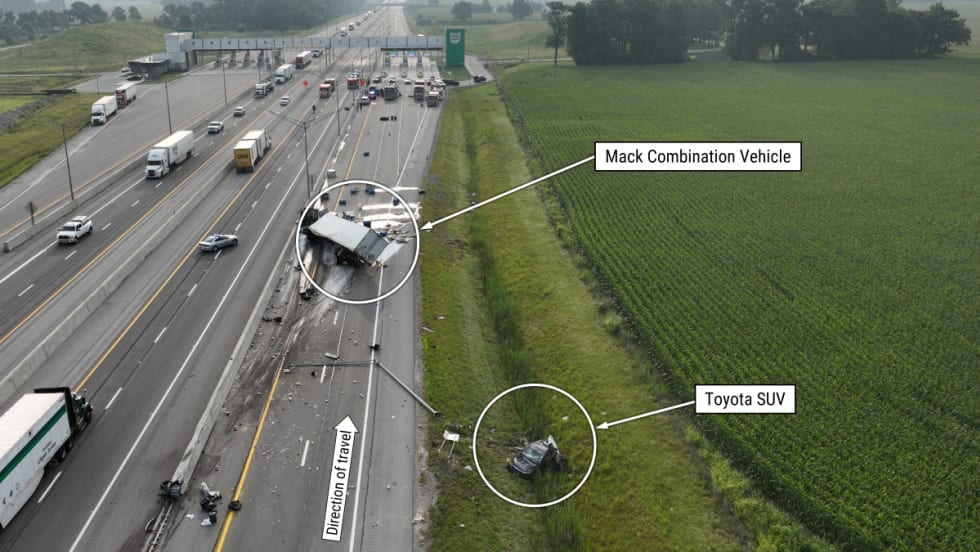
Fatal Crash Exposes Toll Plaza Risks
An NTSB investigation found that last-minute lane changes and large speed differences at an Ohio toll plaza created a hazard the truck driver couldn't avoid in time.
Read More →
When Language Stops the Truck: The Return of ELP Out-of-Service Orders
English language proficiency rules for commercial drivers aren’t new, but renewed out-of-service enforcement has raised the stakes. Here’s what carriers need to know before a driver reaches a roadside inspection.
Read More →
Sponsored•October 6, 2026
A Camera Isn't a Safety Program. Here's What Brokers Are Screening for Now
Footage alone may not be enough to pass broker vetting processes. Here's what counts as a defensible safety program now.
Read More →

Marijuana and Trucking’s Drug-Testing Dilemma
Marijuana is getting stronger, laws are changing, and drug tests still can’t reliably establish impairment. What does that mean for truck drivers and the fleets that employ them?
Read More →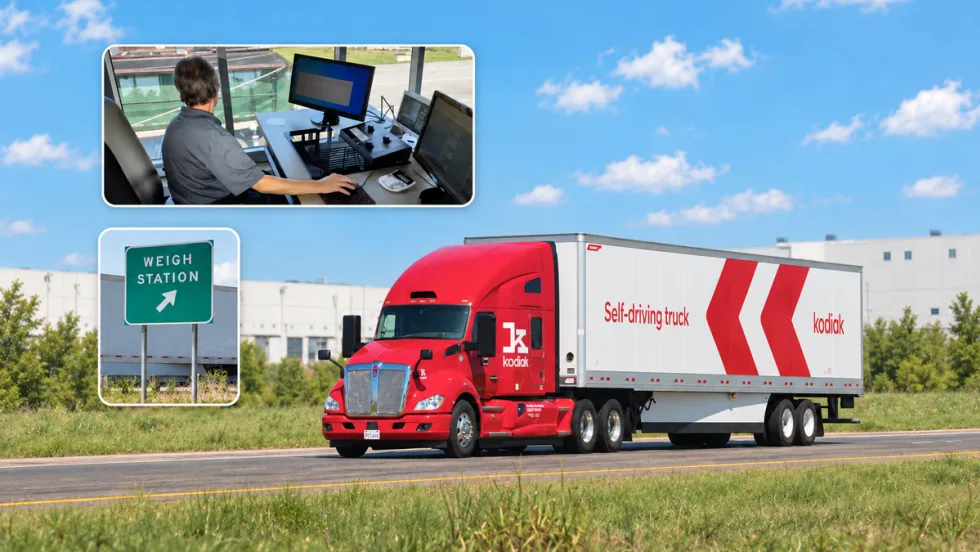
PrePass, Kodiak Connect Driverless Trucks to Roadside Enforcement
The system will allow enforcement agencies to verify Enhanced Inspection information and decide whether Kodiak’s autonomous trucks can bypass roadside screening sites.
Read More →
From One Generation to the Next: How Mentorship Builds Safer Truck Drivers
After three decades in trucking, Harold Perry shares what he's learned about driver safety, mentorship, and helping the next generation build confidence behind the wheel.
Read More →
FMCSA Pauses Biennial-Update Enforcement Amid Motus Transition
Carriers whose updates were due on or after June 1 have more time, while FMCSA works to stabilize its new registration system and warns of phishing sites impersonating its new carrier registration system, Motus.
Read More →
ZF Expands Commercial Vehicle Push in North America
ZF is expanding its North American commercial-vehicle presence with new transmission applications, electrification, trailer technology and autonomous-driving systems.
Read More →
Truck Drivers Need More Than Another Alert
Fleets have more visibility into truck health, safety events, and driver activity than ever. The next challenge is turning all that information into useful guidance for the person who has to decide what to do next.
Read More →
Tesla Wants a Self-Driving Semi. Are Cameras Enough?
Could Tesla’s camera-only autonomous driving technology work on an 80,000-pound Semi? In this commentary, HDT's Deborah Lockridge takes a look at Tesla, Cybercab, and how autonomous trucks see the road.
Read More →