




Transport Canada Boasts Environmental Benefits of Speed Limiters, Downplays Safety Concerns
When Canada's agency responsible for transportation regulations last week released six studies on the implications of mandating speed limiters for trucks, it played up the environmental benefits while downplaying some of the negatives
When Canada's agency responsible for transportation regulations last week released six studies on the implications of mandating speed limiters for trucks, it played up the environmental benefits while downplaying some of the negatives.
Transport Canada last week made public six studies it conducted on the implications of a mandated speed limiter. The press release that accompanied the unveiling of the studies highlighted the potential environmental benefits of limiting truck speed to 105 km/h (65 mph), but downplayed the safety risks and the technical complexities of such a requirement that were borne out in its own studies.
The Environmental Benefits study reveals that speed limiters on medium and heavy trucks set at 105 km/h could result in a savings of 228.6 million liters of diesel fuel and 0.64 megatonnes of greenhouse gases -- 1.4 percent of Canada's total diesel-consumption and GHG output in 2006.
Ontario and Quebec -- both of which have already committed to speed limiter legislation in advance of the federal studies -- would account for 64 percent of the estimated national savings, according to that study.
While the final Summary Report has yet to be released, six studies were released on Friday: "Safety Implications of Mandated Truck Speed Limiters on Canadian Highways", "Trade and Competitiveness Assessment of Mandated Speed Limiters for Heavy Trucks Operating in Canada", "Trade and Competitiveness Assessment of Mandated Speed Limiters for Heavy Trucks Operating in Canada", "Speed Limiter Case Study and Industry Review", "Learning from Others: An International Study on Heavy Truck Speed Limiters", and "Technical Considerations".
Significantly, it was noted in the safety Implications study, that safety could be enhanced by limiting truck speeds to 105 km/h on lightly traveled, rural divided highways -- but as the volume of traffic and percentage trucks increased, the safety gains associated with limiters "become less pronounced."
"As the volume is set close to capacity (2000 vehicles per hour per lane) more vehicle interactions take place and this leads to a reduction in safety especially for those segments with increased merging and lane-change activity, such as, on- and off-ramp segments. In these instances the introduction of truck speed limiters can actually reduce the level of safety when compared to the non-limiter case."
That study also makes special mention of two-lane, undivided rural highways -- of which Canada is blessed with many. While many restrict speed between 70 and 80 km/h (rending a 105 km/h setting nearly irrelevant), some roadways permit speeds of up to 100 km/h (62 mph). Here, suggests the study, "implementation of mandatory speed limiters could lead to an "increase of passing maneuvers onto the opposing traffic lane. The possibility for increased unsafe passing maneuvers poses special safety challenges where trucks are subject to a maximum speed. Further study of this situation is required…"
Overall, the studies appear to confirm to some extent the main arguments expressed for years by both proponents and critics of the policy.
As noted in the study, "Learning from Others: An International Study on Heavy Truck Speed Limiters," speed limiters are generally believed to have had a positive impact on road safety and have contributed to a decrease in accidents involving heavy vehicles. In the U.K., for instance, heavy vehicle accidents have dropped by 26 percent since speed limiter legislation was enacted in 1992.
However, after more than a decade with mandatory speed limiters in both Australia and all EU member states, no empirical research has been done in any of the participating countries to directly link the use of speed limiters with improvements in road safety.
More Equipment

Kodiak Targets Dallas–Houston for Driverless Trucks
The company says its autonomous trucks are completing the I-45 run without a safety observer taking control. It plans to remove the observer by the end of 2026.
Read More →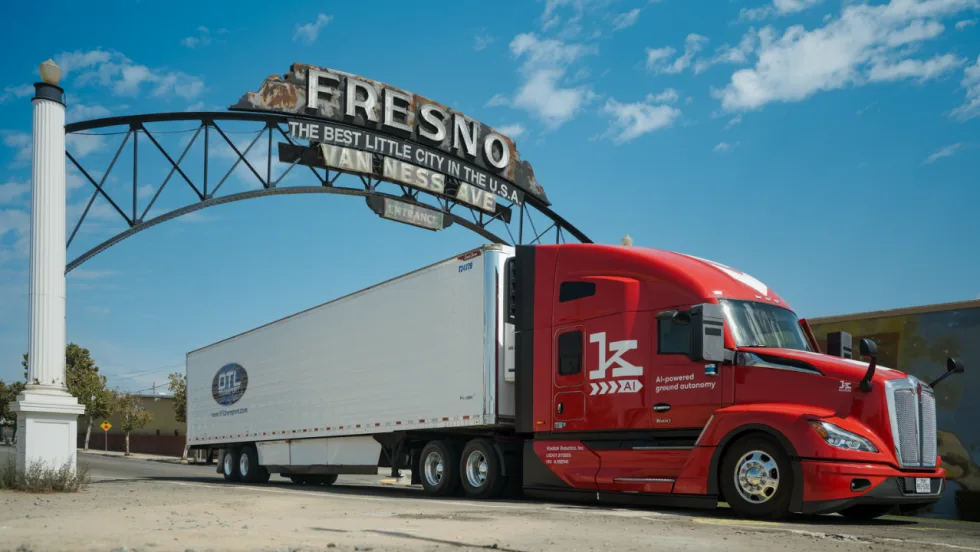
Kodiak Hauls Produce in California Autonomous Truck Pilot
Kodiak AI and DTL Transport have begun hauling produce between Fresno and Los Angeles under California’s new rules for testing heavy-duty autonomous trucks. A safety driver remains behind the wheel.
Read More →
Used-Truck Remarketing Math Is Changing
Used-truck value is no longer just a concern at trade-in. Decisions made throughout a truck’s first life can influence what it’s worth years later.
Read More →
How Volvo Updated Its D13 for EPA 2027 [Watch]
Volvo’s updated D13 promises lower emissions without sacrificing performance or fuel economy. Take a closer look at what changed inside the engine in this HDT Spotlight video.
Read More →
Michelin Tire Improves Efficiency and Durability for Regional Fleets
The Michelin X Multi Energy D2 is a regional haul drive tire engineered to help fleets improve fuel efficiency, durability and traction in demanding stop-and-go operations.
Read More →
ZF Expands Commercial Vehicle Push in North America
ZF is expanding its North American commercial-vehicle presence with new transmission applications, electrification, trailer technology and autonomous-driving systems.
Read More →
Tesla Wants a Self-Driving Semi. Are Cameras Enough?
Could Tesla’s camera-only autonomous driving technology work on an 80,000-pound Semi? In this commentary, HDT's Deborah Lockridge takes a look at Tesla, Cybercab, and how autonomous trucks see the road.
Read More →Kodiak: Driverless Long-Haul Truck Launch on Track for 2026
Kodiak AI says its driverless long-haul safety case is 93% complete and it remains on track to begin commercial operations by year-end 2026.
Read More →
What DOT’s Automated Vehicle Strategy Means for Trucking
The U.S. Department of Transportation issued a new automated-vehicle strategy that outlines plans for driverless-truck regulations, cross-state freight corridors, and federal safety standards.
Read More →
East Coast Port Launches $45M Electric Truck Push
The Port Authority of New York and New Jersey announced millions in incentives for zero-emission drayage trucks, yard tractors, and new charging hubs near the port.
Read More →