




Transflo, Comdata Launch Cardless Fuel Payment Solution
Transflo and Comdata joined forces to introduce a digital fuel technology called Transflo Wallet, a mobile-app-based cardless fuel payment solution for Brokers, Carriers, and 3PLs.

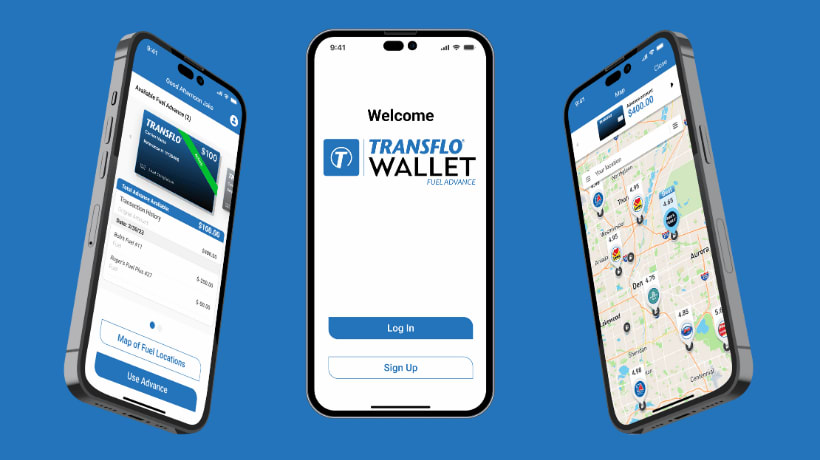
Transflo Wallet's digital payment solution offers increased security and cost savings for carriers.
Image: Transflo
Transflo and Comdata have joined forces to develop Transflo Wallet, a mobile-app-based cardless fuel payment solution. Transflo Wallet will enable freight brokers to send digital fuel advances to carriers and drivers through a mobile app, ultimately streamlining fuel transactions.
Fuel advances have long been a challenge for freight brokers, with conventional payment methods like checks and plastic fuel cards proving inefficient, costly, and susceptible to fraud. Transflo Wallet's app-based solution for drivers and brokers offers a more advanced security feature to protect carriers from fraud and unauthorized acces.
"As we assessed long-standing issues in the industry, fuel payments emerged as the natural next step in extending our broker and carrier automation capabilities," said Renee Krug, Transflo's CEO in a statement. "Our fuel solution builds on our connected digital ecosystem to empower our customers to overcome these challenges."
Transflo Wallet is designed for brokers to advance fuel payments to their carrier networks. The solution leverages Transflo’s mobile app technology with Comdata’s virtual card capabilities.
"Comdata has a deep commitment to reducing friction for the transportation industry," added Eric Dowdell, president of Comdata’s North American Trucking division. “We’re excited to partner with Transflo to deploy our cardless payment APIs to bring brokers more transparency, control, and a more simplified driver experience.”
More Fuel Smarts

How Volvo Updated Its D13 for EPA 2027 [Watch]
Volvo’s updated D13 promises lower emissions without sacrificing performance or fuel economy. Take a closer look at what changed inside the engine in this HDT Spotlight video.
Read More →
Diesel Price Spike Shortens Payback for Natural Gas Trucks, Report Says
Energy Vision estimates fleets could recover the higher purchase price of an RNG-fueled Class 8 tractor in 1.3 to 2.8 years under current fuel-price scenarios.
Read More →
Calstart Becomes Catalyst Mobility, Reflecting Broader Focus
Calstart is now Catalyst Mobility, reflecting the nonprofit’s growing national role in clean transportation, including zero-emission trucks, infrastructure and incentive programs.
Read More →

Record Diesel Prices Squeeze Trucking Fleets
Average U.S. diesel prices have climbed to nearly $6 a gallon, surpassing the 2022 record as tight refinery capacity and Middle East disruptions keep fuel costs elevated.
Read More →
How Fuel Delivery Shapes Engine Performance
Fuel delivery depends on more than what happens at the injector. For fleet, maintenance and technical professionals, looking at the full path from pump to injector can provide useful context for understanding engine performance.
Read More →
East Coast Port Launches $45M Electric Truck Push
The Port Authority of New York and New Jersey announced millions in incentives for zero-emission drayage trucks, yard tractors, and new charging hubs near the port.
Read More →
California Bill Could Shed Light on Electric Truck Prices
Why do battery-electric Class 8 trucks remain so expensive? A California bill headed to Gov. Gavin Newsom would give fleets and state agencies more visibility into what manufacturers charge.
Read More →
Detroit Opens Orders for EPA 2027 Engines
Detroit isn’t starting from scratch to meet EPA 2027 diesel emissions standards. Its Gen 6 DD13 and DD15 engines keep much of today’s platform while updating the fuel and aftertreatment systems.
Read More →
Zero-Emission Truck Corridor Planned for West Coast
California, Oregon, Washington, British Columbia and Baja California are coordinating plans for truck charging and hydrogen fueling from Canada to Mexico.
Read More →
A Closer Look at Kenworth’s Electric T880E Vocational Truck [Video]
Learn more about Kenworth's T880E battery-electric vocational truck at the Paccar Technical Center, including its range, applications, upfitting considerations, and PTO options, in this HDT Spotlight video.
Read More →