




Related from the archives — State of Logistics: Truck Drivers Sorely Wanted (2015)
Technology to Change Logistics Business, Says Report
U.S. business logistics costs rose at a slower rate last year as supply chain transparency continued to grow in importance, according to the the Council of Supply Chain Management Professionals’ Annual State of Logistics Report.
by Staff
June 21, 2016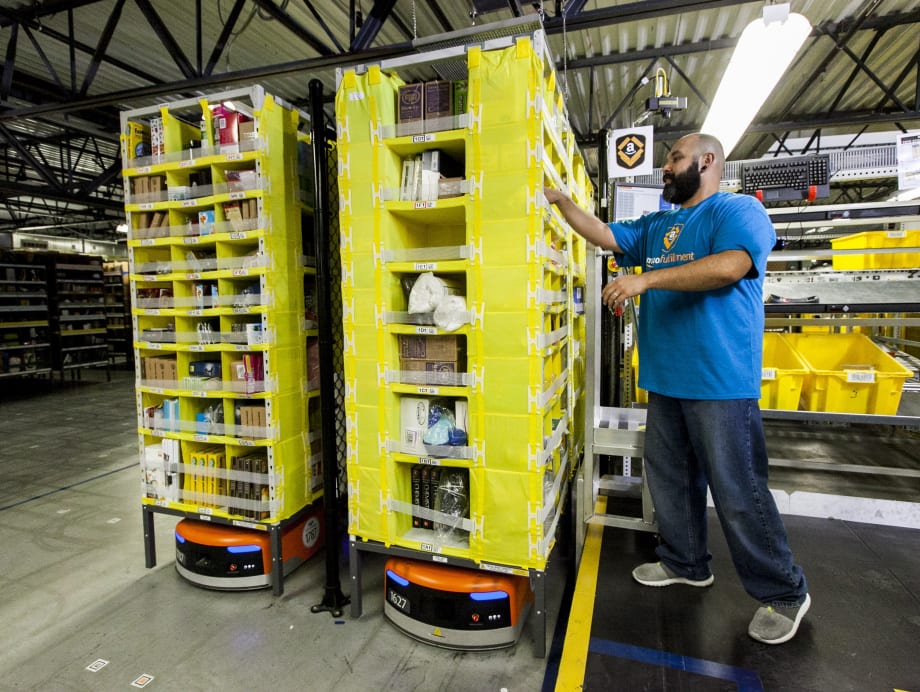
2 min to read
U.S. business logistics costs rose at a slower rate last year as supply chain transparency continued to grow in importance, according to the the Council of Supply Chain Management Professionals’ Annual State of Logistics Report released June 21.
CSCMP collaborated with global strategic management consulting firm, A.T. Kearney, as the new author and researcher, with Penske Logistics continuing as sponsor.
The report reveals total U.S. business logistics costs rose to $1.48 trillion in 2015, a 2.6 percent increase from the previous year, which represents a considerable slowdown from previous years.
"Supply chain transparency continues to grow in importance for shippers and third-party logistics providers," said Marc Althen, Penske Logistics president. "This is driving significant technological change for 3PLs and shippers alike as they collaborate and share more real-time information to enable data-driven business decisions and meet the growing needs of consumers."
Parcel and express continues to grow, with the main drivers being the explosion of business-to-consumer e-commerce and omni-channel retail. E-commerce is likely to double in size by 2020, notes the report. This presents challenges. For one thing, B2C shipments generate lower revenue and have higher operating costs than the average shipment. Returns are also a challenge. One way parcel and express companies are working to address these challenges is investing in technologies such as robotics and vehicle routing software.
The report finds that technology continues to play a key role in the evolution of the 3PL market and projects that over the next decade, the logistics industry will enter a new era. Disruptive forces, including technology and operational constraints, threaten to fundamentally change the rules of the game, says the report. Automation, "Uberization", optimization tools, 3D printing, alternative fuels, advanced load-matching algorithms and more are expected to affect the logistics industry.
Other report findings include:
Motor carriers are experiencing rate weakness, as rates and demand for transportation are soft and continue to fall. Despite this, competition for drivers remains intense.
Containerized shipping by water is experiencing significant overcapacity, creating a favorable rate environment for U.S. shippers.
A steep decline in coal traffic and crude by rail, macroeconomic weakness, and a pause in the growth of intermodal traffic resulted in overall rail volume reduction.
More information: https://cscmp.org/member-benefits/state-of-logistics
More Fleet Management

Sponsored•September 16, 2026
Color Match Smarter: Tools That Restore & Perform
For fleet managers and collision repair professionals keeping heavy-duty trucks on the road, getting the color right the first time isn't just about appearance — it's about efficiency, turnaround time, and bottom-line results. Discover how today's digital color tools are transforming the repair process from guesswork to precision.
Read More →
FMCSA Pauses Biennial-Update Enforcement Amid Motus Transition
Carriers whose updates were due on or after June 1 have more time, while FMCSA works to stabilize its new registration system and warns of phishing sites impersonating its new carrier registration system, Motus.
Read More →
Sponsored•September 14, 2026
2026 Blueprint for Countering Smarter Supply Chain Theft
Cargo theft is no longer just the cost of doing business. It's a multi-billion-dollar criminal enterprise exploiting vulnerabilities across your fleet, drivers, and supply chain.
Read More →


Sponsored•September 1, 2026
How Telematics Improves Visibility, Control, and Performance in Refrigerated Fleets
Explore how telematics help refrigerated fleets improve visibility, uptime, efficiency, compliance, and cargo protection across connected cold chain operations.
Read More →
What the U.S.-Canada Trade War Means for Trucking
Escalating U.S.-Canada tariffs could disrupt cross-border freight, reduce truck volumes, raise costs, and create new uncertainty for carriers on both sides of the border.
Read More →
What Are Trucking’s Top Concerns for 2026?
The American Transportation Research Institute wants to know what's worrying trucking fleet managers, drivers, and other stakeholders in its annual Industry Issues survey.
Read More →
American Trucking Associations Looks for a New Leader
ATA President and CEO Chris Spear abruptly left his job at the association on August 21, at a pivotal time for the trucking industry.
Read More →
Public Wi-Fi Cybersecurity Risks: How Truck Drivers and Fleets Can Protect Their Data
Public Wi-Fi can expose truck drivers and fleets to credential theft, malware, and other cyber threats. Here’s how to reduce the risk on the road.
Read More →
For Nicky Cupp, Fleet Innovation Starts With Frustration
HDT Truck Fleet Innovator Nicky Cupp turns everyday pain points at Fraley & Schilling into opportunities for better technology and smarter processes.
Read More →
Adam Buttgenbach’s Approach to Electric Trucks: Start With Where They Fit
HDT Truck Fleet Innovator Adam Buttgenbach helped PepsiCo build one of North America’s largest EV fleets by focusing on where electric trucks make operational sense.
Read More →