




Study: Early Cellphone Safety Studies Likely Overestimated Crash Risk
A Wayne State University study published in the January 2012 issue of the journal Epidemiology points out that two influential early studies of cellphone use and crash risk may have overestimated the relative risk of conversation on cellphones while driving
A Wayne State University study published in the January 2012 issue of the journal Epidemiology points out that two influential early studies of cellphone use and crash risk may have overestimated the relative risk of conversation on cellphones while driving.
In this new study, Richard Young, Ph.D., professor of research in Wayne State University's Department of Psychiatry and Behavioral Neurosciences in the School of Medicine, examined possible bias in a 1997 Canadian study and a 2005 Australian study. These earlier studies used cellphone billing records of people who had been in a crash and compared their cellphone use just before the crash to the same time period the day (or week) before - the control window.
Young said the issue with these studies is that people may not have been driving during the entire control window period, as assumed by the earlier study investigators.
"Earlier case-crossover studies likely overestimated the relative risk for cellphone conversations while driving by implicitly assuming that driving during a control window was full time when it may have been only part time," said Young. "This false assumption makes it seem like cellphone conversation is a bigger crash risk than it really is."
In Young's new study, his research team used Global Positioning Satellite (GPS) data to track day-to-day driving of more than 400 drivers during a 100-day period. He then divided the days into pairs, with the first day representing the "control" day and the second day representing the "crash" day in the earlier studies. Overall, the team found little driving consistency in any given clock time period between the two days -- driving time on the control day was only about one-fourth of the driving time on the crash day, during any specific clock time period.
"This underestimation of the amount of driving in the control windows by nearly four times could reduce cellphone conversation time in that control period," Young said. "It makes it appear that there is less cellphone conversation in control periods than in the time just before a crash, making the relative risk estimate appear greater than it really is."
Young found that when the cellphone conversation time in the control window was adjusted for the amount of driving, the amount of cellphone usage in the control window was about the same as in the minutes before a crash. He concluded that the crash risk for cellphone conversation while driving is one-fourth of what was claimed in previous studies, or near that of normal baseline driving.
Young added that many well-controlled studies with real driving show that the primary increase in crash risk from portable electronic devices comes from tasks that require drivers to look at the device or operate it with their hands, such as texting while driving. Five other recent real-world studies concur with his conclusion that the crash risk from cellular conversations is not greater than that of driving with no conversation.
"Tasks that take a driver's eyes off the road or hands off the steering wheel are what increase crash risk," said Young. "Texting, emailing, manual dialing and so forth -- not conversation -- are what increase the risk of crashes while driving."
The National Transportation Safety Board has recommended that all 50 states and the District of Columbia ban the non-emergency use of portable electronic devices for all drivers. Young said this recommendation goes beyond the data from newer studies, including his, because it would ban cellphone conversations while driving.
"Recent real-world studies show that cellphone conversations do not increase crash risk beyond that of normal driving -- it is the visual-manual tasks that take the eyes off the road and the hands off the wheel that are the real risk," said Young.
More Safety & Compliance
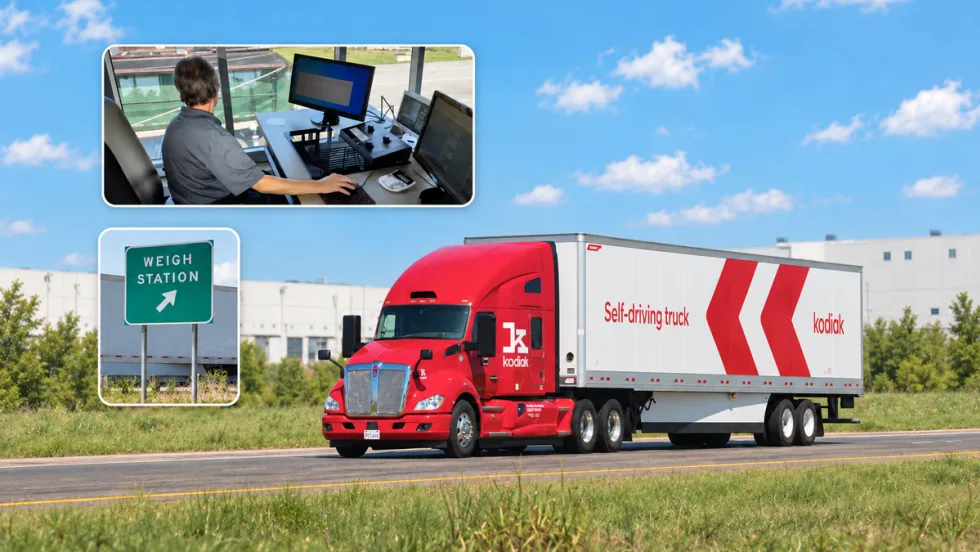
PrePass, Kodiak Connect Driverless Trucks to Roadside Enforcement
The system will allow enforcement agencies to verify Enhanced Inspection information and decide whether Kodiak’s autonomous trucks can bypass roadside screening sites.
Read More →
From One Generation to the Next: How Mentorship Builds Safer Truck Drivers
After three decades in trucking, Harold Perry shares what he's learned about driver safety, mentorship, and helping the next generation build confidence behind the wheel.
Read More →
FMCSA Pauses Biennial-Update Enforcement Amid Motus Transition
Carriers whose updates were due on or after June 1 have more time, while FMCSA works to stabilize its new registration system and warns of phishing sites impersonating its new carrier registration system, Motus.
Read More →
ZF Expands Commercial Vehicle Push in North America
ZF is expanding its North American commercial-vehicle presence with new transmission applications, electrification, trailer technology and autonomous-driving systems.
Read More →
Truck Drivers Need More Than Another Alert
Fleets have more visibility into truck health, safety events, and driver activity than ever. The next challenge is turning all that information into useful guidance for the person who has to decide what to do next.
Read More →
Tesla Wants a Self-Driving Semi. Are Cameras Enough?
Could Tesla’s camera-only autonomous driving technology work on an 80,000-pound Semi? In this commentary, HDT's Deborah Lockridge takes a look at Tesla, Cybercab, and how autonomous trucks see the road.
Read More →
What DOT’s Automated Vehicle Strategy Means for Trucking
The U.S. Department of Transportation issued a new automated-vehicle strategy that outlines plans for driverless-truck regulations, cross-state freight corridors, and federal safety standards.
Read More →
NYC Expands Speed, Pedestrian Safety Tech Across Fleet
New York City is expanding intelligent speed assistance and pedestrian-alert systems across its municipal fleet, moving the technologies from pilot programs into vehicle procurement and retrofit requirements.
Read More →
FMCSA Removes 110 Truck Driver Training Schools from Certified ELDT List
Federal regulators also are targeting more than 160 additional training providers and launching a nationwide audit of third-party CDL skills testers as part of a broader crackdown on trucking fraud.
Read More →
Beyond DOT Compliance: What Makes a Trucking Fleet Truly Safe?
A trucking fleet can follow every rule and still make unsafe decisions. The real test comes when safety conflicts with freight, productivity, or cost.
Read More →