




Stifel: Soft Economy Makes Rate Hikes Tough, Despite Driver Shortage
Although a "cavalcade of regulations" is expected to make it harder than ever to find drivers, an economy that continues to grow at a sub-potential rate means fleets don't have a lot of leverage when it comes to raising rates, according to John Larkin and fellow transportation analysts at the Stifel Nicolaus investment firm.

Although a "cavalcade of regulations" is expected to make it harder than ever to find drivers, an economy that continues to grow at a sub-potential rate means fleets don't have a lot of leverage when it comes to raising rates, according to John Larkin and fellow transportation analysts at the Stifel Nicolaus investment firm.
In its annual "Shake the Sand out of your Sneakers" conference call for transportation investors and the media, Larkin pointed out that the economy has been growing an average of 2.2% a year coming out of the trough of the Great Recession. Before the recession, GDP was increasing at a rate close to 3%. If the economy had continued to grow at that rate instead of heading into recession, we would have a total economy that's 13% larger than the one we're currently dealing with, he said.
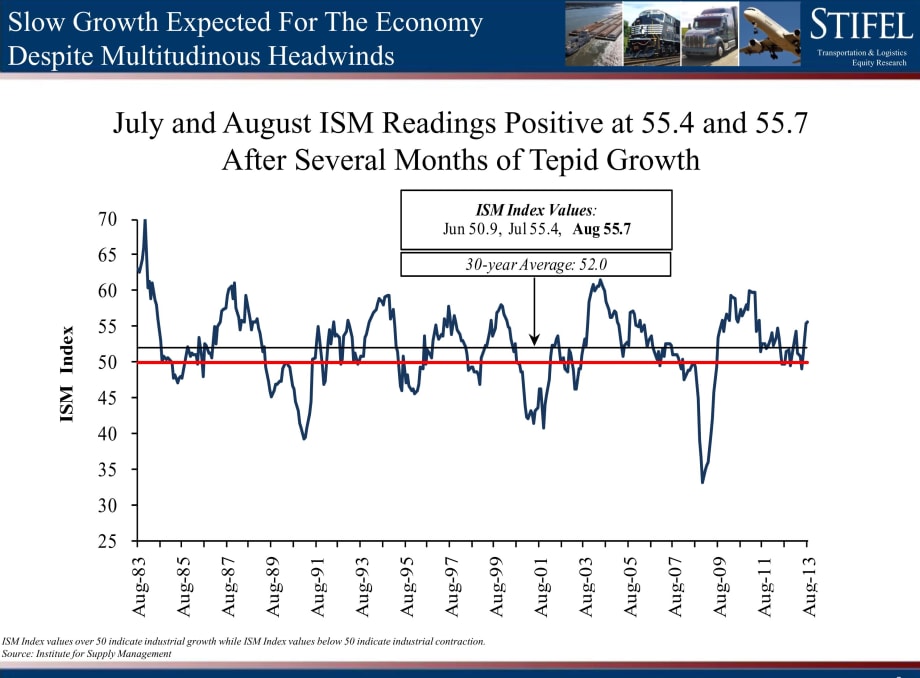
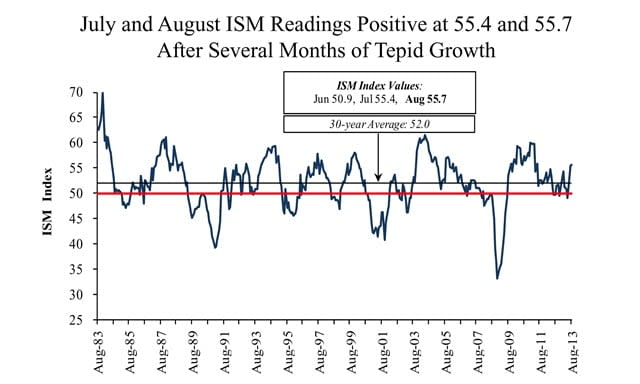
Two areas that significantly affect trucking, consumer spending and manufacturing, are looking somewhat better. On an inflation-adjusted basis, consumer spending is back roughly to where it was in May 1999, although we're not at the heights we saw back in 2006. The ISM index, which measures manufacturing, has looked quite a bit better in July and August compared to the "somewhat mediocre" first part of the year.
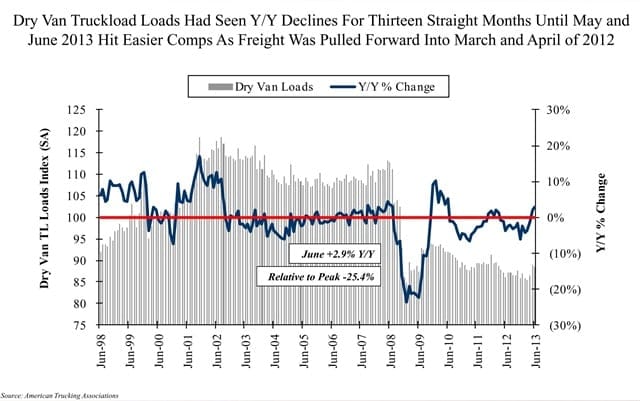
Larkin said the American Trucking Associations' Truck Tonnage Index may be a little misleading in measuring the overall strength of the industry. When you look at ATA's Trucking Activity Report, which measures numbers of loads rather than weight, he explained, dry van has been pretty soft. Tonnage, on the other hand, is affected by the tons of sand and water being moved for hydraulic fracturing in the petroleum industry.
"We think dry van freight in particular looks pretty mediocre as big-box retailers struggle to drive incremental sales," Larkin said. Tanker traffic and flatbed have been a little stronger, and refrigerated freight a little more stable.
The driver situation is challenging, he said, and it doesn't seem to matter whether carriers rely on experienced drivers or recruit them straight from truck driver training schools. "We're seeing a lot of examples of carriers with trucks parked against the fence because they can't find qualified drivers."
That situation will get worse, he said, as "the cavalcade of federal regulations marches on." CSA has already taken some drivers out of the game, and the new hours of service regulations seem to be having a 2% to 4% negative impact on productivity. However, freight volumes being soft, that hasn't really had much of an effect yet.
New regulations coming down the pike, such as mandatory electronic logs, stricter medical requirements and speed limiters, all will "reduce the driver pool or reduce the productivity of the drivers we have left."
However, "shippers are not convinced there's going to be a big shortage, and thus are not paying up for guaranteed capacity right now," Larkin said, relating a conversation with a large 3PL this week who said right now, large shippers would have a pretty good shot of beating down prices 3% to 4%.
Meanwhile, Larkin reports, a lot of small and medium sized shippers are outsourcing logistics to 3PLs, which are offering a broader array of services, carriers, and modal options. "The small broker may end up getting gobbled up by these more sophisticated and well-capitalized companies."
More Fleet Management

Color Match Smarter: Tools That Restore & Perform
For fleet managers and collision repair professionals keeping heavy-duty trucks on the road, getting the color right the first time isn't just about appearance — it's about efficiency, turnaround time, and bottom-line results. Discover how today's digital color tools are transforming the repair process from guesswork to precision.
Read More →
FMCSA Pauses Biennial-Update Enforcement Amid Motus Transition
Carriers whose updates were due on or after June 1 have more time, while FMCSA works to stabilize its new registration system and warns of phishing sites impersonating its new carrier registration system, Motus.
Read More →
2026 Blueprint for Countering Smarter Supply Chain Theft
Cargo theft is no longer just the cost of doing business. It's a multi-billion-dollar criminal enterprise exploiting vulnerabilities across your fleet, drivers, and supply chain.
Read More →


How Telematics Improves Visibility, Control, and Performance in Refrigerated Fleets
Explore how telematics help refrigerated fleets improve visibility, uptime, efficiency, compliance, and cargo protection across connected cold chain operations.
Read More →
What the U.S.-Canada Trade War Means for Trucking
Escalating U.S.-Canada tariffs could disrupt cross-border freight, reduce truck volumes, raise costs, and create new uncertainty for carriers on both sides of the border.
Read More →
What Are Trucking’s Top Concerns for 2026?
The American Transportation Research Institute wants to know what's worrying trucking fleet managers, drivers, and other stakeholders in its annual Industry Issues survey.
Read More →
American Trucking Associations Looks for a New Leader
ATA President and CEO Chris Spear abruptly left his job at the association on August 21, at a pivotal time for the trucking industry.
Read More →
Public Wi-Fi Cybersecurity Risks: How Truck Drivers and Fleets Can Protect Their Data
Public Wi-Fi can expose truck drivers and fleets to credential theft, malware, and other cyber threats. Here’s how to reduce the risk on the road.
Read More →
For Nicky Cupp, Fleet Innovation Starts With Frustration
HDT Truck Fleet Innovator Nicky Cupp turns everyday pain points at Fraley & Schilling into opportunities for better technology and smarter processes.
Read More →
Adam Buttgenbach’s Approach to Electric Trucks: Start With Where They Fit
HDT Truck Fleet Innovator Adam Buttgenbach helped PepsiCo build one of North America’s largest EV fleets by focusing on where electric trucks make operational sense.
Read More →