





Related: In Search of Drivers
State of Logistics: Truck Drivers Sorely Wanted
The numbers are in and 2014 was the “best year for the supply chain industry since the Great Recession.” Nonetheless, the truck-driver shortage still greatly concerns the logistics sector.
June 23, 2015

SOL report sees truck drivers as "the limiting factor for the growth in trucking capacity.” Image: Penske Logistics
6 min to read
The numbers are in, and 2014 was the “best year for the supply chain industry since the Great Recession.” Over the course of the year, the transportation sector grew by 3.6%.
That that was due not thanks to higher rates, but to stronger shipment volumes. Nonetheless, the truck-driver shortage still greatly concerns the logistics sector — not surprisingly given that the 2014 turnover rate wound up at over 95 percent annualized.
All that’s per the Council of Supply Chain Management Professionals' (CSCMP) 26th Annual “State of Logistics Report,” which is presented by Penske Logistics. The SOL report was rolled out on June 23 at the National Press Club in Washington, D.C., by its author, transportation consultant Rosalyn Wilson, senior business analyst at Parsons. She has tracked and measured all costs associated with moving freight through the U.S. supply chain since 1988.

Report author Roz Wilson, presenting the 26th Annual State of Logistics Report. Image: Penske Logistics
The 2015 report provides an overview of the economy’s performance during the past year, discloses total U.S. logistics costs for 2014 and discusses key logistics trends.
SOL shows that total U.S. business logistics costs rose to $1.45 trillion in 2014, a 3.1 percent increase from the previous year. However, the growth rate for logistics costs was lower than the U.S. gross domestic product (GDP), resulting in a slight decline in logistics as a percent of GDP from 8.4 percent to 8.3 percent.
Overall, the report finds that last year the U.S. economy was on “solid ground.”
That foundation rested on several positive factors:
Consistent creation of new jobs
“Inching up” of both real net income and household net worth
Low to moderate levels of inflation
Reduced gasoline prices, which fueled up consumer buying
“As consumer spending increased, freight levels climbed as retailers replenished inventories,” noted report author Wilson. “Consumers had been the missing component in the recovery from the Great Recession, but in 2014 they began returning to the marketplace.”
The general freight pattern in 2014 was unmistakable. According to Wilson, “Freight shipment volume [of late] has been following a predictable trend-- starting the year at or below the end of the previous year, rising throughout the spring, flattening or even dropping during the summer months, peaking in August-September, then falling close to the levels at which the year started 2014 was no exception for the start of the trend, as the January level was the lowest since 2010. February followed the trend and began the climb upward… Things got even better in the second quarter with freight payments in April hitting the highest point in 15 years. Shipment volume also rose in April reaching the highest level since June 2011. Freight continued to gain momentum although the performance of the economy overall during this period was weak.”
Wilson also pointed out that “during this time, the trucking industry edged even closer to 100% utilization.” She said that in 2014, truck capacity grew “extremely tight” with the demand for spot-market truck capacity running high as well.
What’s more, in May of last year, freight payments were 11.2% higher than during the same month a year before and were 77.7% higher than at the recession’s end in 2009.
Rates held steady despite the tightening capacity, noted Wilson. “Both number of shipments and freight spend reached a crescendo in June, with shipment volume surpassing the November 2007 prerecession level. Both of Cass’ freight indexes increased every month for the first half of 2014. At that point, the freight sector was a great deal stronger than many other parts of the economy.”
Wilson found that trucking, the largest component of transportation costs, increased 3.0% in 2014. Trucking’s intercity segment rose 2.7% and its local delivery segment was up 3.7%. And while the number of truck shipments declined, truck tonnage increased 3.5% in 2014.
“This supports the anecdotal evidence collected that suggests loads are heavier and more trucks are moving at or near full capacity,” she remarked “Interestingly, total freight payments rose less than the increase in the number of shipments. This indicates that rates were flat and competitive overall. Spot market prices seesawed up and down, a good indicator of the sporadic capacity problems. Once again in 2014, truck freight rates did not rise as a traditional supply and demand model would have indicated. However, on a cost per ton-mile basis, there was a 2.5% uptick, but on an average cost-per-mile basis, there was a 2.1% drop in 2014.”
Wilson cautioned supply-chain firms to “be aware that a trucking shortage allows carriers to be selective in who they do business with. They are interested in maximizing driver pay and satisfaction, which means more time actually driving to deliver or pick up goods since drivers are generally paid by the mile.
“Shippers who hold drivers for long periods of time waiting to load or unload, or who do not treat their drivers well, will fall to the bottom,” she continued “Maximum equipment utilization, quicker turns, and fewer empties go right to the bottom line. Shippers willing to work with carriers to accomplish this will fare better than those who neglect these issues.”

SOL report sees truck drivers as "the limiting factor for the growth in trucking capacity.”Image: Penske Logistics
Here are specifics on other cost contributors highlighted by Wilson:
Railroad sector costs grew 6.5 percent as rail traffic reached its highest annual total on record. The 4.5 percent increase in traffic volume brought the rail industry close to its pre-recession volumes. Total carloads increased 3.9 percent, hitting their highest total since 2006 due to increased shipments of grain and coal. Intermodal volume also increased 5.2 percent, surpassing 2013’s record total.
Costs for the water sector rose 8.9 percent, the second highest growth sector in 2014. Inland waterway traffic rebounded due to successful agricultural harvests, higher demand for coal and an expansion of petroleum transportation by barge. Shipments through the nation’s ports increased, with East Coast ports seeing the largest percentage of gains due to congestion and delays at West Coast ports caused by protracted labor issues.
Air cargo sector costs declined 1.2 percent as competition from other modes kept rates down; however, in 2014, a record $968 billion of high value merchandise was moved by air—$443.8 billion in exports and $543.3 in imports.
Freight forwarder costs rose 5.4 percent in 2014, mainly due to an increase of 7.4 percent in the 3PL sector. The level of uncertainty in the supply chain has supported a 20.5 percent growth in the domestic transportation services segment.
Inventory-carrying costs rose 2.1 percent as inventories continued to climb. Interest rates remain well below pre-recession levels, but have been rising in recent months.
Other components of carrying costs—taxes, depreciation, insurance and obsolescence—were up 1.2 percent due to inventory growth.
Warehousing costs rose 4.4 percent because of shrinking capacity, which lowered the national vacancy rate to 7 percent. In addition, warehousing costs are on the rise as companies respond to the shortage of workers by offering better pay and benefits.
According to Wilson, the state of logistics through 2015 will be shaped by the expected “sustained growth in freight volume and the capacity and cost problems this increase will create.”
Indeed, she stated that “most of the problems that the freight logistics industry will face in the next three years will boil down to capacity issues. Freight volume is expected to increase at a moderate rate, but capacity is not going to keep pace. The second half of 2015 is sure to be fraught with capacity issues and bottlenecks for most modes. Rates should rise faster in the second half of 2015 to cover the higher costs faced by carriers and needed investment.”
But Wilson also pointed out that, based on equipment orders placed and announced investment plans, “carriers are working to overcome some capacity constraints. They are, however, doing so with caution to make sure that they do not end up in the overcapacity situation they found themselves in prior to the Great Recession.
"Truck drivers,” she added, “will be the limiting factor for the growth in trucking capacity.”
More Fleet Management

Platform Science Adds Dispatch and Safety Tools
Four additions to PS Fleet help fleets monitor loads, manage driver coaching, share truck locations and adjust video system settings.
Read More →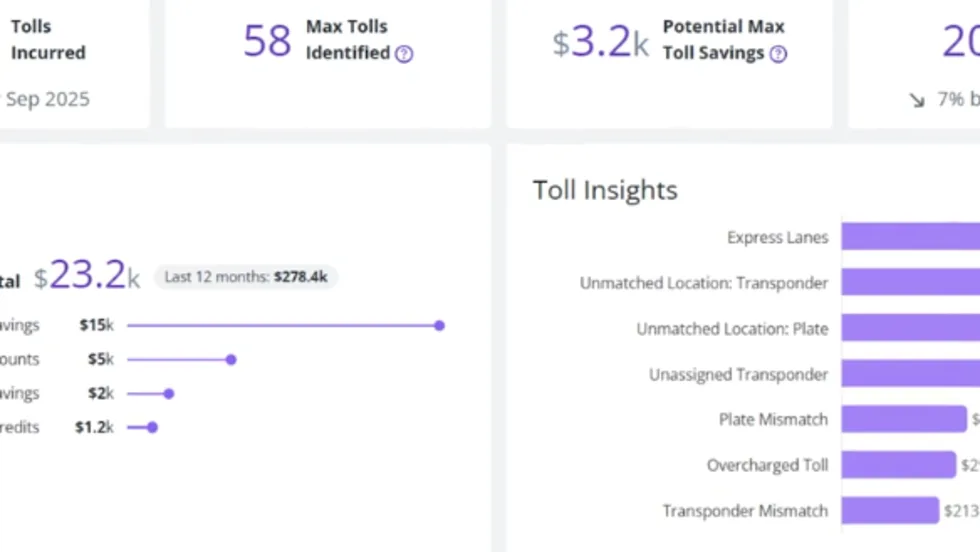
PrePass Intelligence Mines Fleet Bypass, Toll and Safety Data
PrePass Intelligence helps fleets measure bypass savings, flag potential toll overcharges, and spot suspicious transactions by combining data from separate systems.
Read More →
Motive Adds AI Agents for Fleet Operations
New tools automate follow-up on fleet data, from maintenance work orders to driver alerts, with two-way voice conversations planned for later this year.
Read More →
Can You Beat Our Trucking Trivia Challenge?
Test your truck knowledge with 19 trivia questions from Heavy Duty Trucking Exchange. Can you keep up with the fleet pros?
Read More →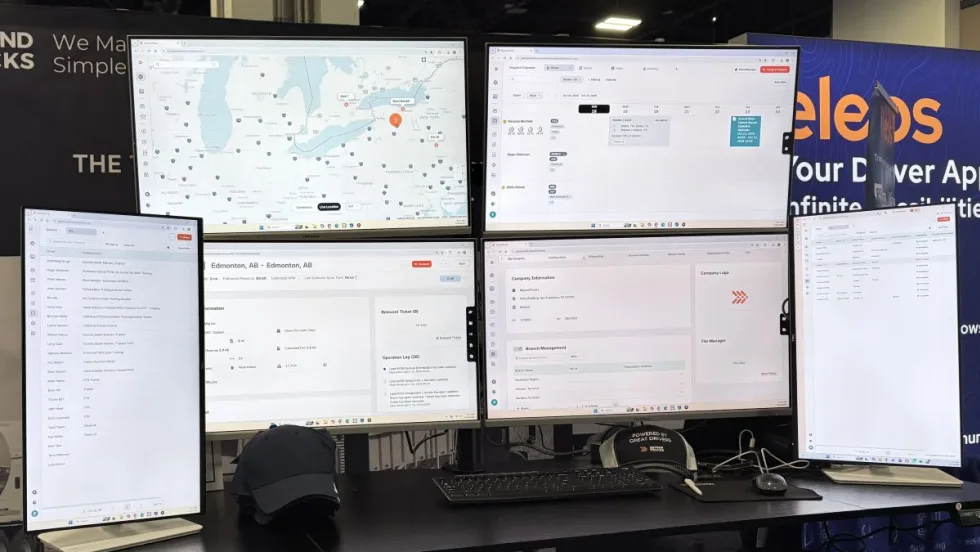
BeyondTrucks Adds Rules Checks to Dispatch
New Compatibility Engine checks driver qualifications, equipment requirements and fleet policies before loads are dispatched.
Read More →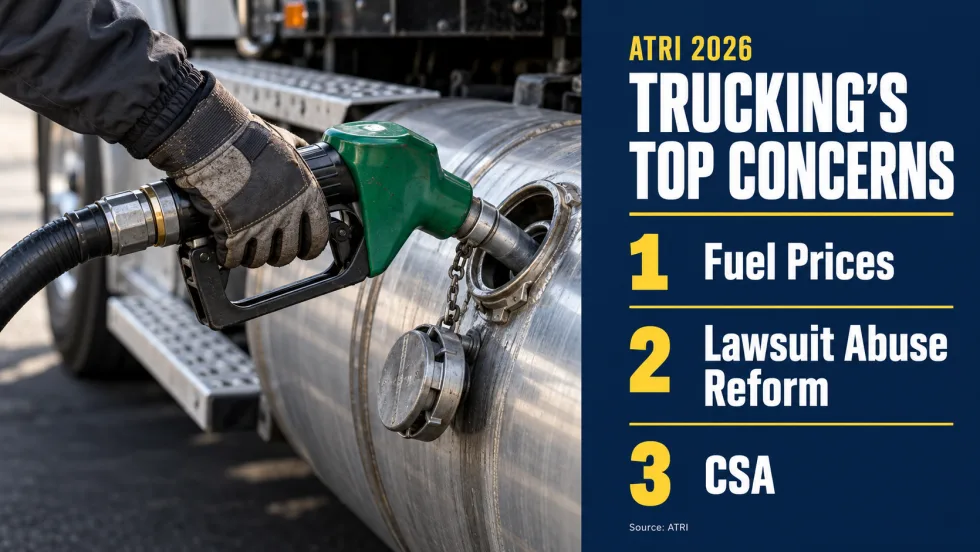
Diesel Prices Hijack Trucking’s Worry List
ATRI’s annual survey finds cautious optimism about freight, but diesel costs, litigation, and insurance continue to squeeze fleets. Drivers have different priorities on several issues.
Read More →
Nomination Deadline Extended for HDT Emerging Leaders
Just a few more days to nominate accomplished trucking fleet professionals under 40 who are making an impact and helping lead the industry forward for the HDT Emerging Leaders award. Deadline extended to October 20!
Read More →
What Will ATA’s New Leader Bring to Trucking's Table?
Incoming President and CEO Mark Colson’s record in Alabama offers clues about his priorities and approach following Chris Spear’s abrupt departure as the head of the American Trucking Associations.
Read More →
Volvo, Waabi Start Commercial Autonomous Operations in Texas
Volvo VNL Autonomous trucks, powered by the Waabi Driver, are hauling freight directly to third-party facilities for a customer in Texas.
Read More →
Samsara Launches Custom AI Agent Builder
Agent Studio lets fleets create AI tools for hours-of-service monitoring, reporting and driver support, including agents that communicate by phone.
Read More →