




Southwest Research Institute Looks to Boost Hydrogen Fueling Infrastructure
A new joint industry project headed by the Southwest Research Institute is aiming at developing and advancing hydrogen fueling infrastructure and technologies in North America.

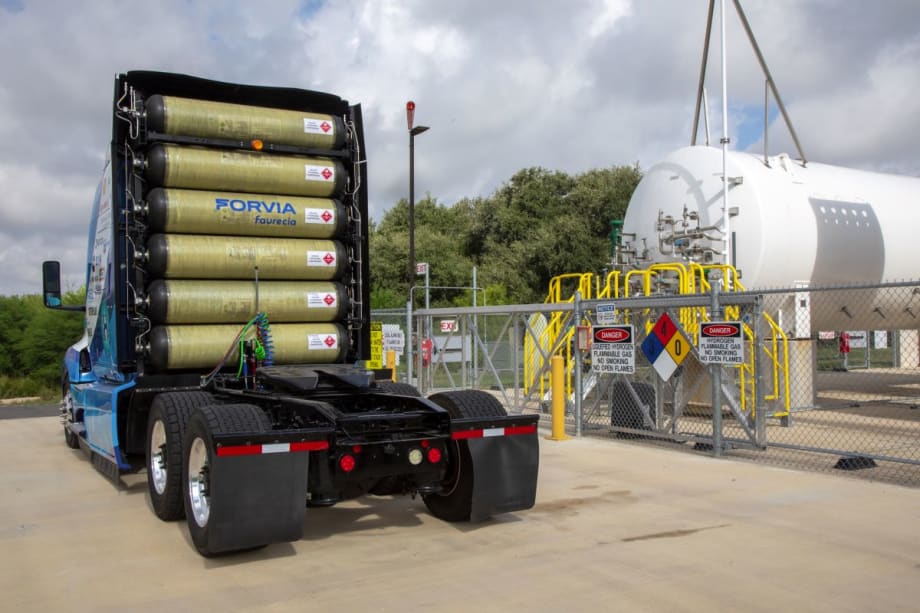
Southwest Research Institute is home to several hydrogen-energy-related initiatives, including the H2-ICE consortium, which completed the construction of a hydrogen internal combustion engine-powered heavy-duty vehicle and an on-site liquid hydrogen storage tank capable of holding up to 17,000 gallons of liquid hydrogen.
Photo: SwRI
The Southwest Research Institute has announced a new joint industry project (JIP). This project aims to help spur the growth and innovation of fueling technologies and infrastructure for hydrogen-powered heavy-duty vehicles.
Strengthening Hydrogen Infrastructure
SwRI’s H2HD REFUEL (Hydrogen Heavy Duty Refueling Equipment and Facilities Utilization Evaluation Laboratory) JIP will strengthen the acceptance of hydrogen fuel use by heavy-duty vehicles, the group said.
The goal is to help the mobility industry meet its decarbonization and zero-emissions goals by advancing hydrogen refueling station (HRS) technologies.
Over the next four years, SwRI researchers will use hands-on experiments, system modeling and theoretical studies to strengthen existing HRS equipment and procedures and explore potential alternatives.
“There are less than sixty hydrogen refueling stations in the U.S., but only one or two currently exist that can meet the specific needs of heavy-duty hydrogen-powered vehicles,” said Dr. Thomas E. Briggs, Jr., Institute engineer with SwRI’s Powertrain Engineering Division. “Many light-duty hydrogen stations face significant technical challenges, including supply chain issues, mechanical failures, and lack of infrastructure. Considering the multimillion-dollar investment per station, these issues reflect a significant technology gap that industry and government must bridge before building additional heavy-duty refueling stations.”
A Four-Year Program
The H2HD REFUEL JIP hopes to address these issues by connecting hydrogen vehicle manufacturers, original equipment manufacturers (OEMs) and refueling station operators to develop innovative, dependable and compatible HRS technologies.
The four-year program will investigate a broad range of HRS-related topics to help solve existing technical challenges, such as discovering the best onboard hydrogen storage method: liquid, H70 gas or cryo-compression, and comparing the performances of refueling station flow components. The JIP also plans to study hydrogen losses from cryogenic systems that occur from boil-off and system inefficiencies.
“Connecting industry stakeholders is vital to developing compatible and reliable hydrogen refueling technologies and associated infrastructure,” said Angel Wileman, the JIP’s project manager from SwRI’s Mechanical Engineering Division. “H2HD REFUEL’s comprehensive approach will ensure that the industry can meet the growing demand for heavy-duty hydrogen vehicles efficiently and safely. This JIP is another example of how SwRI is leading the way when it comes to hydrogen energy research.”
H2HD REFUEL members will benefit from access to SwRI-led cutting-edge research and hydrogen storage system models. Members can also participate in interactive workshops and bi-annual meetings for networking and knowledge sharing and gain valuable economic and performance insights for different hydrogen storage systems.
More Fuel Smarts

How Volvo Updated Its D13 for EPA 2027 [Watch]
Volvo’s updated D13 promises lower emissions without sacrificing performance or fuel economy. Take a closer look at what changed inside the engine in this HDT Spotlight video.
Read More →
Diesel Price Spike Shortens Payback for Natural Gas Trucks, Report Says
Energy Vision estimates fleets could recover the higher purchase price of an RNG-fueled Class 8 tractor in 1.3 to 2.8 years under current fuel-price scenarios.
Read More →
Calstart Becomes Catalyst Mobility, Reflecting Broader Focus
Calstart is now Catalyst Mobility, reflecting the nonprofit’s growing national role in clean transportation, including zero-emission trucks, infrastructure and incentive programs.
Read More →

Record Diesel Prices Squeeze Trucking Fleets
Average U.S. diesel prices have climbed to nearly $6 a gallon, surpassing the 2022 record as tight refinery capacity and Middle East disruptions keep fuel costs elevated.
Read More →
How Fuel Delivery Shapes Engine Performance
Fuel delivery depends on more than what happens at the injector. For fleet, maintenance and technical professionals, looking at the full path from pump to injector can provide useful context for understanding engine performance.
Read More →
East Coast Port Launches $45M Electric Truck Push
The Port Authority of New York and New Jersey announced millions in incentives for zero-emission drayage trucks, yard tractors, and new charging hubs near the port.
Read More →
California Bill Could Shed Light on Electric Truck Prices
Why do battery-electric Class 8 trucks remain so expensive? A California bill headed to Gov. Gavin Newsom would give fleets and state agencies more visibility into what manufacturers charge.
Read More →
Detroit Opens Orders for EPA 2027 Engines
Detroit isn’t starting from scratch to meet EPA 2027 diesel emissions standards. Its Gen 6 DD13 and DD15 engines keep much of today’s platform while updating the fuel and aftertreatment systems.
Read More →
Zero-Emission Truck Corridor Planned for West Coast
California, Oregon, Washington, British Columbia and Baja California are coordinating plans for truck charging and hydrogen fueling from Canada to Mexico.
Read More →
A Closer Look at Kenworth’s Electric T880E Vocational Truck [Video]
Learn more about Kenworth's T880E battery-electric vocational truck at the Paccar Technical Center, including its range, applications, upfitting considerations, and PTO options, in this HDT Spotlight video.
Read More →