




Shippers Group Wants Higher Truck Weight Limits
More than 100 associations and companies, including the National Private Truck Council, the Agricultural Transportation Efficiency Coalition and big companies like Kraft Foods and International Paper, today launched a coalition asking Congress to raise the truck weight limit
More than 100 associations and companies, including the National Private Truck Council, the Agricultural Transportation Efficiency Coalition and big companies like Kraft Foods and International Paper, today launched a coalition asking Congress to raise the truck weight limit.
The Coalition for Transportation Productivity supports the Safe and Efficient Transportation Act of 2009 (H.R. 1799), which would increase the weight limit on Interstate highways. Proponents say the move would improve trucking productivity and allow for safer highways, a cleaner environment and a stronger economy.
"America's freight transportation infrastructure is on the verge of becoming overwhelmed over the next decade," said CTP Co-Chair John Runyan. "Freight hauled by trucks in the U.S. is expected to double by 2025, and truck traffic is growing 11 times faster than road capacity. The Coalition for Transportation Productivity is asking Congress to responsibly reform truck weight limits with proper safeguards to allow the same amount of freight to be carried on fewer trucks, which will improve the efficiency of our interstates, reduce fuel use, and curb emissions."
Introduced by U.S. Rep. Michael Michaud of Maine, the Safe and Efficient Transportation Act of 2009 allows individual states to increase their interstate vehicle weight limits to 97,000 pounds - but only for vehicles equipped with a sixth axle. Without changing the size or length of the truck, the additional axle would maintain braking capacity and the current distribution of weight per tire while minimizing pavement wear. The bill also imposes a user fee for six-axle units that would fund vital bridge repair.
"Accident rates among heavy vehicles are strongly tied to the vehicle miles a truck must travel to deliver a ton of freight," Runyan continued. "A proposal like H.R. 1799 would reduce the number of vehicle miles and overall number of trucks needed to deliver a specific amount of freight, making roads safer while cutting fuel and emissions by as much as 19 percent for each ton carried."
A 2009 Wisconsin DOT study found that if a law like H.R. 1799 had been in place in 2006, it would have prevented 90 truck-related accidents in the state during 2006. Employers in the state would have saved more than $150 million in transportation costs.
In 2001, the United Kingdom raised the gross vehicle weight limit for six-axle trucks to 97,000 pounds. Since then, the coalition notes, fatal truck-related accident rates have declined by 35 percent. More freight has been shipped, while the vehicle miles traveled to deliver a ton of freight declined.
Learn more about the proposed six-axle configuration and the legislation in "Trailer Report" in the June issue of Heavy Duty Trucking magazine.
More Drivers

From One Generation to the Next: How Mentorship Builds Safer Truck Drivers
After three decades in trucking, Harold Perry shares what he's learned about driver safety, mentorship, and helping the next generation build confidence behind the wheel.
Read More →
Truck Drivers Need More Than Another Alert
Fleets have more visibility into truck health, safety events, and driver activity than ever. The next challenge is turning all that information into useful guidance for the person who has to decide what to do next.
Read More →
FMCSA Removes 110 Truck Driver Training Schools from Certified ELDT List
Federal regulators also are targeting more than 160 additional training providers and launching a nationwide audit of third-party CDL skills testers as part of a broader crackdown on trucking fraud.
Read More →
Hours of Service Pilot Programs: FMCSA Readies for 2027 Rollout
Two pilot programs could eventually reshape hours-of-service rules, giving truck drivers options to pause their 14-hour clock or use longer split sleeper rest periods.
Read More →
Medical Cards, English Proficiency Reshape Roadcheck Violations
Medical-card violations jumped to the top of the driver out-of-service list during CVSA’s 2026 International Roadcheck, while English-language proficiency violations appeared among the leading violations for the first time.
Read More →
Driver Trust Can Make or Break the Success of Fleet Safety Technology
New Teletrac Navman research suggests that onboarding, transparency about driver data, and positive feedback can play a significant role in how commercial drivers respond to safety and coaching technology.
Read More →
EEOC Sues KLLM Over Alleged Sex Discrimination in Driver Training
KLLM is facing a federal sex-discrimination lawsuit over policies the EEOC alleges put female truck driver trainees at a disadvantage.
Read More →
FMCSA Moves to Codify English Language Requirements for Commercial Drivers
By changing regulations on English-language proficiency requirements for commercial drivers, rather than relying on a guidance memo, the FMCSA said future administrations won't be able to walk back the Trump administration's stricter enforcement with just a memo.
Read More →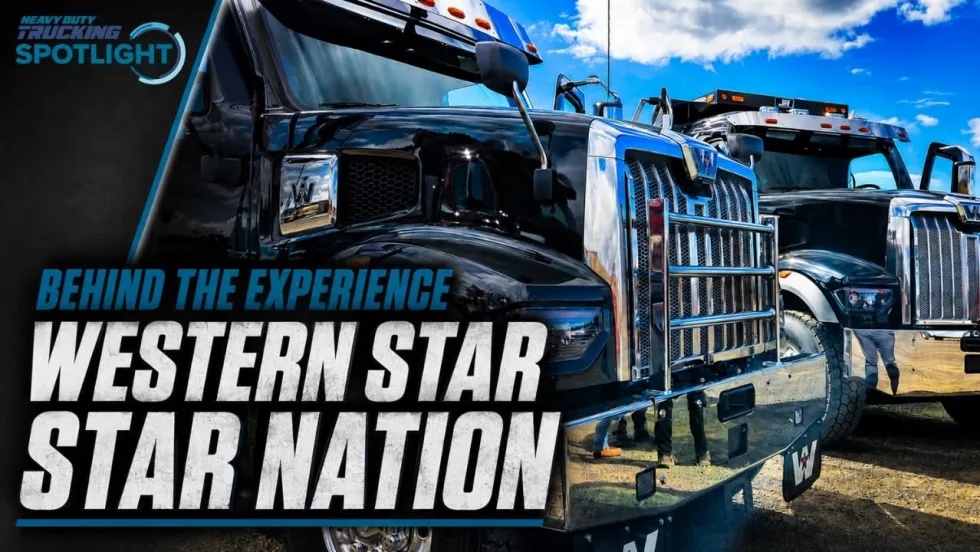
Drivers Put Western Star Trucks to the Test at Star Nation Experience
Watch to get an inside look at the Western Star trucks, technology, and community behind the Star Nation Experience 2026!
Read More →
Trump Administration Looks to Put More Veterans Behind the Wheel
The Freedom Haulers program pulls together existing and expanded programs at several federal agencies to recruit veterans to drive commercial heavy-duty trucks and cut the red tape for them to get a CDL, training, and employment.
Read More →