




Second Quarter Brings Losses to Saia
Affected by weak tonnage levels and a competitive pricing environment, Saia posted second quarter losses of $1.7 million and a 21 percent decrease in revenue
Affected by weak tonnage levels and a competitive pricing environment, Saia posted second quarter losses of $1.7 million and a 21 percent decrease in revenue.
"Second quarter margins deteriorated compared to the prior year quarter reflecting tonnage and yield declines," said Rick O'Dell, president and CEO. "This is due to the weak shipping environment and lower yields impacted by increasingly competitive pricing pressure."
The company's losses per share for the quarter amounted to $0.13, compared to earnings per share of $0.46 and net income of $5.3 million for the year-ago quarter. Revenue dropped to $218 million. Operating loss was $0.4 million, while the second quarter of 2008 saw operating income of $10.9 million.
"In addition, self insured costs for health care and accident severity resulted in higher expense in the second quarter of 2009," O'Dell said.
Less-than-truckload tonnage fell 6.2 percent, while LTL shipments per workday declined three percent with a 3.4 percent drop in weight per shipment. Saia's LTL yield slipped 14.5 percent from the second quarter of 2008. The company attributes the drops to the reduction in fuel surcharges and competitive pricing.
In an effort to mitigate some of the economic loss, the company reduced compensation by 10 percent of salary for the leadership team and five percent for hourly, linehaul and salaried workers in operations, maintenance and administration. This was implemented on April 1, 2009.
"We continue to address the current challenging environment by taking aggressive actions to control costs and improve productivity through focused engineered initiatives," O'Dell said.
More Drivers

Driver Trust Can Make or Break the Success of Fleet Safety Technology
New Teletrac Navman research suggests that onboarding, transparency about driver data, and positive feedback can play a significant role in how commercial drivers respond to safety and coaching technology.
Read More →
EEOC Sues KLLM Over Alleged Sex Discrimination in Driver Training
KLLM is facing a federal sex-discrimination lawsuit over policies the EEOC alleges put female truck driver trainees at a disadvantage.
Read More →
FMCSA Moves to Codify English Language Requirements for Commercial Drivers
By changing regulations on English-language proficiency requirements for commercial drivers, rather than relying on a guidance memo, the FMCSA said future administrations won't be able to walk back the Trump administration's stricter enforcement with just a memo.
Read More →
Drivers Put Western Star Trucks to the Test at Star Nation Experience
Watch to get an inside look at the Western Star trucks, technology, and community behind the Star Nation Experience 2026!
Read More →
Trump Administration Looks to Put More Veterans Behind the Wheel
The Freedom Haulers program pulls together existing and expanded programs at several federal agencies to recruit veterans to drive commercial heavy-duty trucks and cut the red tape for them to get a CDL, training, and employment.
Read More →
Putting Mack’s Command Steer to the Test
A test drive of Mack’s Command Steer active steering system evaluates how it can make truck driving easier and less tiring.
Read More →
Competition Heating Up for Truck Drivers
New report reveals rising driver hiring costs, the return of sign-on bonuses, growing AI advantages, and the operational factors shaping driver retention.
Read More →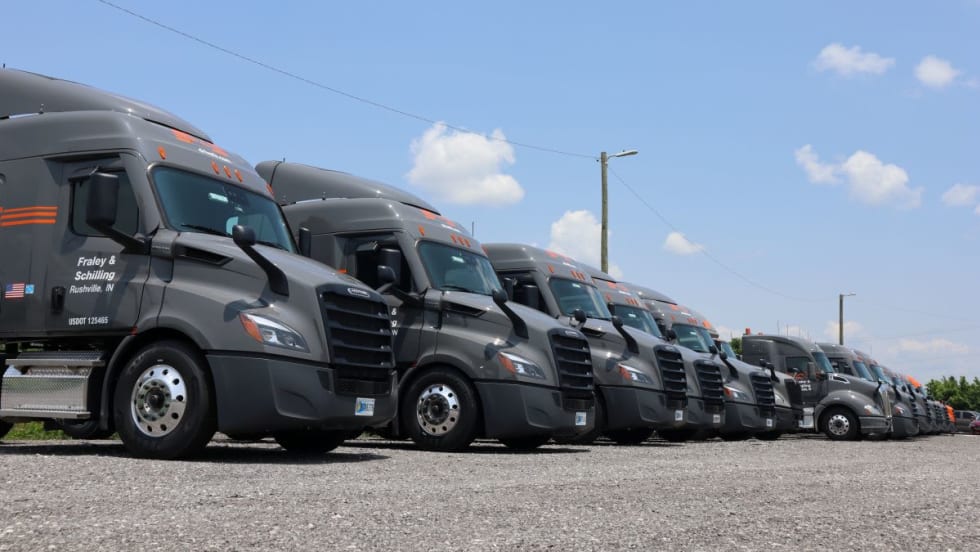
How Fraley & Schilling Improved Logbook Compliance by Over 50%
Fraley & Schilling needed a way to close a compliance workflow gap in its ELD system without adding more work from driver training, reminders, and back-office follow-ups. It found the answer in a custom driver app.
Read More →
Volvo Goes Gaming
Volvo has roared into American Truck Simulator with two new flagship trucks.
Read More →
What the Best Fleets to Drive For Teach About Driver Retention
Survey fatigue, AI-powered routing, owner-operator expectations, and the decline of social media all emerged as themes from this year's Best Fleets to Drive For program.
Read More →