





5 Things Fleets Need to Know About the Drug & Alcohol Clearinghouse
Schneider to Pilot Truck Driver Alcohol Detection System
Schneider will become the first truckload carrier to conduct a trial deployment of "lifesaving technology" developed through the Driver Alcohol Detection System for Safety Program.
December 8, 2021
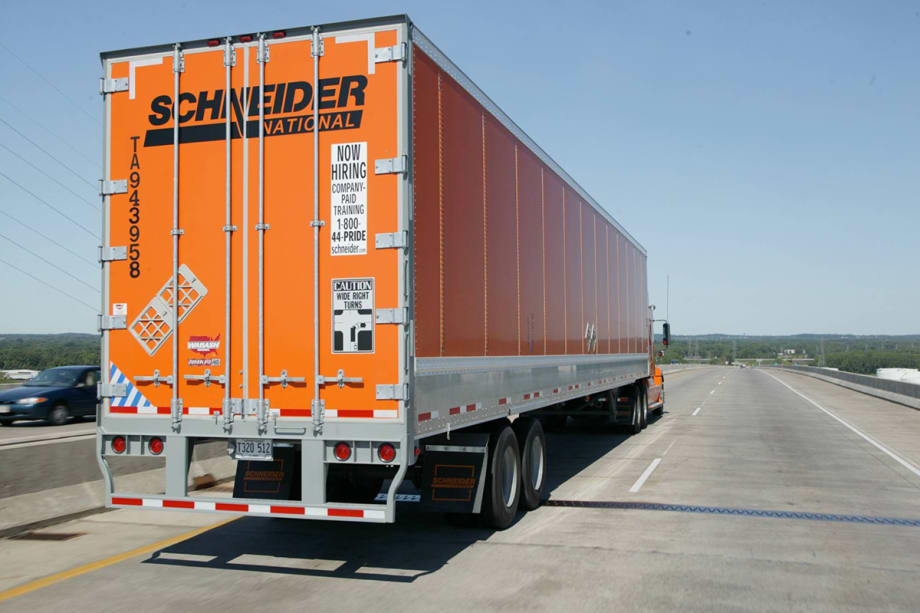
Schneider will outfit eight of its cabs with the latest breath sensors in 2022.
Photo: Schneider
2 min to read
Schneider will become the first truckload carrier to conduct a trial deployment of "lifesaving technology" developed through the Driver Alcohol Detection System for Safety Program.
DADSS is a public-private partnership between the world’s leading automakers and the U.S. Department of Transportation’s National Highway Traffic Safety Administration to invent, test, commercialize and deploy new alcohol detection technologies in vehicles.
As part of this trial deployment in collaboration with the Automotive Coalition for Traffic Safety, Schneider will outfit eight of its cabs with the latest breath sensors in 2022.
The sensors will log more than 100,000 sensor miles for each vehicle outfitted, for a collective total of almost one million miles.
The pilot will help refine the technology by increasing the stress that the system is put under on the road, exponentially increasing the number of miles driven, and exposing the system to new drivers and a wider range of environmental conditions — all key to the DADSS program’s quest to commercialize fully passive vehicle-integrated breath technology.
The collaboration will be carried out through the Driven to Protect Initiative with the Virginia Department of Motor Vehicles. Since 2018, the Commonwealth of Virginia has been helping to test in-vehicle alcohol detection technology that will determine if a driver is impaired with a blood alcohol concentration at or above the applicable legal limit in the Commonwealth — and prevent the vehicle from moving.
“The progress [Virginia has] made since 2018 has advanced this game-changing anti-drunk driving technology, and I am excited to see how this new partnership will bring the technology one step closer to saving countless lives on our roadways,” said Virginia DMV Commissioner Richard D. Holcomb.
ACTS recently announced that the first product has come out of the DADSS research lab and is being made available for open licensing for use in commercial vehicles. This first-generation breath system will be used by fleet operators implementing a zero-tolerance alcohol policy for their drivers. Additional product updates are planned, with a goal of releasing a new product update every 18 months over the next 4 years. A consumer version of the breath system is expected by 2024 and a touch system by 2025.
Last month, Congress demonstrated its commitment to advanced technology solutions by including them in the new Infrastructure Investment and Jobs Act, which lays out a process for deploying advanced drunk and impaired driving prevention technology.
More Safety & Compliance

ZF Expands Commercial Vehicle Push in North America
ZF is expanding its North American commercial-vehicle presence with new transmission applications, electrification, trailer technology and autonomous-driving systems.
Read More →
Truck Drivers Need More Than Another Alert
Fleets have more visibility into truck health, safety events, and driver activity than ever. The next challenge is turning all that information into useful guidance for the person who has to decide what to do next.
Read More →
Tesla Wants a Self-Driving Semi. Are Cameras Enough?
Could Tesla’s camera-only autonomous driving technology work on an 80,000-pound Semi? In this commentary, HDT's Deborah Lockridge takes a look at Tesla, Cybercab, and how autonomous trucks see the road.
Read More →
What DOT’s Automated Vehicle Strategy Means for Trucking
The U.S. Department of Transportation issued a new automated-vehicle strategy that outlines plans for driverless-truck regulations, cross-state freight corridors, and federal safety standards.
Read More →
NYC Expands Speed, Pedestrian Safety Tech Across Fleet
New York City is expanding intelligent speed assistance and pedestrian-alert systems across its municipal fleet, moving the technologies from pilot programs into vehicle procurement and retrofit requirements.
Read More →
FMCSA Removes 110 Truck Driver Training Schools from Certified ELDT List
Federal regulators also are targeting more than 160 additional training providers and launching a nationwide audit of third-party CDL skills testers as part of a broader crackdown on trucking fraud.
Read More →
Beyond DOT Compliance: What Makes a Trucking Fleet Truly Safe?
A trucking fleet can follow every rule and still make unsafe decisions. The real test comes when safety conflicts with freight, productivity, or cost.
Read More →
Hours of Service Pilot Programs: FMCSA Readies for 2027 Rollout
Two pilot programs could eventually reshape hours-of-service rules, giving truck drivers options to pause their 14-hour clock or use longer split sleeper rest periods.
Read More →
New Guide Offers Pet Safety Tips for Truck Drivers
Hundreds of thousands of pets travel in truck cabs. A new safety guide from Volvo Trucks and the Center for Pet Safety offers practical advice for truck drivers who bring dogs and cats along for the ride.
Read More →
Medical Cards, English Proficiency Reshape Roadcheck Violations
Medical-card violations jumped to the top of the driver out-of-service list during CVSA’s 2026 International Roadcheck, while English-language proficiency violations appeared among the leading violations for the first time.
Read More →