




Safety Board Calls For Actions To Help Prevent Fatigue-Related Accidents
The National Transportation Safety Board says human fatigue was the probable cause of a 2005 truck-bus collision that killed five and injured 35, and recommends the government mandate safety technology to prevent such accidents in the future
The National Transportation Safety Board says human fatigue was the probable cause of a 2005 truck-bus collision that killed five and injured 35, and recommends the government mandate safety technology to prevent such accidents in the future.
"Human fatigue has been a persistent factor in far too many transportation accidents. And if anything, the problem is growing not shrinking," said NTSB Acting Chairman Mark V. Rosenker. "More needs to be done to reverse the trend so fewer of these tragic accidents come before the Safety Board."
Just before 2 a.m. on Oct. 16, 2005, a tractor-trailer traveling westbound on I-94 near Osseo, Wis., departed the right-hand lane and traveled along the earthen roadside before re-entering the highway where it overturned, coming to rest on its right side and blocking both westbound lanes. About a minute later, a chartered 55-passenger motorcoach, carrying members of a high school band, crashed into the underside of the overturned truck. The motorcoach driver and four passengers were fatally injured. Thirty- five passengers received minor to serious injuries. The truck driver received minor injuries.
The Safety Board determined that the driver of the truck was fatigued and fell asleep at the wheel because he did not use his off-duty time to obtain sufficient sleep to safely operate the vehicle. With the low-light conditions of a dark night, the motorcoach driver was unable to see the truck blocking the travel lanes in time to avoid the collision.
The Safety Board also found that had the truck been equipped with technologies to detect fatigue, the systems might have prevented or mitigated the severity of the accident. And had the motorcoach been equipped with a collision warning system with active braking, the severity of the accident may have been significantly reduced.
"In this tragic accident, we can clearly see how the advanced vehicle safety technologies, some of which are already fully developed and in use, could have made a big difference here," said Rosenker. "This board is going to continue to be a strong advocate for the implementation of technologies that can actually prevent such terrible accidents from ever occurring."
Last year the NTSB added "Enhanced Vehicle Safety Technology to Prevent Collisions" to its List of Most Wanted Transportation Safety Improvements, or Most Wanted List. Among the advanced safety technologies that the board believes will help reduce accidents are adaptive cruise control and collision warning systems. This report goes further to include active braking and electronic stability control as additional tools to help drivers remain in control of their vehicles.
The NTSB recommended that the Federal Motor Carrier Safety Administration develop and implement a plan to deploy technologies in commercial vehicles to reduce the occurrence of fatigue-related accidents. It also recommends FMCSA develop and use a methodology to continually assess the effectiveness of fatigue management plans implemented by motor carriers.
The board recommended that the National Highway Traffic Safety Administration determine whether equipping commercial vehicles with collision warning systems with active braking and electronic stability control systems will reduce commercial vehicle accidents. If these technologies are determined to be effective in reducing accidents, NTSB says, NHTSA should require their use on commercial vehicles.
NTSB also reiterated a previous recommendation to NHTSA that calling for a rulemaking on adaptive cruise control and collision warning system performance standards for new commercial vehicles and requiring that all new commercial vehicles be equipped with a collision warning system.
A synopsis of the Board's report, including the probable cause and recommendations, is available at ntsb.gov under "Board Meetings." The Board's full reports will be available on the website in several weeks.
More Safety & Compliance
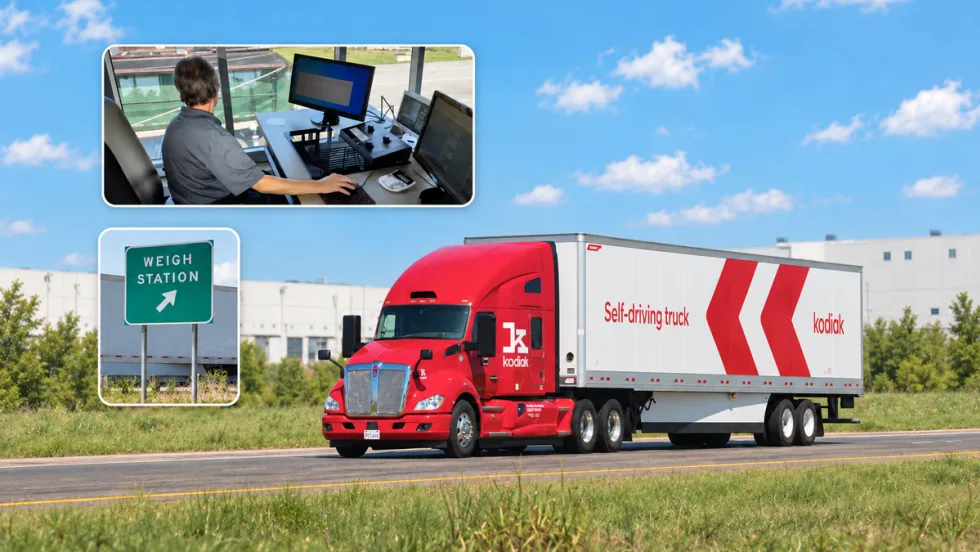
PrePass, Kodiak Connect Driverless Trucks to Roadside Enforcement
The system will allow enforcement agencies to verify Enhanced Inspection information and decide whether Kodiak’s autonomous trucks can bypass roadside screening sites.
Read More →
From One Generation to the Next: How Mentorship Builds Safer Truck Drivers
After three decades in trucking, Harold Perry shares what he's learned about driver safety, mentorship, and helping the next generation build confidence behind the wheel.
Read More →
FMCSA Pauses Biennial-Update Enforcement Amid Motus Transition
Carriers whose updates were due on or after June 1 have more time, while FMCSA works to stabilize its new registration system and warns of phishing sites impersonating its new carrier registration system, Motus.
Read More →
ZF Expands Commercial Vehicle Push in North America
ZF is expanding its North American commercial-vehicle presence with new transmission applications, electrification, trailer technology and autonomous-driving systems.
Read More →
Truck Drivers Need More Than Another Alert
Fleets have more visibility into truck health, safety events, and driver activity than ever. The next challenge is turning all that information into useful guidance for the person who has to decide what to do next.
Read More →
Tesla Wants a Self-Driving Semi. Are Cameras Enough?
Could Tesla’s camera-only autonomous driving technology work on an 80,000-pound Semi? In this commentary, HDT's Deborah Lockridge takes a look at Tesla, Cybercab, and how autonomous trucks see the road.
Read More →
What DOT’s Automated Vehicle Strategy Means for Trucking
The U.S. Department of Transportation issued a new automated-vehicle strategy that outlines plans for driverless-truck regulations, cross-state freight corridors, and federal safety standards.
Read More →
NYC Expands Speed, Pedestrian Safety Tech Across Fleet
New York City is expanding intelligent speed assistance and pedestrian-alert systems across its municipal fleet, moving the technologies from pilot programs into vehicle procurement and retrofit requirements.
Read More →
FMCSA Removes 110 Truck Driver Training Schools from Certified ELDT List
Federal regulators also are targeting more than 160 additional training providers and launching a nationwide audit of third-party CDL skills testers as part of a broader crackdown on trucking fraud.
Read More →
Beyond DOT Compliance: What Makes a Trucking Fleet Truly Safe?
A trucking fleet can follow every rule and still make unsafe decisions. The real test comes when safety conflicts with freight, productivity, or cost.
Read More →