




Rush Introduces Class 6-8 CNG Fuel System
Rush Enterprises' Momentum Fuel Technologies has introduced what it says is the industry’s first complete compressed natural gas fuel system solution for Class 6-8 trucks.

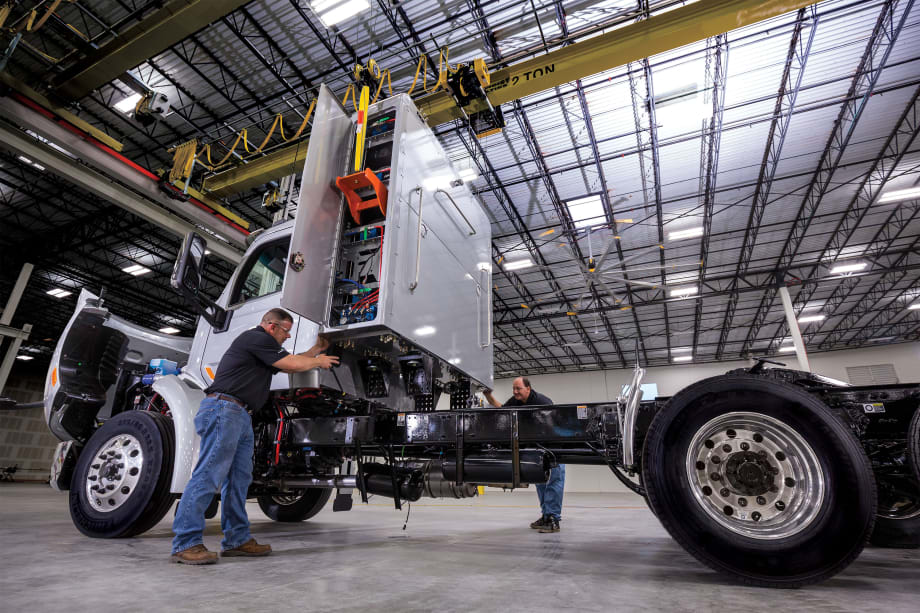
Photos courtesy of Momentum Fuel Technologies
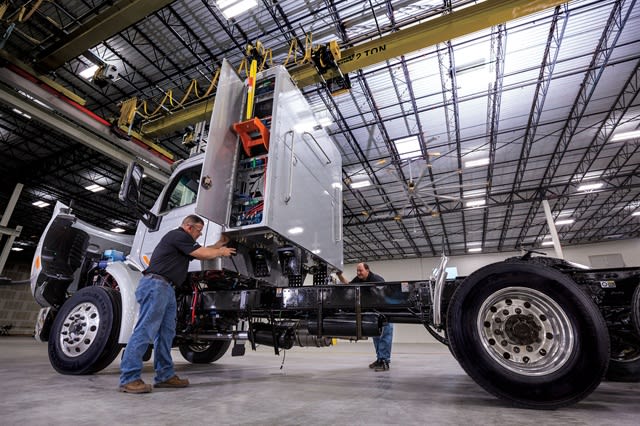
Photos courtesy of Momentum Fuel Technologies
Rush Enterprises' Momentum Fuel Technologies has introduced what it says is the industry’s first complete compressed natural gas (CNG) fuel system solution for Class 6-8 trucks.
"The industry is ready for a complete CNG fuel system solution," said W.M. 'Rusty' Rush, chairman, CEO and president of Rush Enterprises. "With Rush Truck Centers’ expertise in natural gas truck sales and service and an unsurpassed support network, we are well positioned to launch Momentum Fuel Technologies."
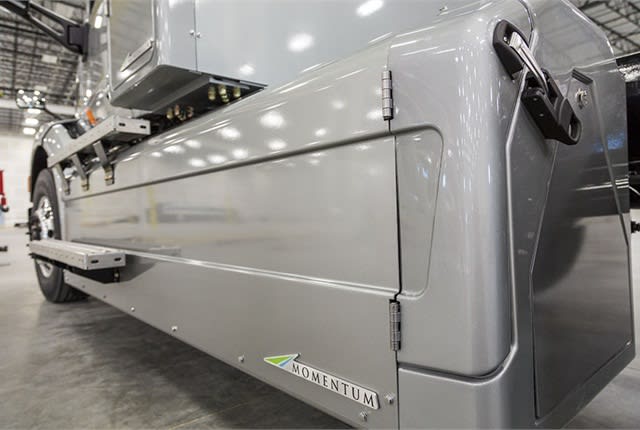
The company plans to offer both side-mount and back-of-cab mount systems. Side-mount systems include a 40-diesel-gallon-equivalent system with a range of 176-220 miles and a 45-DGE system with a range of 198-248 miles.
The back-of-cab mount system Rush initially intends to offer will be 110 DGE with a range of 506-633 miles. It also expect to offer another back-of-cab mount system, 150 DGE with a range of 660-825 miles, in fall 2015.
Rush said while he does not see natural gas replacing diesel, there is still market for natural gas engine and “this market needs competition.” Rush says he has seen a change in the length of haul of his customers. “Typical length of haul used to be 1,200 miles. Now they are 500, and this plays into the rise of CNG.”
Mike Zimmerman, general manager of Momentum Fuel Technologies, says, “It was no easy task to start from nothing, but we used the voice of the customer to tell us how they wanted to have the fuel system designed.”
Customers expressed interest in a number of areas, including driver confidence, system weight, critical safety features, limiting downtime and a complete support network. Momentum Fuel Technologies’ solution meets these needs, Zimmerman said. “We are truck people, not tank people, so we approached this from the frame rails out. The integration was the most difficult part.”
He says the approach for this new product line is based on innovative design, advanced safety features, installation expertise and a nationwide support network.
The system is engineered to maximize fill rates, reserving customers’ valuable time for the road. Additionally, fuel flows straight from the manifold to the individual tanks using a parallel-flow fill system.
Built-in safeguards increase driver confidence in fuel levels and reduce range anxiety. The temperature-compensated fuel-level system reflects accurate gas and pressure levels so drivers won’t feel the need to make continual fuel top-offs on the road. The Electronic Control Module (ECM) converts the tank readings through the Fuel Level Interface Module (FLIM) and outputs the signal to the factory-installed fuel gauge.
The system comes with both transit-fill and time-fill fuel ports. The design includes oversized tubing with fewer bends and fittings plus a high-flow ball valve. Customers can choose optional front-bumper or passenger-side fuel ports for added convenience.
The system is designed to be lightweight and the company partnered with 3M to use its nanoparticle-enhanced matrix resin technology, which it says results in a six percent improvement in fiber delivered burst strength when compared to vessels with conventional resin.
The fuel system boasts a number of safety features including:
Area pressure Relief Devices (PRD): In the event of a fire or other emergency, fuel is vented out through tubes at the rear of the system. All PRD vent tubes are fitted with weatherproof caps to protect the system from environmental elements.
Color Coded for Quick Visual Indication: All high-pressure lines in the system are color coded so they are easy for drivers and technicians to identify.
Standard fuel door safety warning system: This prevents the engine from starting if the door is ajar.
To manufacture the fuel systems, Momentum Fuel Technologies invested millions of dollars in its 109,000-square-foot CNG-dedicated facility in the Dallas-Fort Worth area, with state-of-the art machining equipment.
Rush says the company already has invested “millions of dollars in the project and investment will continue. I am in this for the long term. This is a good leverage play for us.”
Rush Truck Centers has 14 locations with dedicated natural gas service bays and more than 260 technicians trained in natural gas safety and preparedness, more than 55 trained in fuel-systems and more than 135 trained in OEM systems. Rush says the company has made extensive investments in facilities and tooling upgrades to meet safety requirements and effectively service the Momentum CNG fuel system.
“We are also working with independent service providers including the Cummins distributor and Peterbilt dealer networks, among others, to provide supplemental aftermarket support in areas where Rush Truck Centers does not currently have dealership operations,” said Michael J. McRoberts, senior vice president of dealer operations, Rush Enterprises.
More Fuel Smarts

How Volvo Updated Its D13 for EPA 2027 [Watch]
Volvo’s updated D13 promises lower emissions without sacrificing performance or fuel economy. Take a closer look at what changed inside the engine in this HDT Spotlight video.
Read More →
Diesel Price Spike Shortens Payback for Natural Gas Trucks, Report Says
Energy Vision estimates fleets could recover the higher purchase price of an RNG-fueled Class 8 tractor in 1.3 to 2.8 years under current fuel-price scenarios.
Read More →
Calstart Becomes Catalyst Mobility, Reflecting Broader Focus
Calstart is now Catalyst Mobility, reflecting the nonprofit’s growing national role in clean transportation, including zero-emission trucks, infrastructure and incentive programs.
Read More →

Record Diesel Prices Squeeze Trucking Fleets
Average U.S. diesel prices have climbed to nearly $6 a gallon, surpassing the 2022 record as tight refinery capacity and Middle East disruptions keep fuel costs elevated.
Read More →
How Fuel Delivery Shapes Engine Performance
Fuel delivery depends on more than what happens at the injector. For fleet, maintenance and technical professionals, looking at the full path from pump to injector can provide useful context for understanding engine performance.
Read More →
East Coast Port Launches $45M Electric Truck Push
The Port Authority of New York and New Jersey announced millions in incentives for zero-emission drayage trucks, yard tractors, and new charging hubs near the port.
Read More →
California Bill Could Shed Light on Electric Truck Prices
Why do battery-electric Class 8 trucks remain so expensive? A California bill headed to Gov. Gavin Newsom would give fleets and state agencies more visibility into what manufacturers charge.
Read More →
Detroit Opens Orders for EPA 2027 Engines
Detroit isn’t starting from scratch to meet EPA 2027 diesel emissions standards. Its Gen 6 DD13 and DD15 engines keep much of today’s platform while updating the fuel and aftertreatment systems.
Read More →
Zero-Emission Truck Corridor Planned for West Coast
California, Oregon, Washington, British Columbia and Baja California are coordinating plans for truck charging and hydrogen fueling from Canada to Mexico.
Read More →
A Closer Look at Kenworth’s Electric T880E Vocational Truck [Video]
Learn more about Kenworth's T880E battery-electric vocational truck at the Paccar Technical Center, including its range, applications, upfitting considerations, and PTO options, in this HDT Spotlight video.
Read More →