




Roadcheck 2007 Shows Advances in Truck Fleet Safety
The U.S. trucking industry showed improvement in truck safety, including an increase in the number of drivers wearing their safety belts, as well as industry compliance with hazardous materials regulations,

The U.S. trucking industry showed improvement in truck safety, including an increase in the number of drivers wearing their safety belts, as well as industry compliance with hazardous materials regulations,
according to the results of the 2007 truck safety Roadcheck conducted throughout North America by the Commercial Vehicle Safety Alliance.
Figures also showed slight increases in the number of drivers and vehicles parked for work and rest violations as law enforcement officials continue to do a better job of targeting drivers with previous violations.
Underscoring the effectiveness of industrywide efforts to educate drivers about truck safety and enforce safety measures, the number of vehicles, including trucks and buses, placed out of service represented 21.5 percent of the vehicles inspected. This compared with 21.7 percent in 2006.
The number of safety belt violations during the June 5-7 enforcement blitz decreased significantly to 829 in 2007 from 1,223 a year earlier. The number of hazardous materials trucks placed out of service also declined to 17.7 percent from 18.2 percent in 2006. The number of trucks parked for brake defects also dropped.
Drivers placed out of service for non-compliance with hours-of-service rules increased slightly, as 4.9 percent of all inspections resulted in a driver being placed out of service for hours of service violations, up from 4.5 percent in 2006. While results in some enforcement categories increased slightly in 2007 over Roadcheck 2006, the public should not be alarmed. These figures do not mean that trucking is less safe, but that inspectors have improved their skill in selecting trucks and drivers for inspections.
The Roadcheck inspections were not performed at random. Trucks and drivers were targeted for inspection based upon the safety record or previous inspection records of the motor carrier or the driver, or upon the observation skills of the trained inspectors. The inspectors use a computerized Inspection Selection System (ISS) by entering the vehicle, company and driver identifying information into the computer. The ISS then gives the inspector one of three results: "inspect," "inspection optional" or "don't inspect."
As part of its overall safety agenda, ATA said it would continue to promote safety belt use for all truck drivers by advocating primary safety belt laws in all states and increased safety belt enforcement efforts. ATA also continues to work with its industry counterparts to educate drivers about driver work and rest rules to ensure compliance.
ATA President and CEO Bill Graves praised CVSA for a successful Roadcheck saying, "Safety on the nation's highways and the safety of the motoring public continue to be the top priorities of the trucking industry. ATA supports the removal of unsafe trucks from the road. CVSA continues to become better at targeting those drivers and vehicles that should be out of operation. We appreciate CVSA's annual Roadcheck effort, which helps ensure that education and enforcement are having a positive impact on safety."
More Safety & Compliance
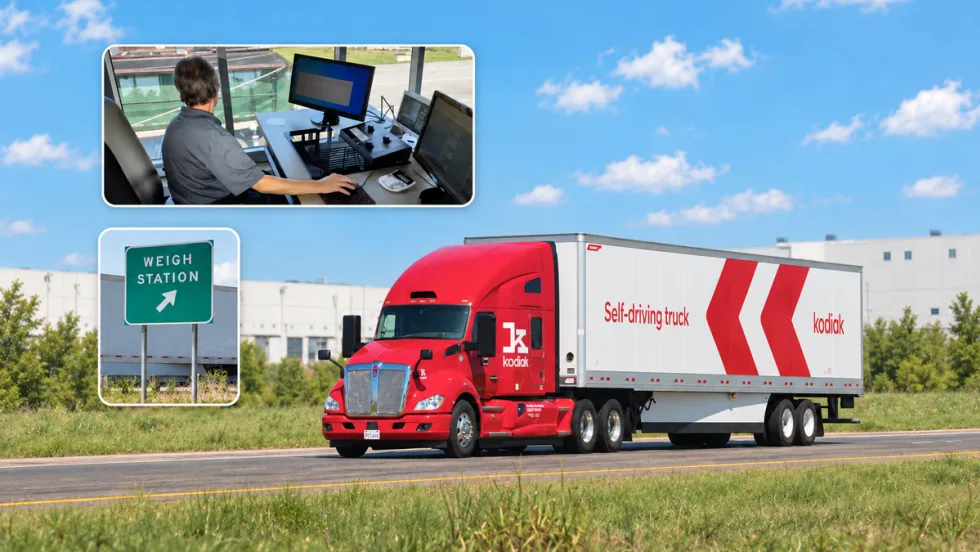
PrePass, Kodiak Connect Driverless Trucks to Roadside Enforcement
The system will allow enforcement agencies to verify Enhanced Inspection information and decide whether Kodiak’s autonomous trucks can bypass roadside screening sites.
Read More →
From One Generation to the Next: How Mentorship Builds Safer Truck Drivers
After three decades in trucking, Harold Perry shares what he's learned about driver safety, mentorship, and helping the next generation build confidence behind the wheel.
Read More →
FMCSA Pauses Biennial-Update Enforcement Amid Motus Transition
Carriers whose updates were due on or after June 1 have more time, while FMCSA works to stabilize its new registration system and warns of phishing sites impersonating its new carrier registration system, Motus.
Read More →
ZF Expands Commercial Vehicle Push in North America
ZF is expanding its North American commercial-vehicle presence with new transmission applications, electrification, trailer technology and autonomous-driving systems.
Read More →
Truck Drivers Need More Than Another Alert
Fleets have more visibility into truck health, safety events, and driver activity than ever. The next challenge is turning all that information into useful guidance for the person who has to decide what to do next.
Read More →
Tesla Wants a Self-Driving Semi. Are Cameras Enough?
Could Tesla’s camera-only autonomous driving technology work on an 80,000-pound Semi? In this commentary, HDT's Deborah Lockridge takes a look at Tesla, Cybercab, and how autonomous trucks see the road.
Read More →
What DOT’s Automated Vehicle Strategy Means for Trucking
The U.S. Department of Transportation issued a new automated-vehicle strategy that outlines plans for driverless-truck regulations, cross-state freight corridors, and federal safety standards.
Read More →
NYC Expands Speed, Pedestrian Safety Tech Across Fleet
New York City is expanding intelligent speed assistance and pedestrian-alert systems across its municipal fleet, moving the technologies from pilot programs into vehicle procurement and retrofit requirements.
Read More →
FMCSA Removes 110 Truck Driver Training Schools from Certified ELDT List
Federal regulators also are targeting more than 160 additional training providers and launching a nationwide audit of third-party CDL skills testers as part of a broader crackdown on trucking fraud.
Read More →
Beyond DOT Compliance: What Makes a Trucking Fleet Truly Safe?
A trucking fleet can follow every rule and still make unsafe decisions. The real test comes when safety conflicts with freight, productivity, or cost.
Read More →