




Risk Higher for Truckers in the 11th Hour
The crash risk for truck drivers in the last hour of a now legal 11-hour day behind the wheel is more than three times higher than during the first hour, a Penn State research team has found
The crash risk for truck drivers in the last hour of a now legal 11-hour day behind the wheel is more than three times higher than during the first hour, a Penn State research team has found.
For 60 years, federal rules limited truckers to driving 10 consecutive hours. However, in January 2004, the Federal Motor Carrier Safety Administration raised the limit to 11 hours and reaffirmed the change in October this year.
Dr. Paul Jovanis, professor of civil engineering who led the Penn State study, says, "Our analysis of data from three national trucking companies during normal operations in 2004 shows that the crash risk is statistically similar for the first six hours of driving and then increases in significant steps thereafter. The 11th hour has a crash risk more than three times the first hour."
Jovanis described the findings in a paper, “On the Relationship of Crash Risk and Driver Hours of Service,” presented at the 2005 International Truck & Bus Safety Security Symposium in Alexandria, Va. His co-authors are Sang Woo Park, doctoral candidate in civil engineering; K-Yu Chen, master's degree student in civil engineering; and Frank Gross, doctoral candidate in civil engineering.
The pattern of increased crash risk associated with the number of hours driven that the Penn State team observed is contrary to the results of field studies conducted by others in the 1990s. However, the pattern is consistent with more recent Penn State observational studies. For example, using data on an estimated 16 million vehicle miles of actual long haul truck travel by professional drivers collected during 1984 and 1985, the Penn State researchers found recently that the 10th hour of driving had a crash risk 2.1 times the first hour of driving. Those results were reported at the Transportation Research Board annual meeting in Washington, D.C., last year and are scheduled to be published in a forthcoming issue of the Journal of the Transportation Research Board.
Jovanis notes, "Our findings, using data from 2004 and from the 1980s, establish a consistent pattern of increased crash risk with hours driving, particularly in the 9th, 10th and 11th hours."
In their most recent study, the researchers also found that multi-day driving schedules, over 7 days, were associated with significant crash risk increases similar in magnitude to extended driving time.
In addition, separate analyses of the records of drivers who operate trucks that have sleeping compartments with those that don't have sleeping compartments show that there is a strong association of crash risk and driving time for sleeper operations, especially in the 8th, 10th and 11th hours. Non-sleeper operations associate crash risk with multi-day driving somewhat more strongly than with driving time.
Jovanis says, "Considered as a whole, these results reveal important differences in crash risk associated with the two different types of trucking operations. One tentative conclusion is that the rigors of sleeper operations appear to result in a greater decline in performance at extended driving hours than for comparable non-sleeper operations."
The study was supported by the Federal Motor Carrier Safety Administration (FMCSA) but represents only the views of the authors.
More Safety & Compliance
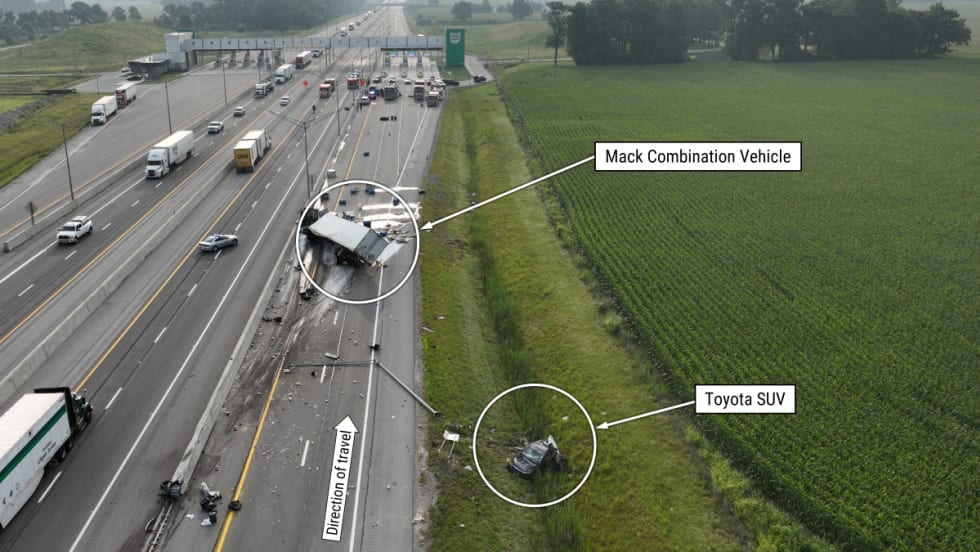
Fatal Crash Exposes Toll Plaza Risks
An NTSB investigation found that last-minute lane changes and large speed differences at an Ohio toll plaza created a hazard the truck driver couldn't avoid in time.
Read More →
When Language Stops the Truck: The Return of ELP Out-of-Service Orders
English language proficiency rules for commercial drivers aren’t new, but renewed out-of-service enforcement has raised the stakes. Here’s what carriers need to know before a driver reaches a roadside inspection.
Read More →
A Camera Isn't a Safety Program. Here's What Brokers Are Screening for Now
Footage alone may not be enough to pass broker vetting processes. Here's what counts as a defensible safety program now.
Read More →

Marijuana and Trucking’s Drug-Testing Dilemma
Marijuana is getting stronger, laws are changing, and drug tests still can’t reliably establish impairment. What does that mean for truck drivers and the fleets that employ them?
Read More →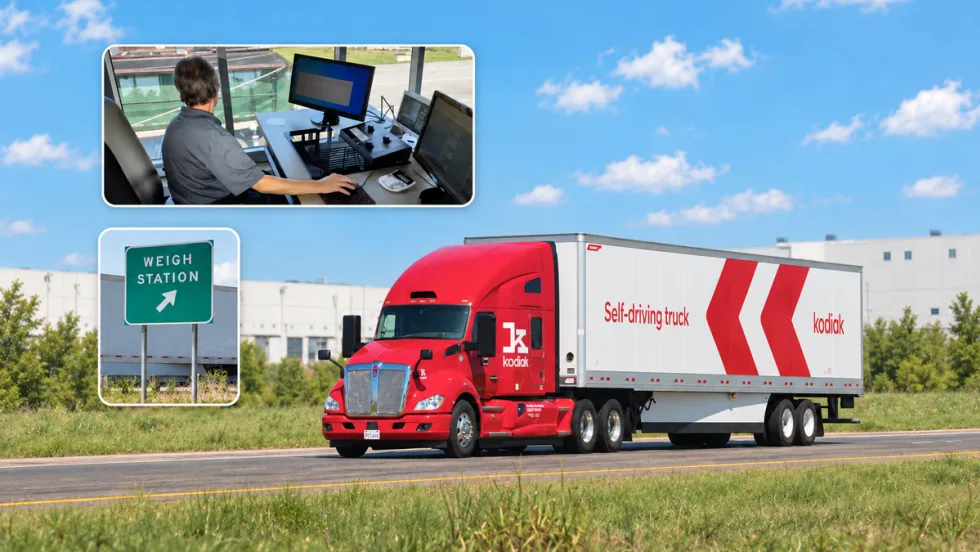
PrePass, Kodiak Connect Driverless Trucks to Roadside Enforcement
The system will allow enforcement agencies to verify Enhanced Inspection information and decide whether Kodiak’s autonomous trucks can bypass roadside screening sites.
Read More →
From One Generation to the Next: How Mentorship Builds Safer Truck Drivers
After three decades in trucking, Harold Perry shares what he's learned about driver safety, mentorship, and helping the next generation build confidence behind the wheel.
Read More →
FMCSA Pauses Biennial-Update Enforcement Amid Motus Transition
Carriers whose updates were due on or after June 1 have more time, while FMCSA works to stabilize its new registration system and warns of phishing sites impersonating its new carrier registration system, Motus.
Read More →
ZF Expands Commercial Vehicle Push in North America
ZF is expanding its North American commercial-vehicle presence with new transmission applications, electrification, trailer technology and autonomous-driving systems.
Read More →
Truck Drivers Need More Than Another Alert
Fleets have more visibility into truck health, safety events, and driver activity than ever. The next challenge is turning all that information into useful guidance for the person who has to decide what to do next.
Read More →
Tesla Wants a Self-Driving Semi. Are Cameras Enough?
Could Tesla’s camera-only autonomous driving technology work on an 80,000-pound Semi? In this commentary, HDT's Deborah Lockridge takes a look at Tesla, Cybercab, and how autonomous trucks see the road.
Read More →