




Rhode Island’s Truck Tolls Remain Unpopular with Trucking Groups
National and local trucking and infrastructure interest groups have roundly rejected Rhode Island's system of interstate tolling that specifically targets commercial vehicle traffic.

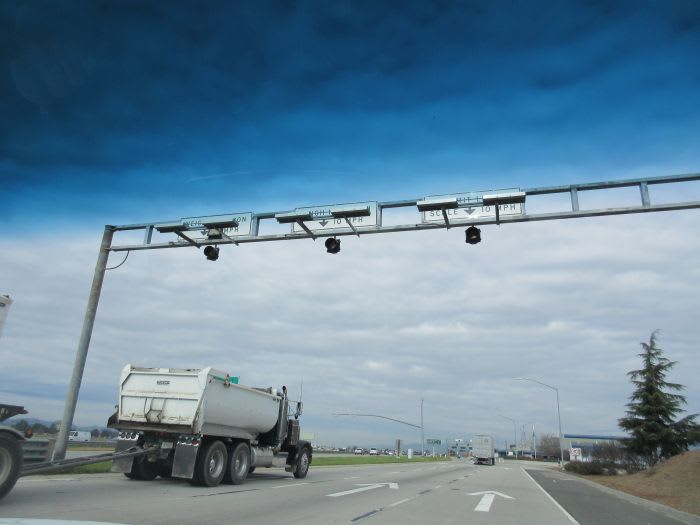
National and local trucking and infrastructure interest groups have roundly rejected Rhode Island's system of interstate tolling that specifically targets commercial vehicle traffic.
Photo: PrePass
Rhode Island has continued to moved forward with its RhodeWorks plan to charge commercial vehicles traveling on major interstates with truck-only tolls, despite its unpopularity with certain trucking interest groups.
The American Trucking Associations and the Rhode Island Trucking Association recently vowed to fight against the state’s truck toll plan in a release, calling it a “predatory and discriminatory truck-only toll scheme.”
“By pressing ahead with her ill-conceived RhodeWorks scheme, Gov. Raimondo is violating the Constitution by interfering with interstate commerce," said Chris Spear, ATA president and CEO. "She and her administration were warned of this repeatedly by the trucking industry and we will continue to fight these unjust tolls by any means available."
ATA stated that it the trucking industry was on board with paying its fair share for infrastructure repairs and updates, but was not willing to foot the bill alone. RHITA also took issue with what it called the undue burden the truck tolls put on local businesses rather than from companies passing through the state.
“Ninety-four percent of the costs of these tolls will ultimately be borne by Rhode Island businesses – and worsening our state's congestion problems as study after study has shown that when new tolls are imposed, traffic simply diverts away from them – thus taking traffic off of the interstates and putting it on Main Street," said RITA President Chris Maxwell.
In addition to those trucking groups, the Alliance for Toll-Free Interstates also spoke up about its namesake issue, saying that tolls will only negatively affect Rhode Island’s economy in the long run by targeting local business routing possible business around the state. The group is against tolls as a means of funding infrastructure because it maintains that tolling is too expensive and inefficient.
“Tolls on existing interstates are an underhanded tax that will negatively impact Rhode Island’s economy,” said Stephanie Kane, spokesperson for ATFI. “Increased transportation costs will affect companies’ decisions to operate and expand in the state. RhodeWorks’ 'toll taxes' will hurt area businesses and ultimately lead to job losses. These tolls, and those planned for the future, will eventually reroute prosperity around Rhode Island regardless of whether these toll taxes are only levied on trucks or all vehicles.”
Related: ATA Challenges Rhode Island Truck Toll Environmental Report
More Fleet Management

Color Match Smarter: Tools That Restore & Perform
For fleet managers and collision repair professionals keeping heavy-duty trucks on the road, getting the color right the first time isn't just about appearance — it's about efficiency, turnaround time, and bottom-line results. Discover how today's digital color tools are transforming the repair process from guesswork to precision.
Read More →
FMCSA Pauses Biennial-Update Enforcement Amid Motus Transition
Carriers whose updates were due on or after June 1 have more time, while FMCSA works to stabilize its new registration system and warns of phishing sites impersonating its new carrier registration system, Motus.
Read More →
2026 Blueprint for Countering Smarter Supply Chain Theft
Cargo theft is no longer just the cost of doing business. It's a multi-billion-dollar criminal enterprise exploiting vulnerabilities across your fleet, drivers, and supply chain.
Read More →


How Telematics Improves Visibility, Control, and Performance in Refrigerated Fleets
Explore how telematics help refrigerated fleets improve visibility, uptime, efficiency, compliance, and cargo protection across connected cold chain operations.
Read More →
What the U.S.-Canada Trade War Means for Trucking
Escalating U.S.-Canada tariffs could disrupt cross-border freight, reduce truck volumes, raise costs, and create new uncertainty for carriers on both sides of the border.
Read More →
What Are Trucking’s Top Concerns for 2026?
The American Transportation Research Institute wants to know what's worrying trucking fleet managers, drivers, and other stakeholders in its annual Industry Issues survey.
Read More →
American Trucking Associations Looks for a New Leader
ATA President and CEO Chris Spear abruptly left his job at the association on August 21, at a pivotal time for the trucking industry.
Read More →
Public Wi-Fi Cybersecurity Risks: How Truck Drivers and Fleets Can Protect Their Data
Public Wi-Fi can expose truck drivers and fleets to credential theft, malware, and other cyber threats. Here’s how to reduce the risk on the road.
Read More →
For Nicky Cupp, Fleet Innovation Starts With Frustration
HDT Truck Fleet Innovator Nicky Cupp turns everyday pain points at Fraley & Schilling into opportunities for better technology and smarter processes.
Read More →
Adam Buttgenbach’s Approach to Electric Trucks: Start With Where They Fit
HDT Truck Fleet Innovator Adam Buttgenbach helped PepsiCo build one of North America’s largest EV fleets by focusing on where electric trucks make operational sense.
Read More →